


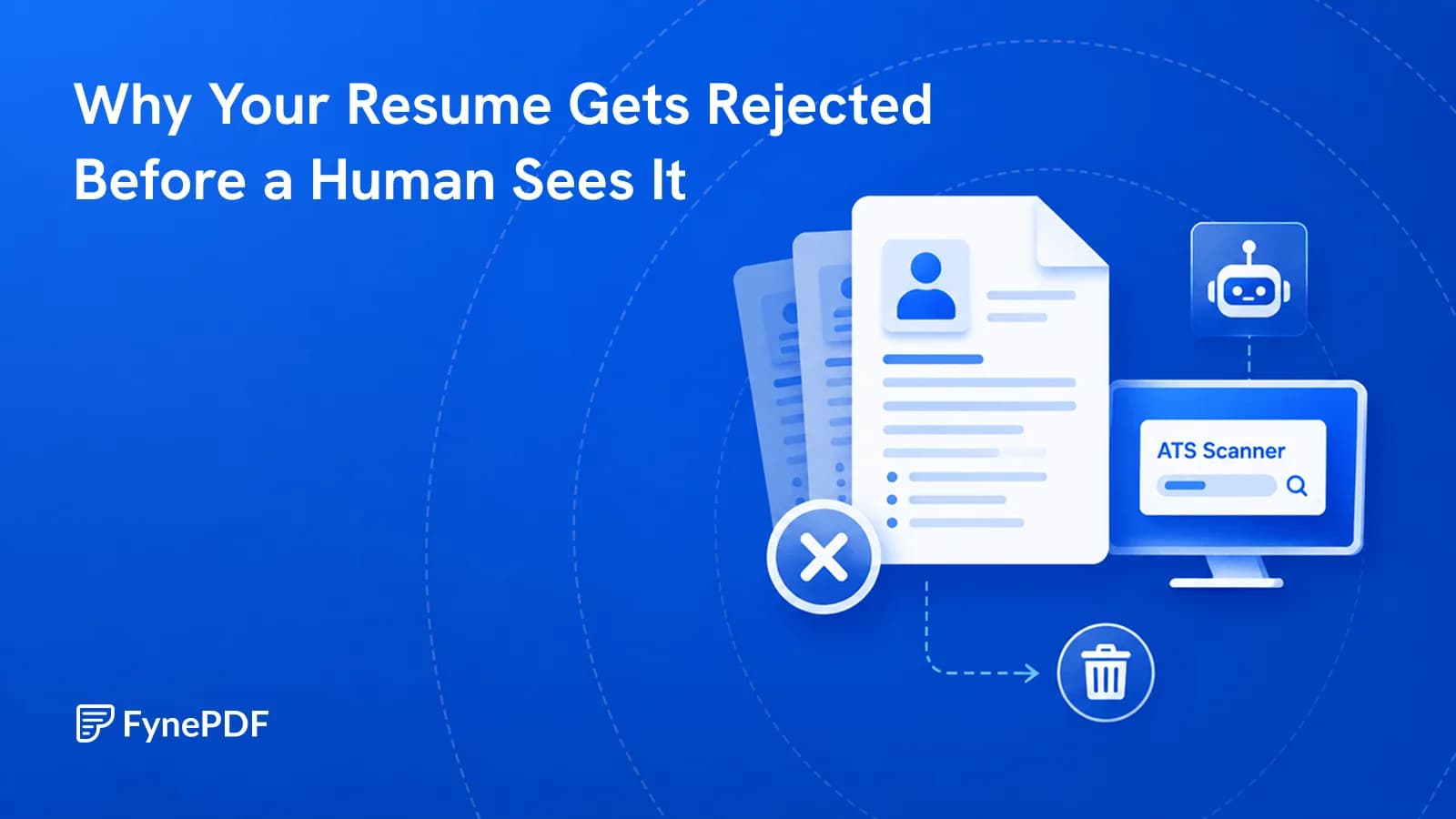
Why Your Resume Gets Rejected Before a Human Sees It
Applicant tracking systems parse your file first. Size, layout, and scans are why it fails.

28 July 2026
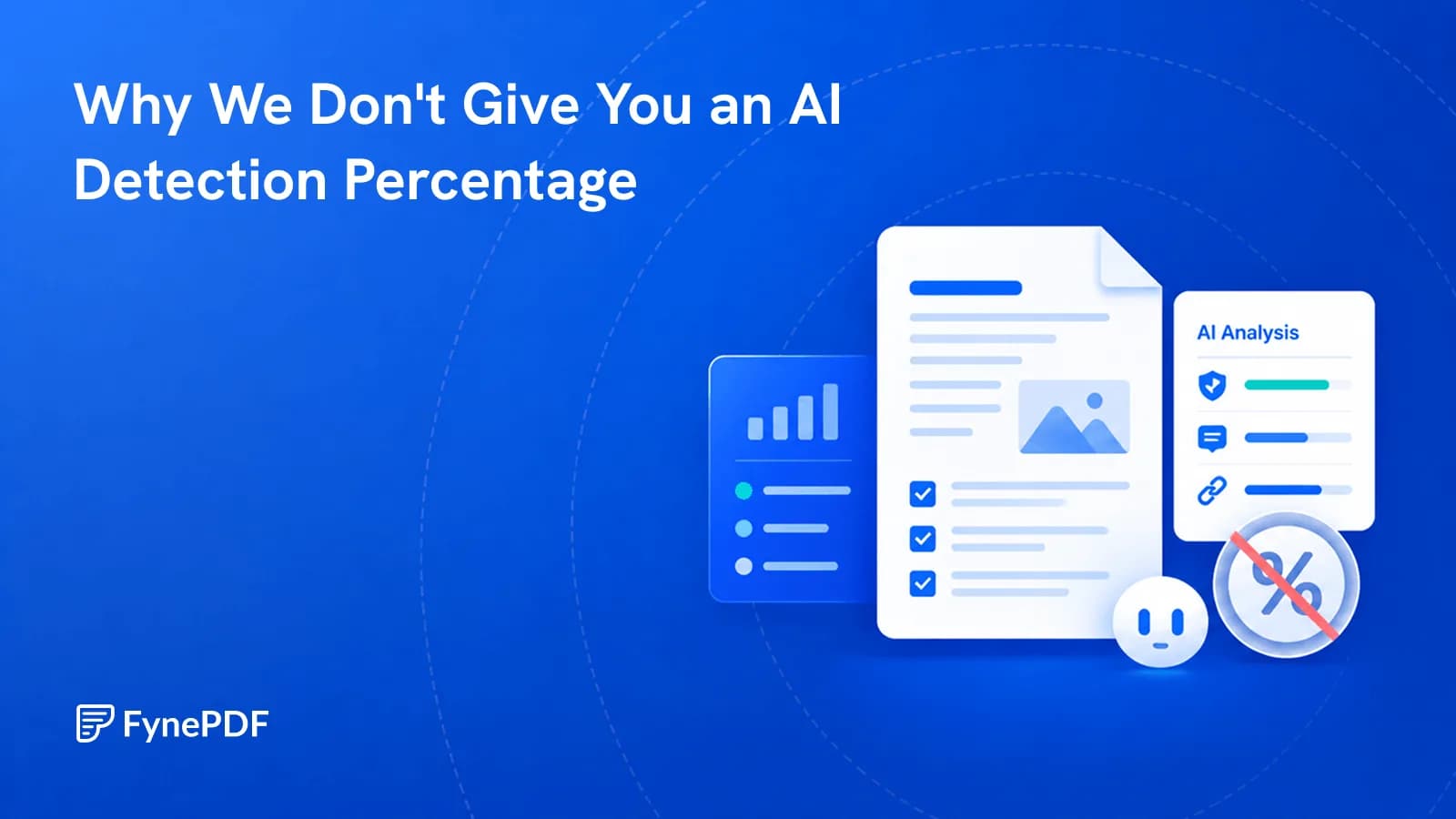
Percentages get treated as proof and used against people. We tell you what we found instead.
A detection percentage looks like a measurement and behaves like a verdict. Once a number exists, it gets pasted into an email, attached to a misconduct referral, and treated as evidence of something it cannot establish. We give you an assessment of what we found and the reasoning behind it, so the judgement stays with a person.
That is a deliberate design choice, and it is worth explaining why.
Detection works by measuring statistical properties of text: how predictable each word is given the words before it, and how much that predictability varies. Machine-generated writing tends to be smoother and more uniform. Human writing tends to vary more.
The difficulty is that plenty of human writing is smooth and uniform too. Formal academic prose. Technical documentation. Careful work by someone writing in a second language. Anything that has been through a grammar checker. These all drift toward the patterns associated with machine text, and research has repeatedly found higher false-positive rates for non-native English writers.
So the underlying signal is a resemblance, not a fact. Expressing a resemblance as "87%" implies a precision the method does not have.
Because of what people do with it. A percentage travels well and strips its own caveats. It arrives in an inbox without the explanation that it is a probability estimate, that the tool has a documented false-positive problem, or that the writer may simply write formally.
Students have faced academic misconduct proceedings on the basis of a figure, with the burden of disproving a statistical estimate falling on the person least equipped to challenge it. An institution treating that figure as proof has mistaken an estimate for a finding, and the pattern of unequal false positives means the same tool applied uniformly produces unequal outcomes.
Removing the number does not fix that entirely. It does remove the artefact that makes the mistake easy.
An account of what stood out and why. Which passages read as uniform, what characteristics prompted that, and where matched source text was found alongside the source it matched.
The difference is that reasoning invites checking and a number invites acceptance. If we say a section reads uniformly, you can read that section and form your own view. If we said "82%", there is nothing to examine.
| What you get | What you do with it |
|---|---|
| Passages that stood out, with reasoning | Read them and judge |
| Matched text shown beside its source | Verify the match yourself |
| Observations about consistency of style | Compare against other work you know |
| No score, no verdict | Make the call, or have a conversation |
Free accounts get 10 interactions and files up to 15MB.
That side is more reliable, and for a straightforward reason: it shows you the match and where it came from, so you can check it yourself. A comparison is verifiable in a way a probability is not.
Matches still need judgement. Correctly quoted and cited material matches its source. So do common phrases, standard methodology descriptions, and reference lists. Read what matched before concluding anything from the fact that something did.
To decide where to look, then look. If a passage stands out, read it, compare it with other writing you have from that person, and talk to them. A conversation establishes far more than any tool output, and it gives the writer a chance to show their drafts and notes.
If your institution has a policy on detection tools, follow it. Many have moved away from treating tool output as determinative, precisely because of the reliability problems described above.
Yes, and it happens regularly. Writing formally, working in a second language, or editing heavily all increase the chance. A flag on work you wrote yourself is a known limitation of the method rather than a sign you did anything wrong.
That is the use it suits best. You know what you wrote, so a flagged passage is information rather than an accusation, and the source matching will catch a paraphrase that stayed too close or a citation you meant to add.
Not until there is a text layer. Run OCR first, and treat results on scans with more caution, since recognition errors alter the very properties being assessed.
Files transfer over encrypted connections and are permanently deleted within 15 minutes of processing unless you save them to your library.
Upload it to the Plagiarism and AI Detector and read what it points at rather than looking for a verdict.
Try it yourself
Applicant tracking systems parse your file first. Size, layout, and scans are why it fails.
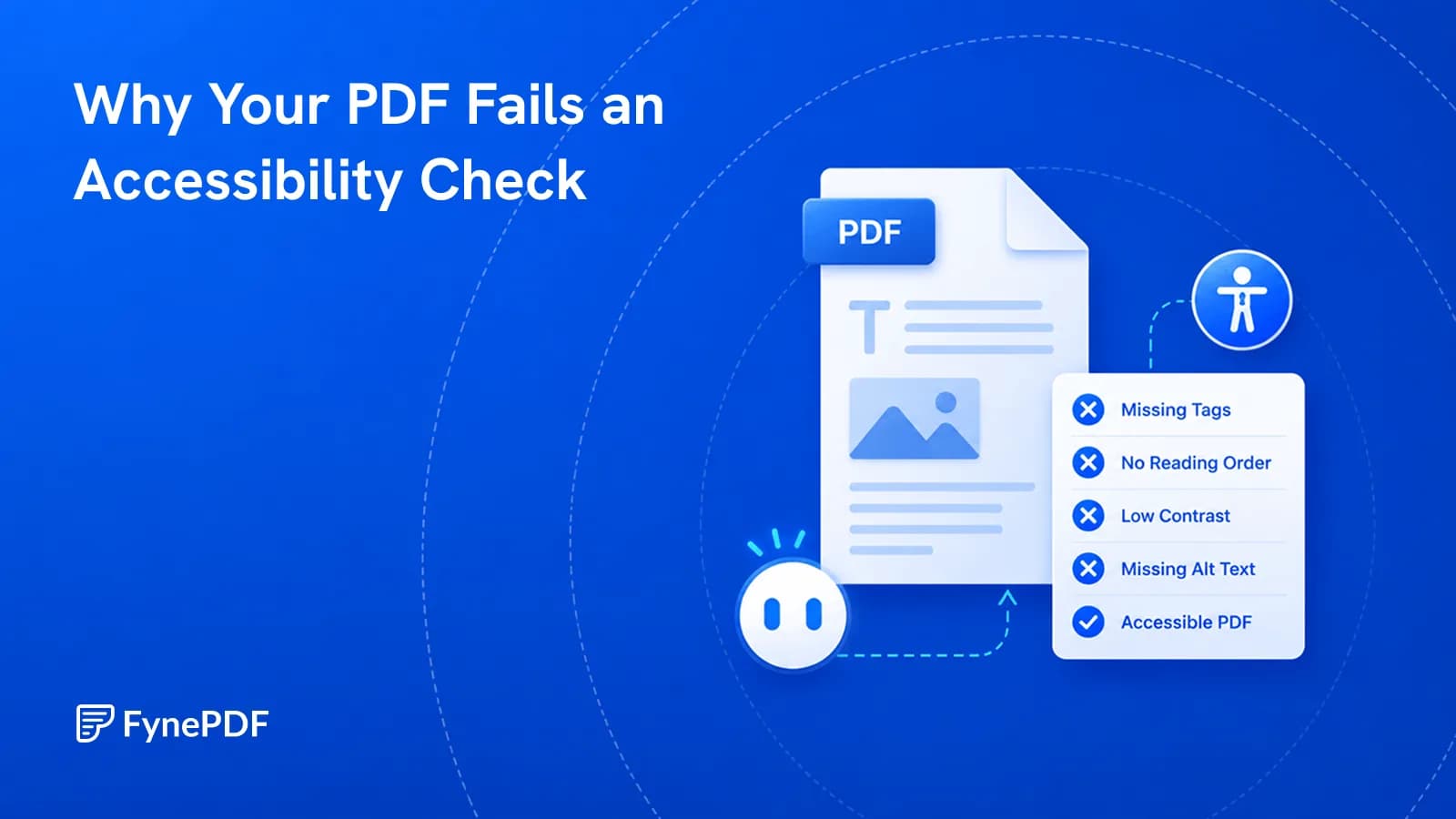
A PDF that looks fine can be unreadable with a screen reader. Here's what's missing.
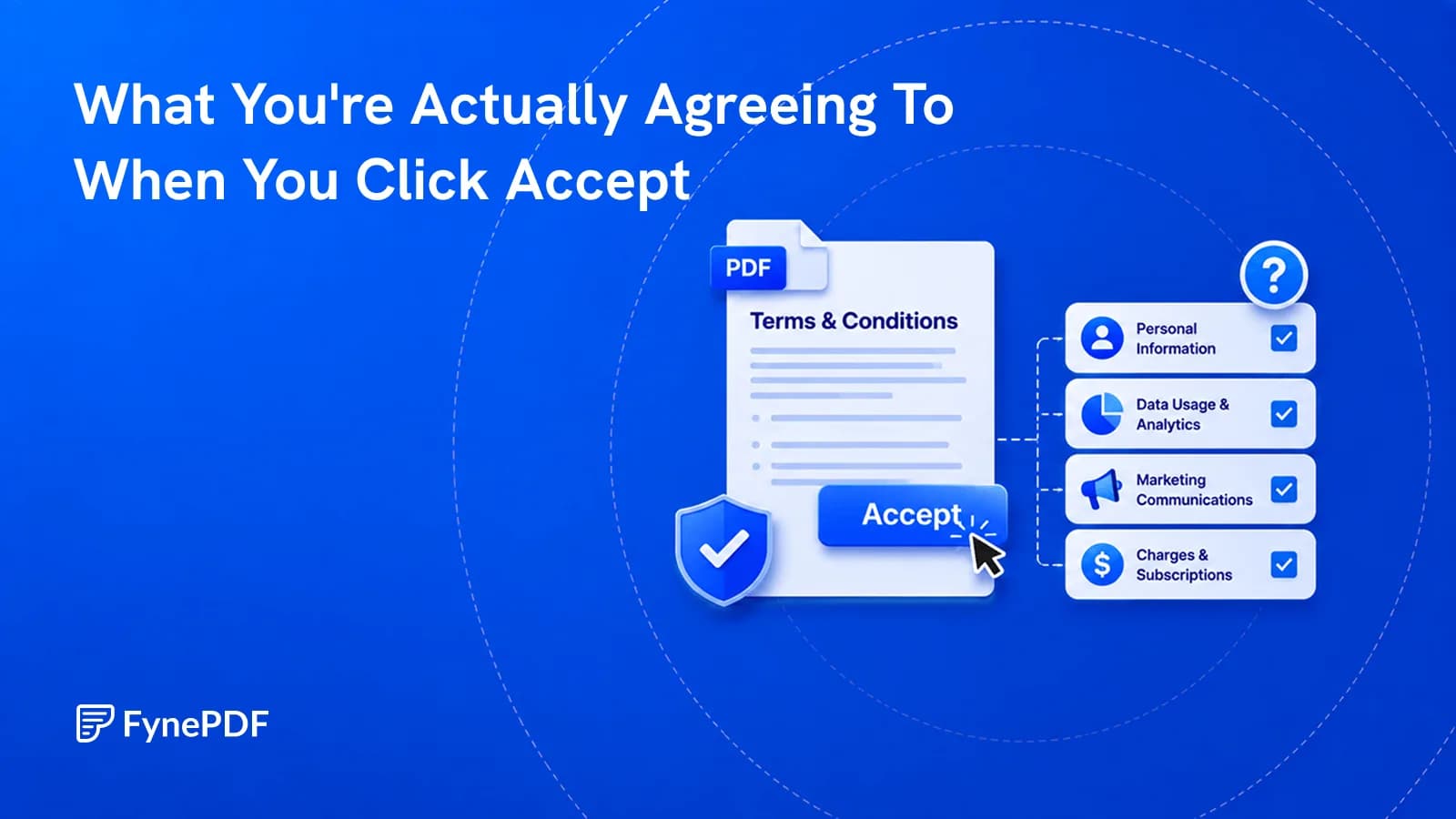
Nobody reads them, and the clauses that matter are buried deliberately. Here's what to check.