


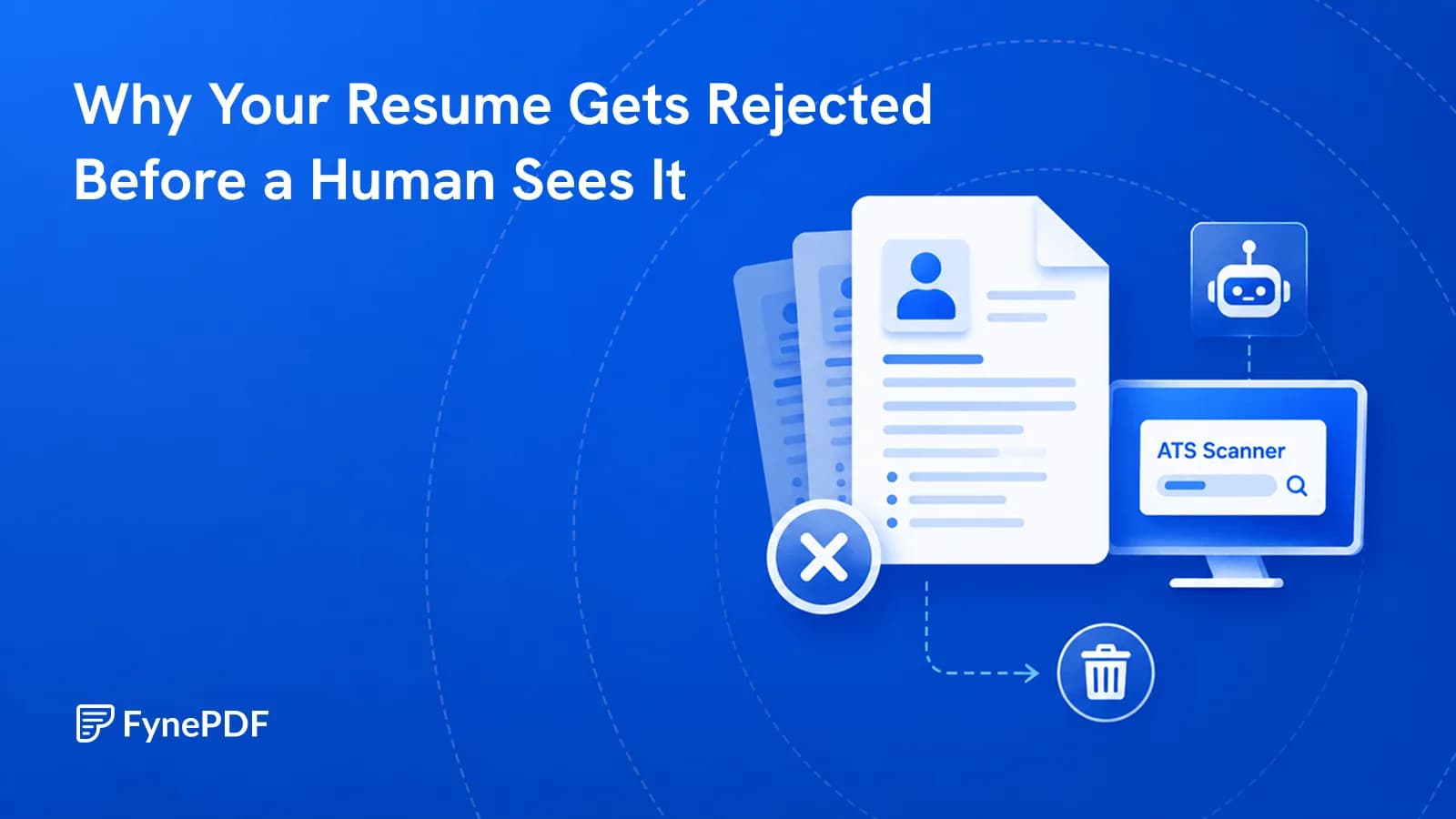
Why Your Resume Gets Rejected Before a Human Sees It
Applicant tracking systems parse your file first. Size, layout, and scans are why it fails.

28 July 2026
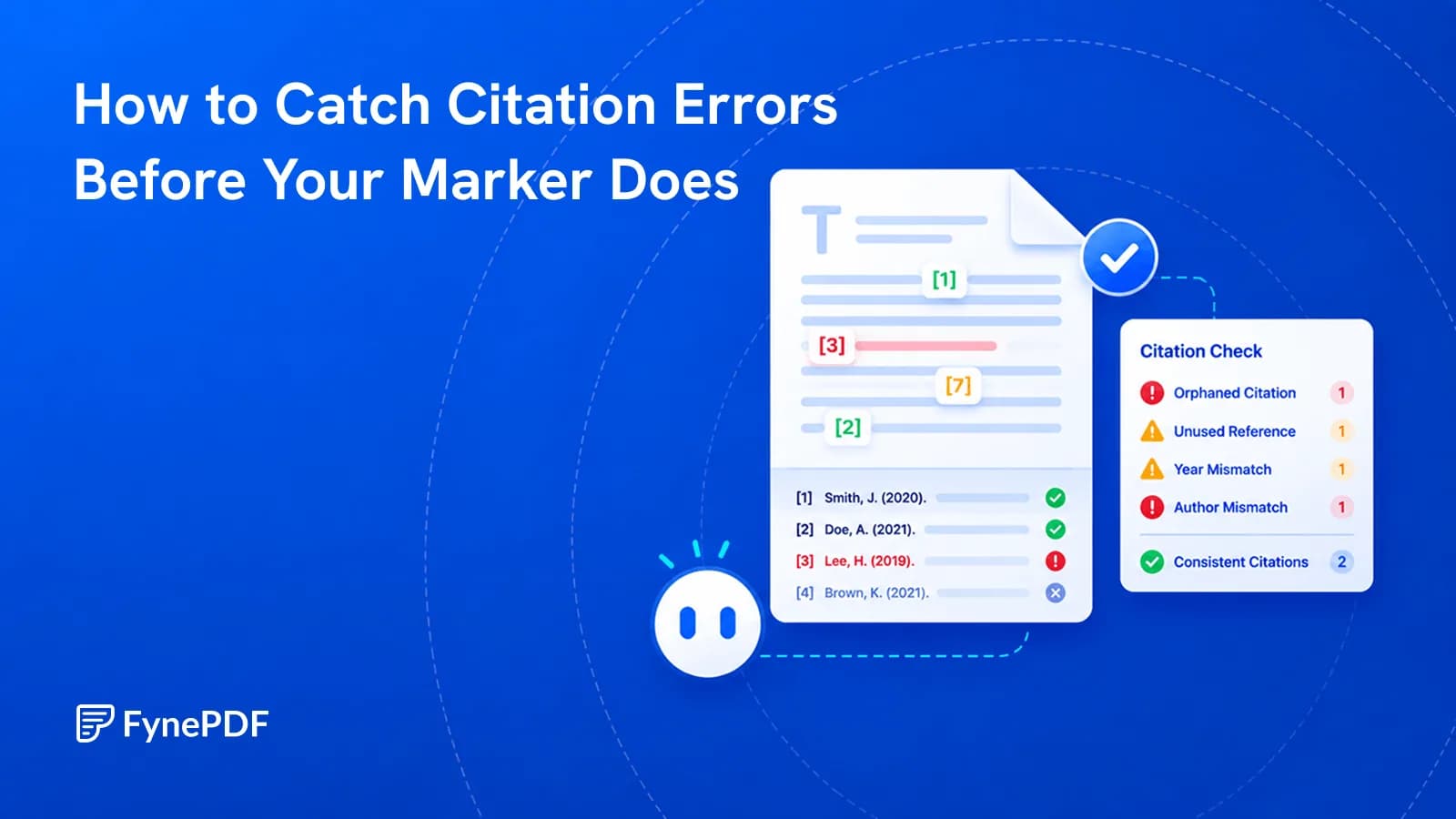
Mismatched dates and citations with no reference entry are what quietly cost marks.
Citation checking finds the mechanical errors that cost marks: in-text citations with no matching reference entry, references never cited in the text, author names spelled differently in the two places, and years that disagree. These are the errors markers notice and students miss, because they appear during editing rather than writing.
The formatting rules are checkable. Whether a source is appropriate for your argument is not, and that part stays with you.
They cluster around editing rather than drafting:
Orphaned in-text citations. You cited Kowalski (2019) in a paragraph you moved from another draft, and the reference list never gained the entry.
Unused references. You removed a paragraph and the reference stayed behind. Reference lists should contain what you cited, no more.
Year mismatches. In-text says 2021, the reference says 2022. Usually a second edition or a preprint later published.
Author name variation. Spelling, initials, or hyphenation differing between text and list, which makes matching fail.
Missing DOIs or URLs, where the style requires them.
Wrong ampersand usage. APA uses "and" in narrative citations and "&" inside parentheses, which is easy to get backwards throughout.
Free accounts get 10 interactions and files up to 15MB. Fixing in the source matters because you will produce another PDF from it, and corrections made only to the PDF disappear on the next export.
| Checkable | Not checkable |
|---|---|
| Citation appears in the reference list | Whether the source says what you claim |
| Reference appears in the text | Whether the source is credible |
| Author and year agree in both places | Whether it is current enough |
| Reference entries follow the pattern | Whether you have enough sources |
| Alphabetical ordering | Whether a citation is needed at all |
Everything in the right column requires reading the sources, which is the actual scholarly work. A paper with immaculate formatting and misrepresented sources is a worse paper than one with a few formatting slips.
No. Style manuals are updated, and institutions frequently modify them with their own requirements. Where the checker and your department's guidance disagree, follow your department.
This applies especially to unusual source types. Datasets, preprints, social media posts, AI tools, government reports, and legal materials all have specific rules that vary between editions and between institutions. Check those against your current official guidance rather than against any tool.
The same class of consistency errors occurs in every style. If your discipline uses something other than APA, the mechanical checks still apply, but verify formatting requirements against the correct manual.
For a broad look at a document rather than citation-specific checking, Chat with Doc lets you ask questions about your own draft and cite the page.
If your paper is already a PDF and the original is gone, PDF to Word recovers an editable version, though citation-heavy documents often need layout repair afterwards.
If your source is a scanned document you are citing from, run OCR before extracting quotations, and check numbers carefully. A misread page number in a citation is a small error with an irritating consequence.
No. It catches mechanical inconsistencies. Marks for referencing usually also reflect source quality, appropriateness, and whether citations support the claims made, none of which is a formatting question.
Yes, and that is a good time to run it. Finding gaps while you can still locate the sources is easier than the night before submission.
Finding the correct details for a source is your responsibility, and inventing plausible reference entries is exactly the failure mode to avoid. A fabricated citation is a serious academic problem.
Files transfer over encrypted connections and are permanently deleted within 15 minutes of processing unless you save them to your library.
Upload your draft to the APA Citation Checker and fix what it finds in your source file.
Try it yourself
Applicant tracking systems parse your file first. Size, layout, and scans are why it fails.
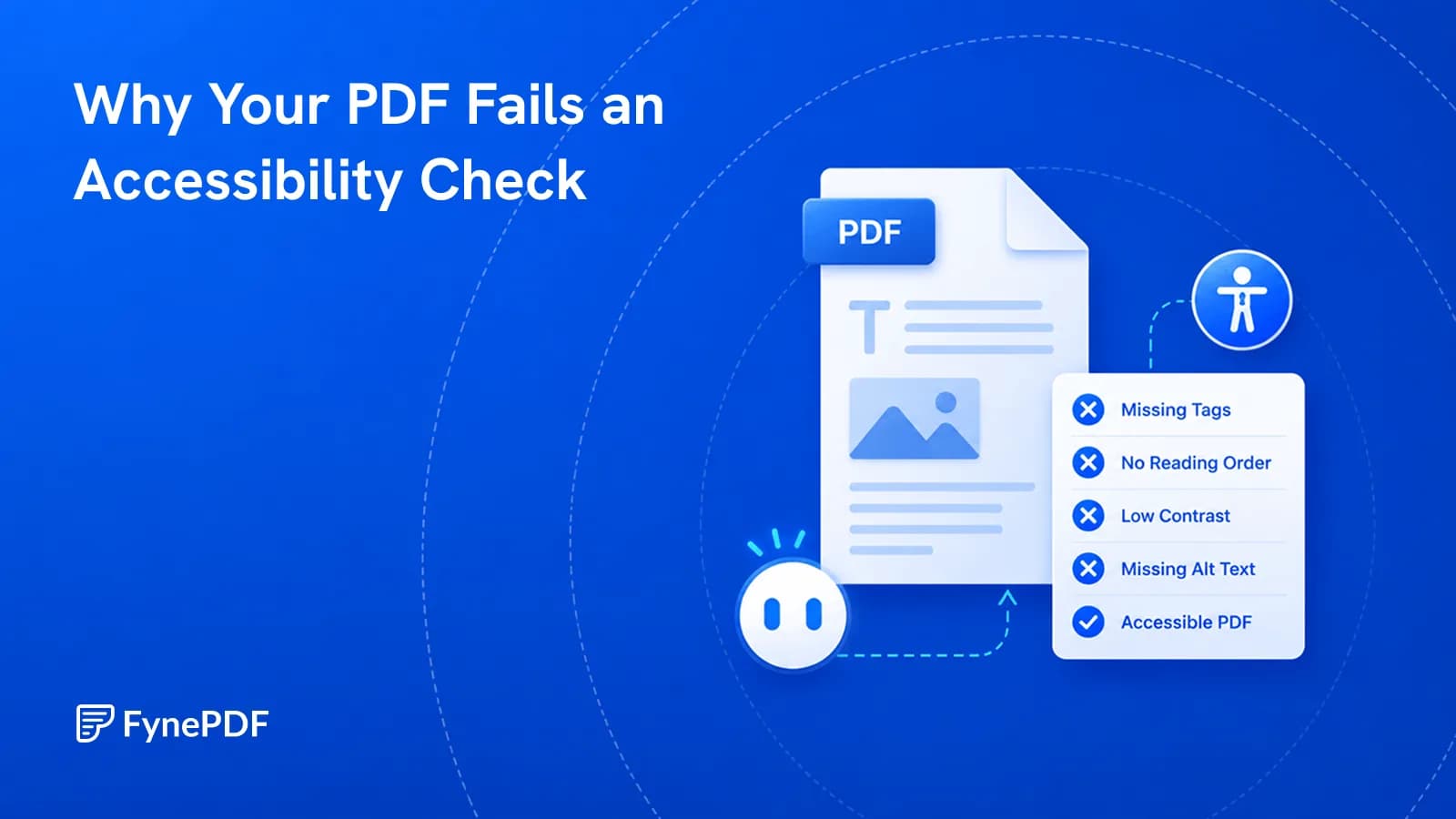
A PDF that looks fine can be unreadable with a screen reader. Here's what's missing.
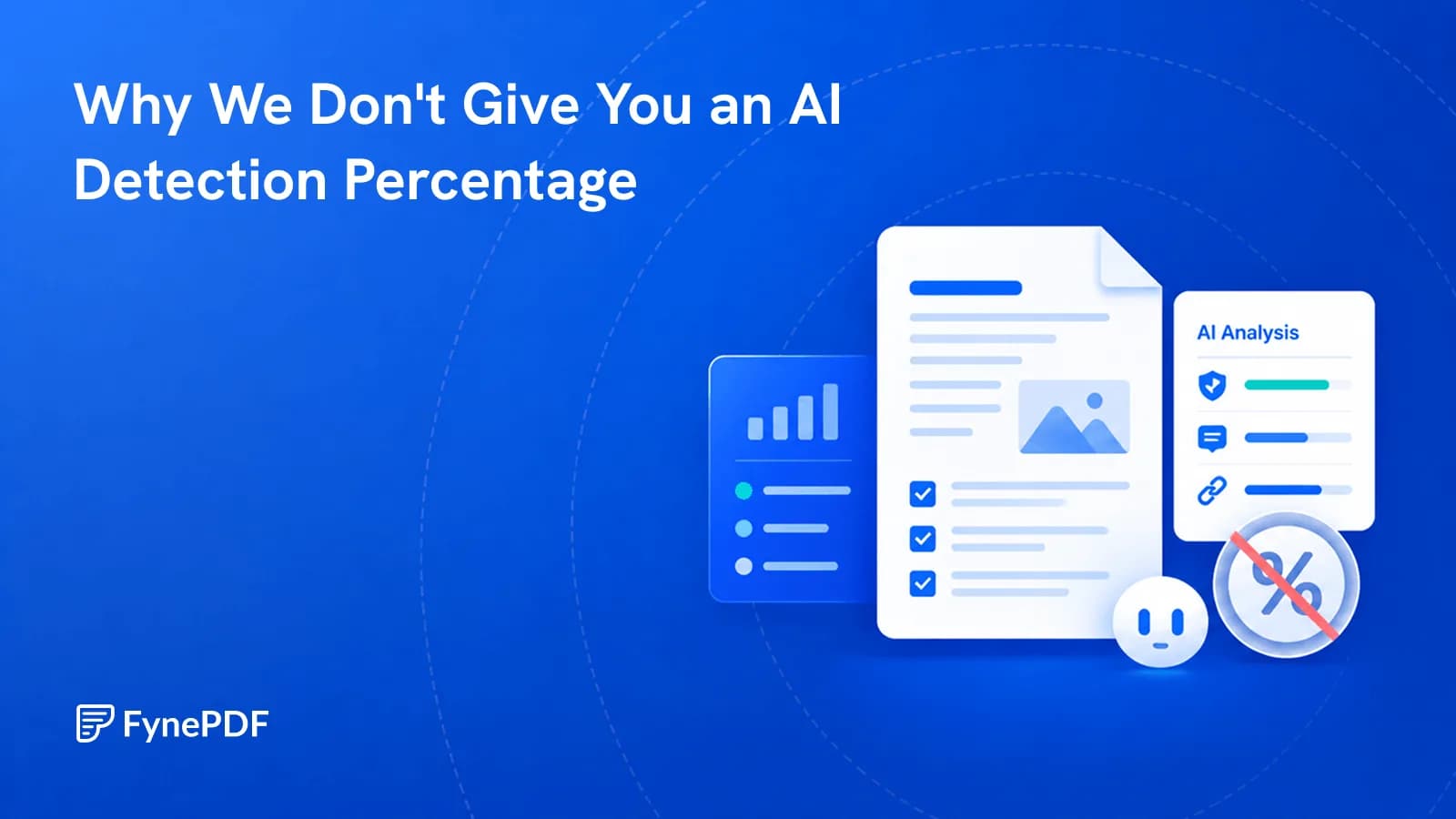
Percentages get treated as proof and used against people. We tell you what we found instead.