


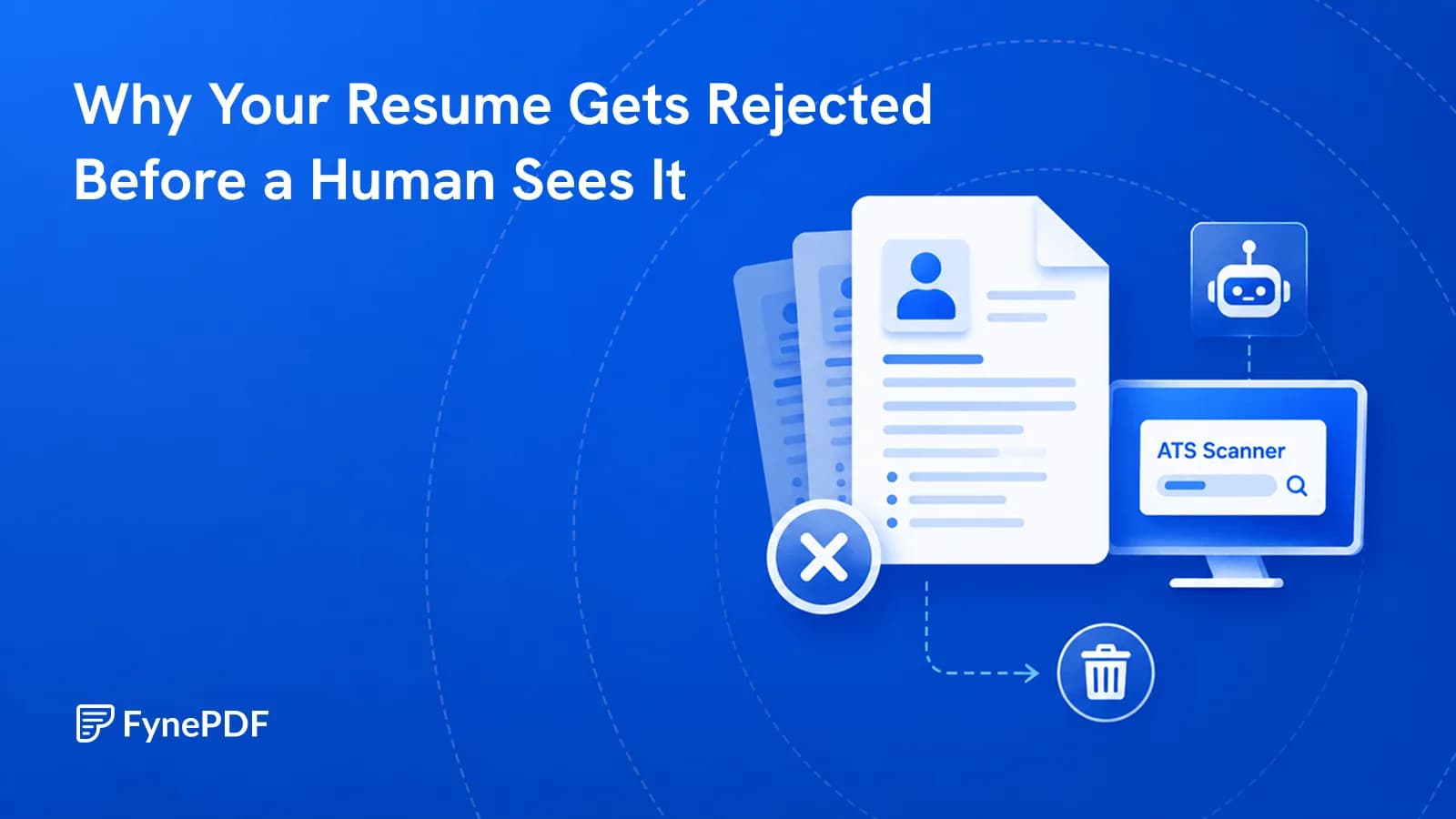
Why Your Resume Gets Rejected Before a Human Sees It
Applicant tracking systems parse your file first. Size, layout, and scans are why it fails.

28 July 2026
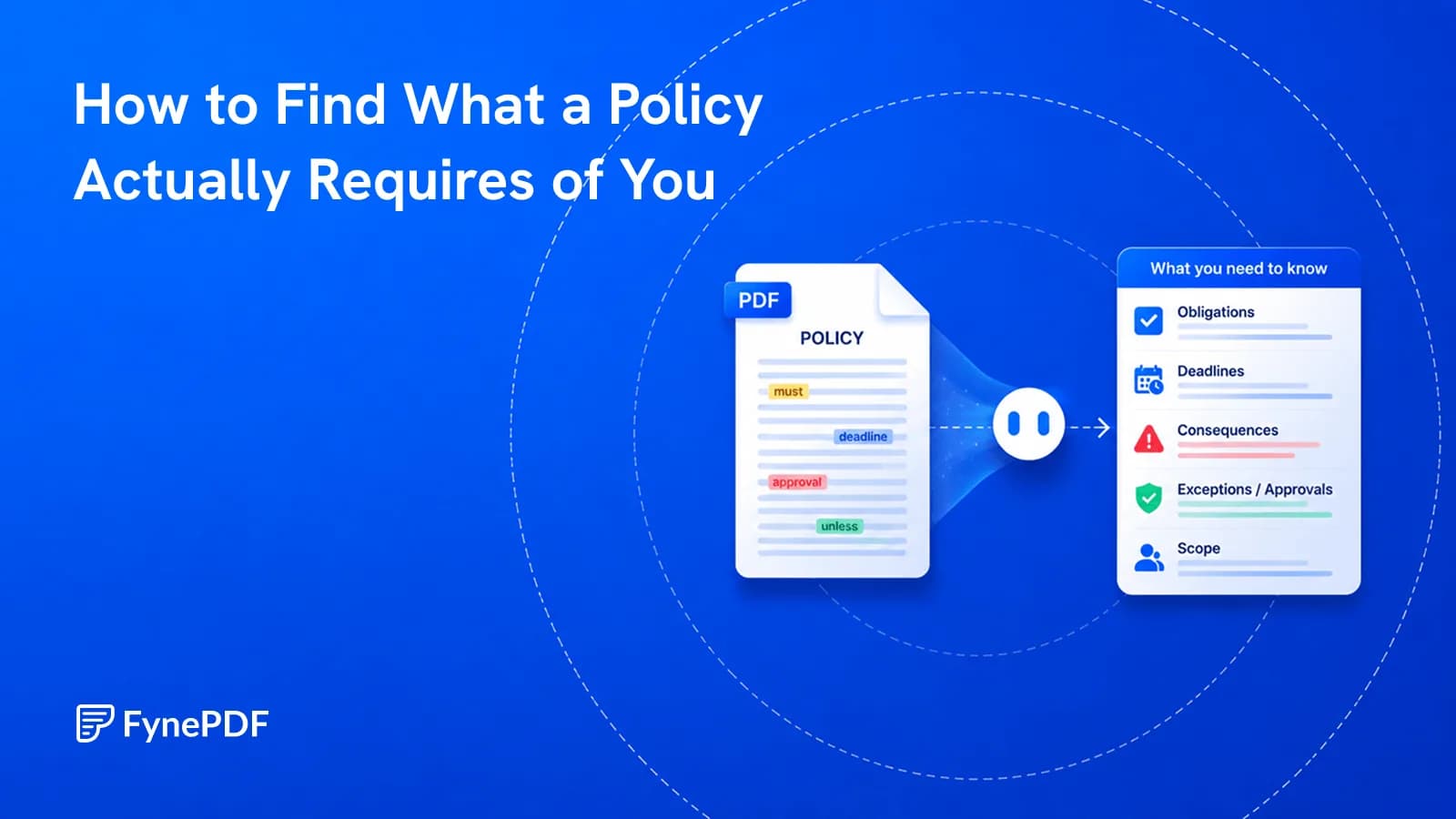
Policies are written to cover the organisation, not to be read. Find your obligations.
Policy documents are written to protect the organisation that issued them, which is a different goal from being understood. The parts that create actual obligations, deadlines, and consequences are scattered through pages of scope statements and definitions. Finding them is what turns a document you signed for into one you have read.
The obligations can be located. Whether a policy is enforceable, or what it means in a dispute, is a question for a qualified professional.
Because they are drafted defensively. A policy has to cover every case the organisation can anticipate, satisfy whatever regulation applies, and survive review by people whose job is to close gaps. Readability is not among the goals, and there is rarely anyone whose role is to advocate for it.
The practical effect is that the sentence affecting you sits between two paragraphs of scope definition, expressed conditionally, cross-referenced to an appendix. People sign acknowledgements for documents they have not read, which is the outcome the format produces.
Five things carry nearly all the consequence:
The modal verbs are the fastest route in. Scanning for must and shall finds the operative sentences considerably faster than reading front to back.
Free accounts get 10 interactions and files up to 15MB.
The summary points you at the paragraphs. For anything you are acting on, read the actual text, because the wording of an obligation is what matters and a summary necessarily compresses it.
| Document | Why it helps |
|---|---|
| Employee handbooks | Long, rarely read, full of obligations |
| IT and security policies | Specific requirements with real consequences |
| Expense and travel policies | Deadlines and approval thresholds |
| Codes of conduct | Reporting duties people miss |
| Data protection policies | Obligations that vary by role |
| Vendor and supplier policies | Contractual requirements passed down |
The recurring pattern is a document issued once, acknowledged immediately, and consulted only after something has gone wrong.
Summarising tells you what a document says. It cannot tell you whether a provision is lawful in your jurisdiction, whether it conflicts with your employment contract, or what would happen if it were tested.
Those questions matter when a policy is being used against you, when it conflicts with something else you have signed, or when the consequences are serious. At that point the people to ask are your union representative, an employment lawyer, or the relevant regulator, depending on the situation. A summary is a starting point for that conversation rather than a substitute for it.
Older handbooks and policies frequently exist only as scans, containing images rather than text. Nothing can be read until a text layer exists, so run OCR first.
Check recognised text carefully where numbers are involved. A misread notice period or threshold changes the obligation entirely.
No. Fairness depends on context, law, and what else you have agreed to. It can tell you what the document requires, which is the necessary first step to forming any view.
Upload both and compare what each requires. Where they genuinely conflict, that is a question for whoever issued them, and it is worth raising in writing.
Chat with Doc lets you query a document directly and cite the page, which suits targeted questions better than a full summary.
Files transfer over encrypted connections and are permanently deleted within 15 minutes of processing unless you save them to your library.
Upload it to the Policy Document Summarizer, find the obligations, then read those sections in the original.
Try it yourself
Applicant tracking systems parse your file first. Size, layout, and scans are why it fails.
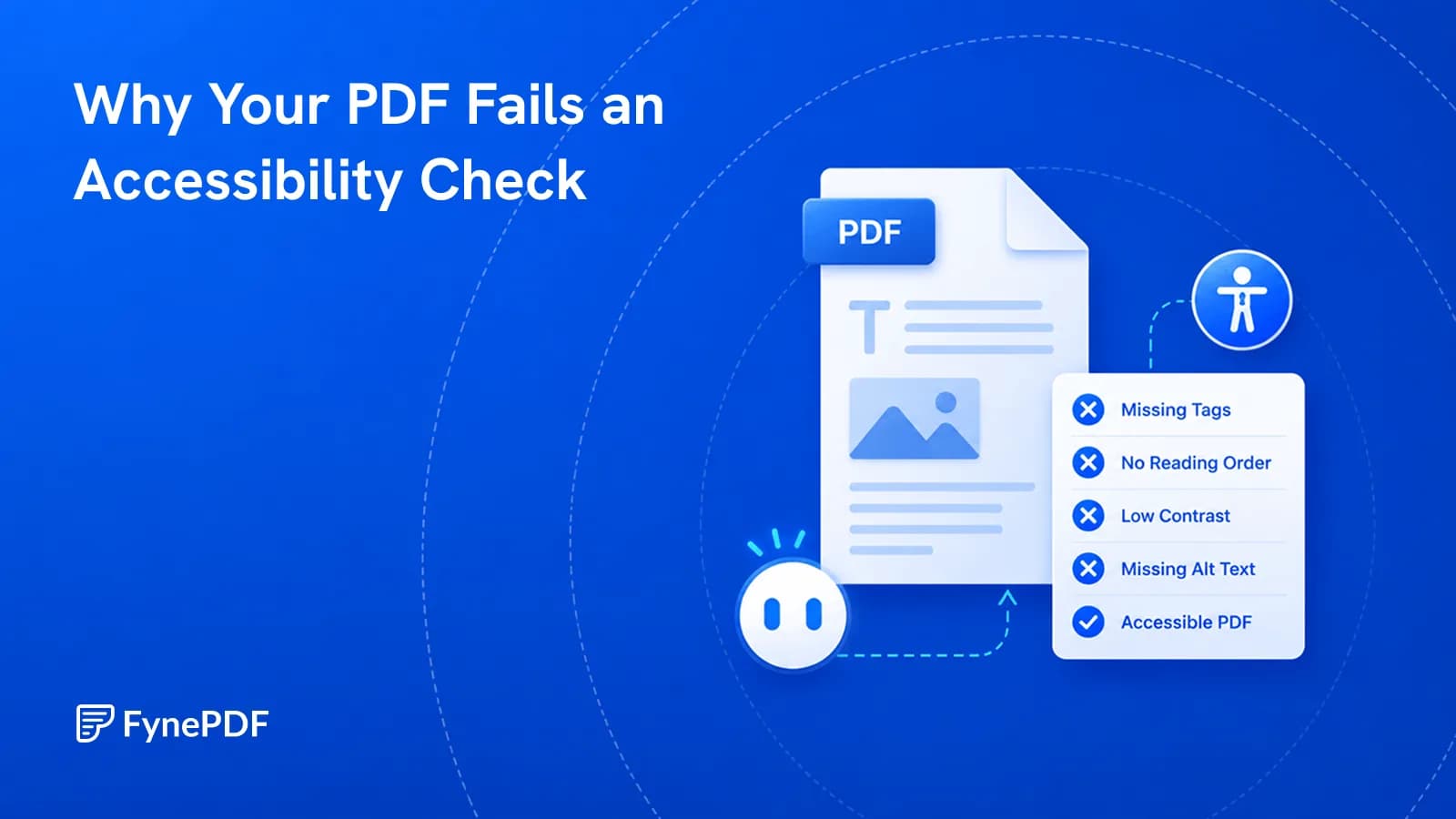
A PDF that looks fine can be unreadable with a screen reader. Here's what's missing.
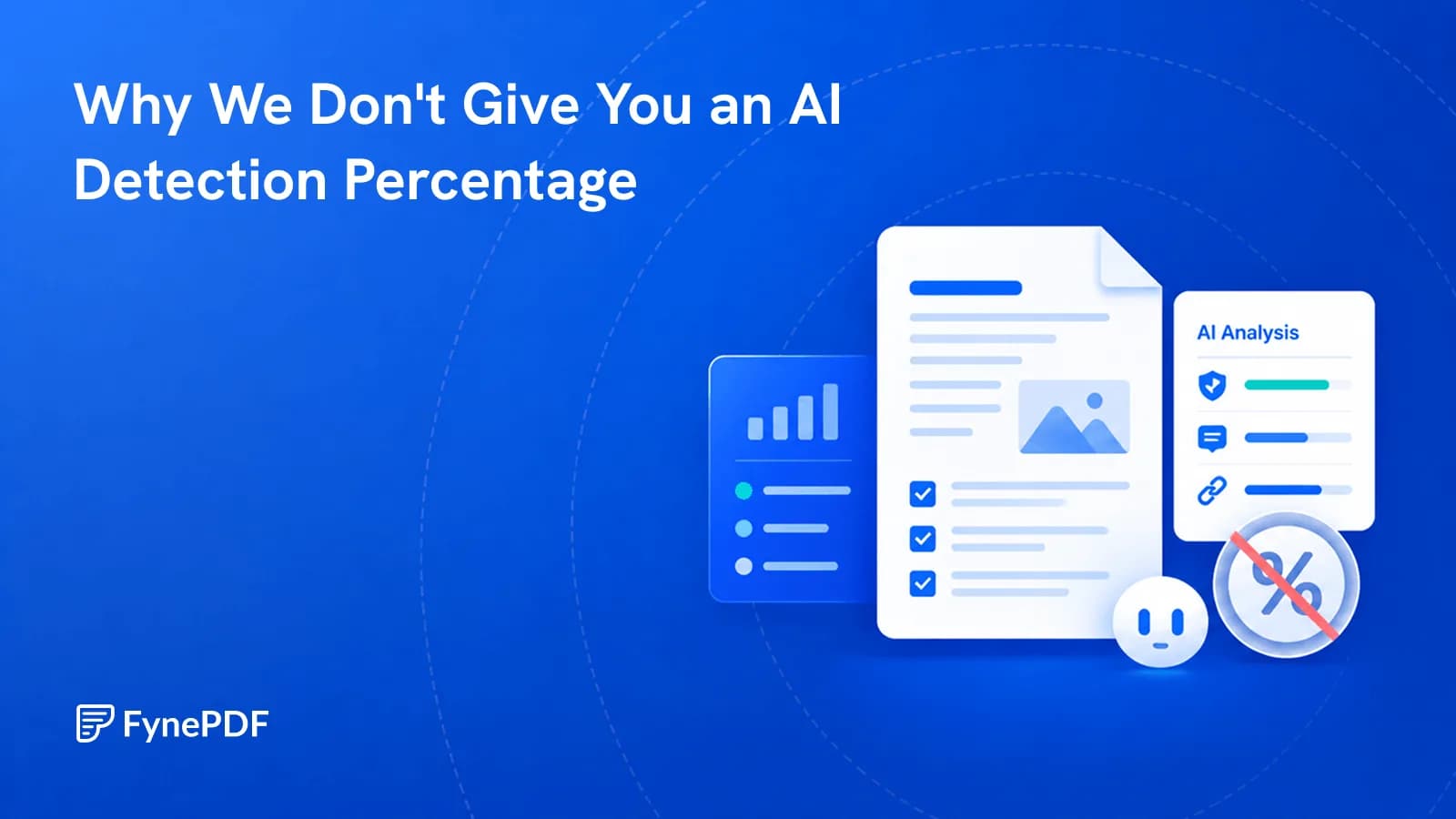
Percentages get treated as proof and used against people. We tell you what we found instead.