


Why Your Word Document Looks Different on Someone Else's Screen
Your 12-page report opened as 14 on their machine. Here's why, and how to stop it.

28 July 2026
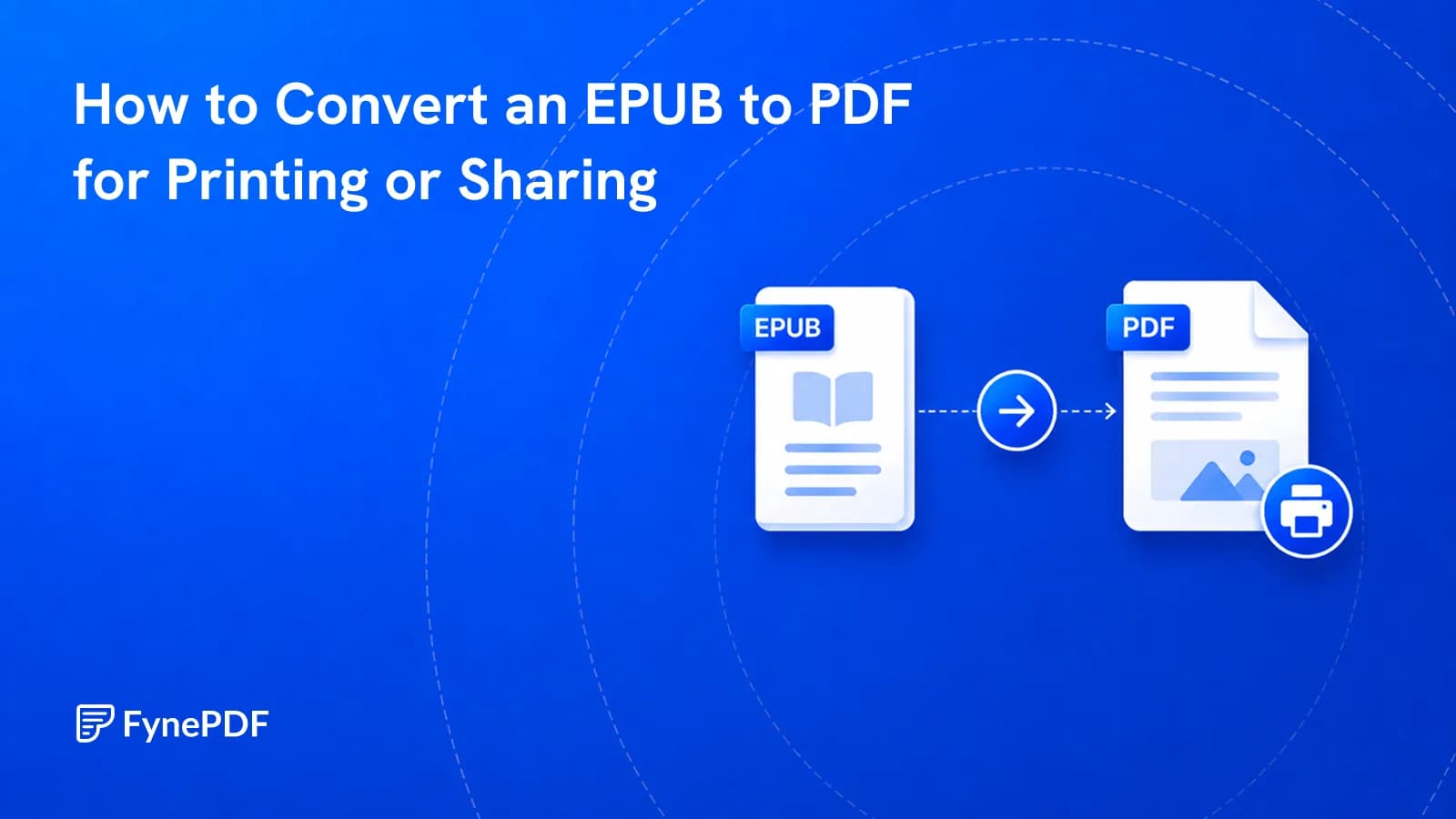
EPUB won't open for most people and can't be printed with fixed pages. PDF can.
Converting an EPUB to PDF produces a fixed-layout document with real pages, which is what you need for printing, citing, or sending to someone without an e-reading app. EPUB reflows to fit whatever screen it's on. Excellent for reading, unhelpful when the pages need to stay put.
Most people can open a PDF without thinking about it. Far fewer can open an EPUB.
The pattern is anything leaving the reading device:
The pagination point is the practical one. Two people reading the same EPUB at different font sizes are on different "pages," so page references between them are meaningless. A PDF gives everyone the same page 47.
.epub file.Free accounts handle files up to 100MB, and no signup is needed to run it.
The reflowing behaviour disappears, which is the point, and a few consequences follow from it.
Page count is decided at conversion. The converter picks a font size and page size, and that's now fixed. Readers can no longer enlarge the text. They zoom instead, which on a phone means panning.
Chapter breaks become page breaks. Usually what you want, though it can leave short pages where a chapter ends near the top of one.
Images get placed at fixed positions rather than flowing with the text. In an EPUB an image sits between paragraphs wherever they fall; in a PDF it lands on a specific page and the text arranges around it.
Internal links generally survive, so a table of contents remains clickable.
Reasonably, for a well-structured EPUB. Headings, paragraphs, italics, and lists carry over, and a document with clean structure produces a clean PDF.
Where it falls short is typographic refinement, the kerning, hyphenation, and page-break decisions that typesetting software makes deliberately. A converted EPUB reads perfectly well and won't be mistaken for a professionally typeset book.
| Source EPUB | Result |
|---|---|
| Well-structured prose | Clean, readable |
| Technical book with code blocks | Good, check block wrapping |
| Illustrated non-fiction | Images may sit awkwardly |
| Fixed-layout EPUB (comics, children's books) | Usually converts closely |
| Heavily styled magazine EPUB | Variable |
Depends where it's going.
For printing, consider N-Up to fit two pages per sheet, and Grayscale PDF if the book has colour elements that would otherwise bill as colour pages.
For emailing, check the size. Illustrated books can be large, and Gmail caps attachments at 25MB. Compress PDF handles it.
For sharing a section only, Extract Pages pulls out the chapter rather than sending the whole book.
No. Ebooks bought from most stores carry protection that prevents conversion, and that restriction is a licensing condition rather than a technical obstacle to work around. This tool is for EPUB files you can already open freely. Your own writing, open-licensed books, and documents distributed without protection.
Conversion applies a sensible default layout. For precise typographic control, dedicated publishing software is the right tool.
PDF to EPUB converts the other way, though the round trip loses structure in both directions. Keep whichever version is your master.
Files transfer over encrypted connections and are permanently deleted within 15 minutes of processing unless you save them to your library.
Upload your .epub to EPUB to PDF and check the chapter breaks before printing or circulating it.
Try it yourself
Your 12-page report opened as 14 on their machine. Here's why, and how to stop it.
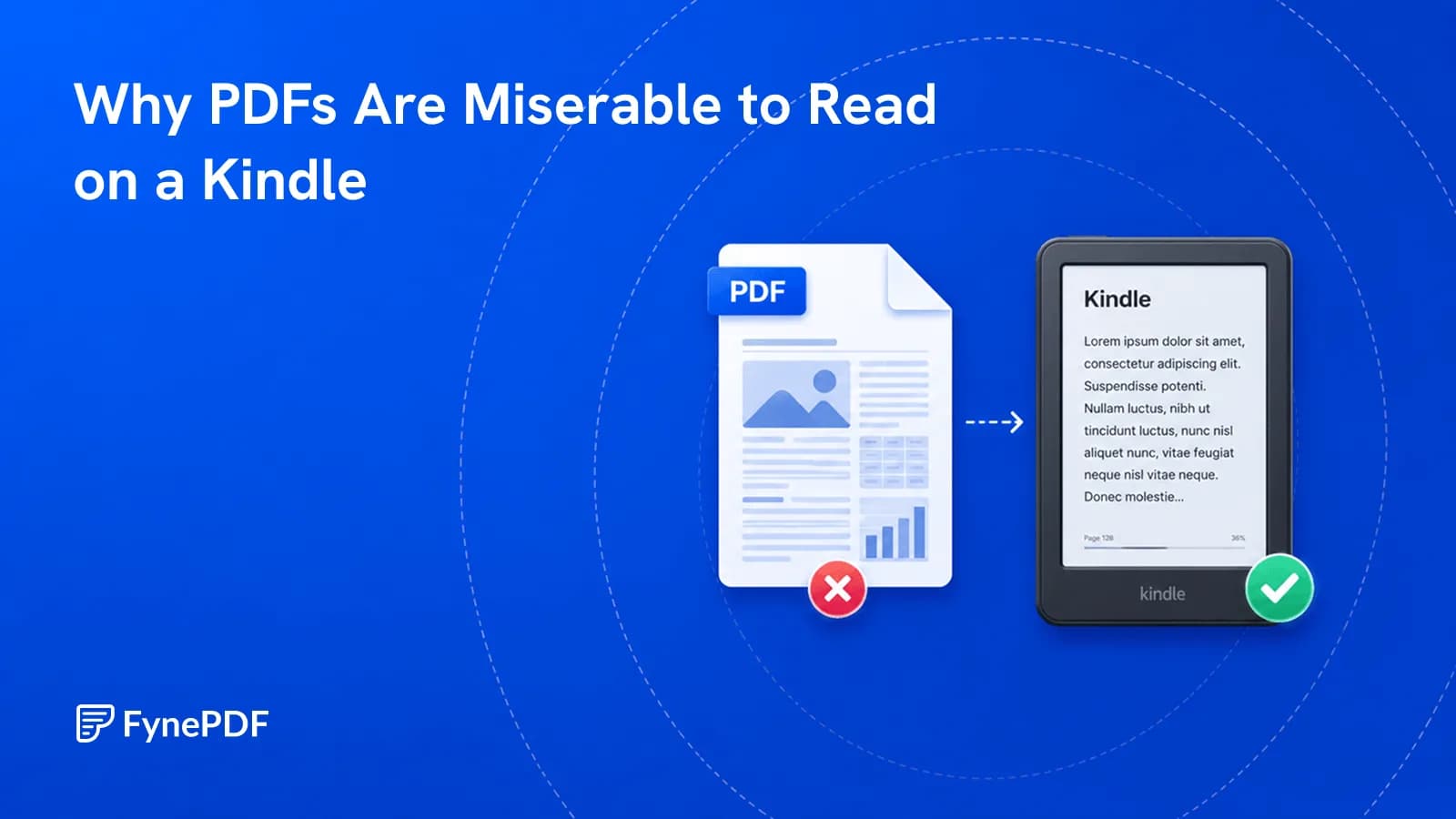
PDFs have fixed pages. E-readers want text that reflows to the screen.
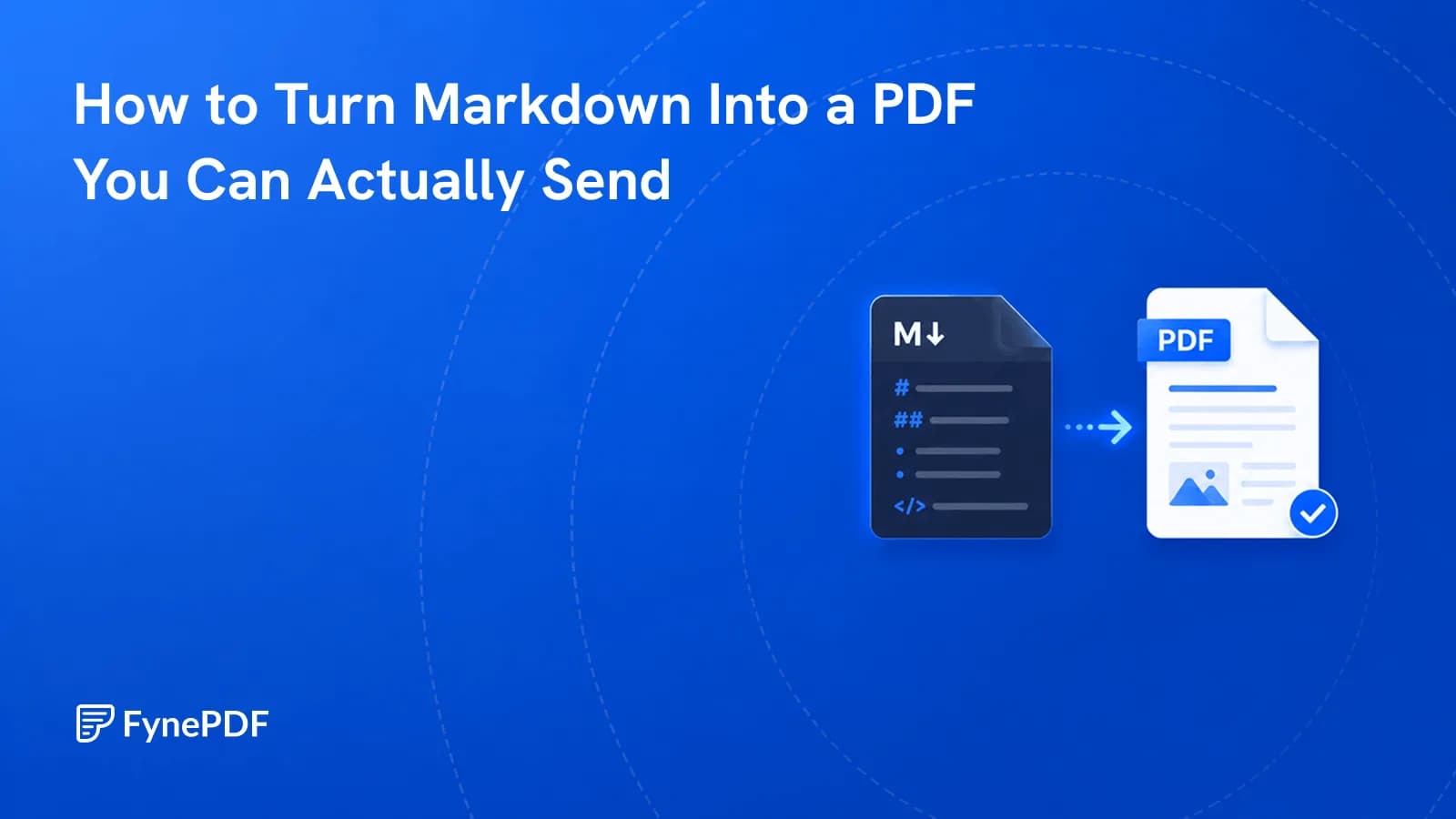
It renders beautifully on GitHub and reads as plain text everywhere else. Convert it.