


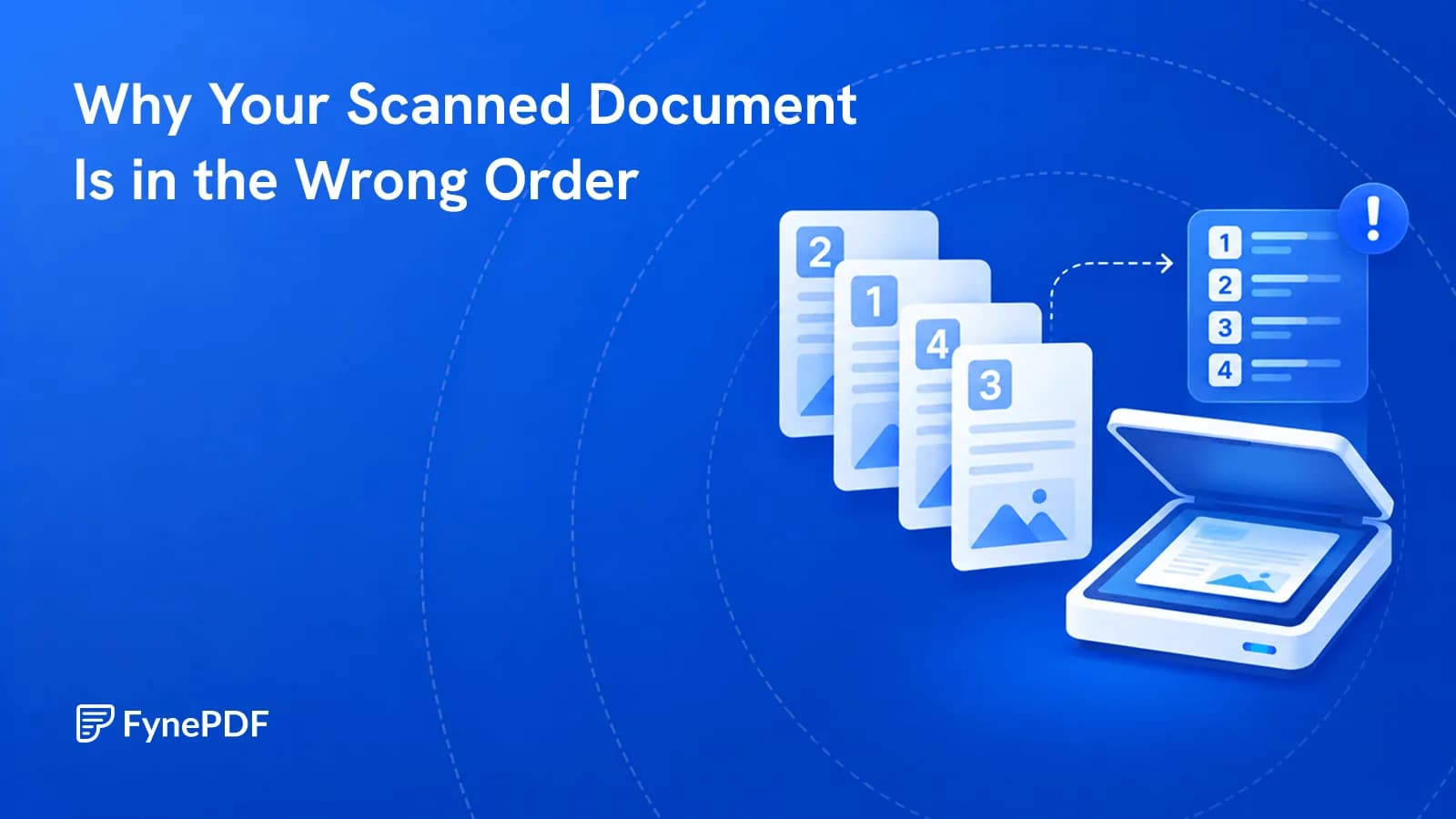
Why Your Scanned Document Is in the Wrong Order
Double-sided scanning gives you all the odd pages, then all the even ones. Here's the fix.

28 July 2026
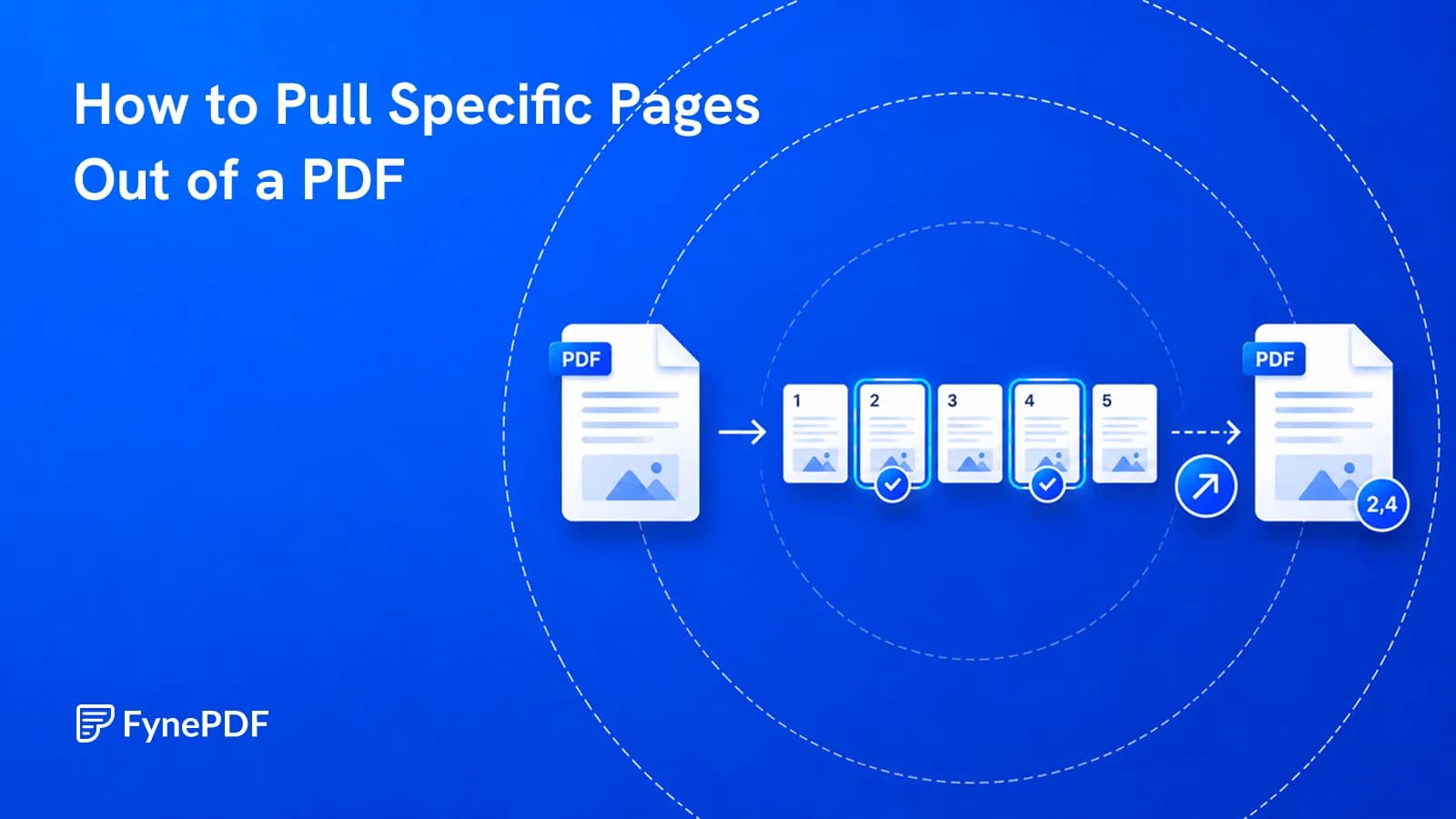
They asked for one appendix, not the 300-page report. Here's how to send just that.
To pull specific pages out of a PDF, upload the file, select the pages you want, and download them as a new document. The original is unchanged. This is the right approach when someone needs a section rather than the whole thing, an appendix, a signature page, one month of statements.
It's also the cheapest way to keep a file under a size limit, since you're removing everything that isn't needed.
Three reasons, in order of how often they bite.
Attention. Sending 300 pages when three are relevant means the recipient has to find them, and some won't bother. Extracting the section is the difference between a question answered and a document ignored.
Size. Portals are strict. USCIS accepts 6MB per document, applicant tracking systems commonly cap at 5MB. Extracting the pages that matter is often more effective than compressing everything.
Disclosure. A full report may contain internal notes, pricing, or other parties' details that this recipient shouldn't see. Extracting only the relevant pages avoids sending information you'd then have to explain.
Free accounts handle files up to 600MB. Your original stays intact, so getting the selection wrong costs nothing.
These three overlap and people reach for the wrong one constantly:
| Goal | Tool |
|---|---|
| Keep a few pages, discard the rest | Extract Pages |
| Divide the whole document into sections | Split PDF |
| Remove a few pages, keep the rest | Delete Pages |
| Change the order | Organize Pages |
The rule of thumb: if you're keeping less than half, extract. If you're removing less than half, delete. Selecting five pages to keep is far less error-prone than selecting ninety-five to remove.
Obvious in a short document, tedious in a long one. If the PDF has real text, search it. Ctrl+F for the section heading or a distinctive phrase gives you the page number directly.
If searching finds nothing, the document is a scan and contains images rather than text. Run OCR first to make it searchable, which is worth doing anyway if you'll be working with it further.
For documents where you're not sure what's where, Chat with Doc can tell you which pages cover a topic. Ask for page references and verify them before extracting.
Two things, quickly:
Context. A page extracted from the middle of a document may reference something on the page before it. Read the first and last extracted pages to confirm they stand alone, and include the preceding page if a definition or table header lives there.
Page numbers. Extracted pages keep their printed numbering, so a document of pages 47–52 starts at 47. That's usually fine and sometimes confusing, Add Page Numbers will renumber from one if the extract should read as a standalone document.
Yes. Selecting pages 3, 17, and 40 produces one file containing those three in that order. Useful for pulling every signature page out of a long agreement.
Proportionally, yes, and often dramatically so if you've dropped image-heavy sections. If it's still too large, Compress PDF will reduce it further.
Remove the protection first with Unlock PDF using your password, extract, then reapply protection with Protect PDF if needed.
No. It removes whole pages. Sensitive content within a page you're keeping needs Redact PDF, which deletes the text rather than hiding it.
Files transfer over encrypted connections and are permanently deleted within 15 minutes of processing unless you save them to your library.
Open Extract Pages, select your pages, and read the first and last one to check they stand alone.
Try it yourself
Double-sided scanning gives you all the odd pages, then all the even ones. Here's the fix.
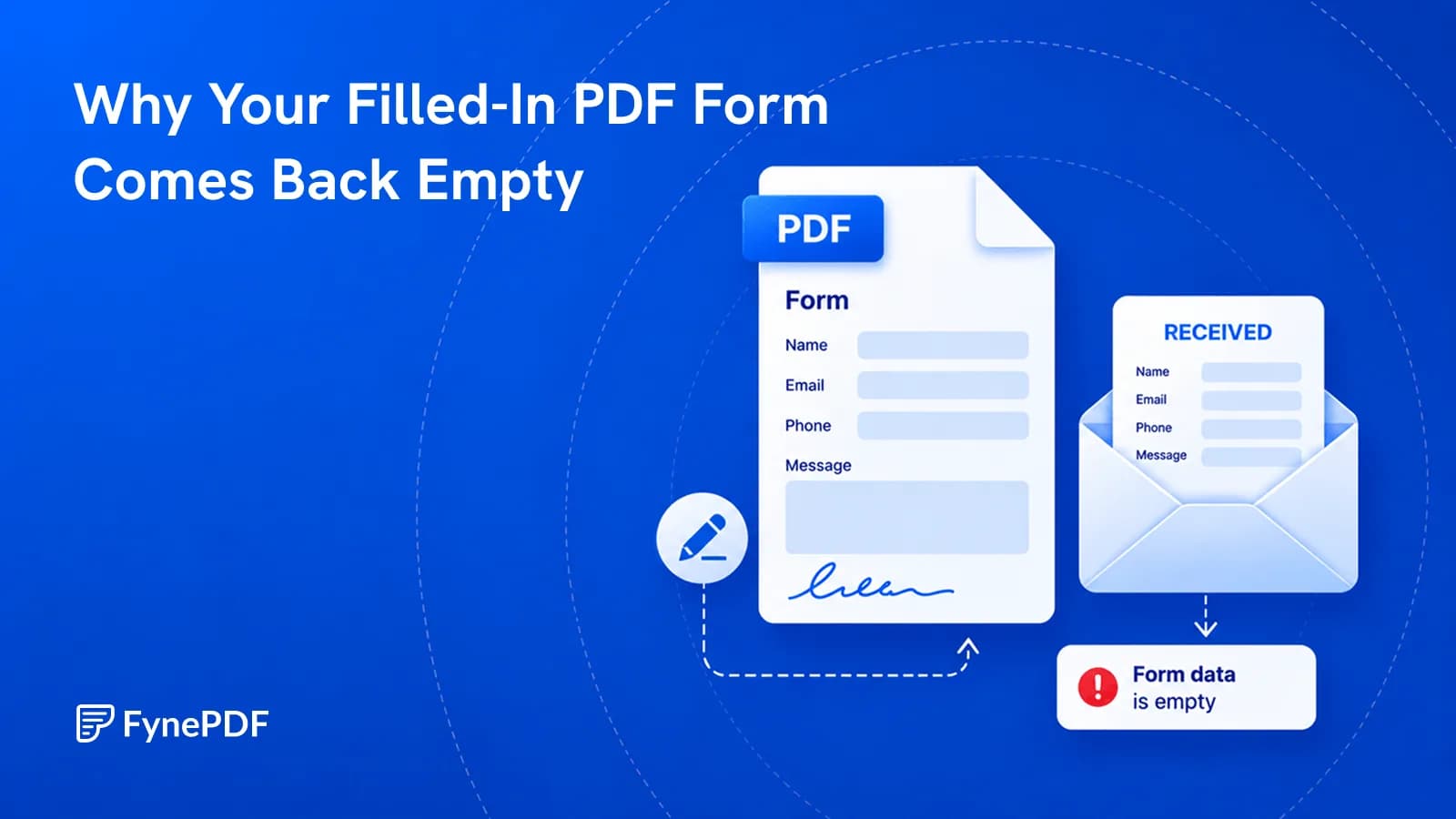
You typed everything in and they see blank boxes. Here's what actually went wrong.

It usually means the file arrived incomplete, not that the contents are gone.