


Why Won't My PDF Open?
From incomplete downloads to outdated viewers, most PDFs that refuse to open fall into a handful of fixable categories.

28 July 2026

It usually means the file arrived incomplete, not that the contents are gone.
A "file is damaged" error usually means the PDF's internal index is broken or the file arrived incomplete, not that the content is destroyed. PDFs keep a table pointing to where each page lives, and if that table is corrupted the reader can't navigate the file even though the pages are still there.
Repair works by rebuilding that index from what remains, which is why it succeeds more often than the error message suggests.
Almost always something interrupted, rather than something inherently wrong with the document:
The pattern is a write or transfer that didn't complete. Genuinely malformed PDFs. Files created badly in the first place. Exist but are far less common than truncated ones.
It depends on which part is broken, and it's worth setting expectations honestly:
| Problem | Outlook |
|---|---|
| Corrupted index, content intact | Usually recoverable in full |
| Broken structure with pages present | Often recoverable |
| Truncated file, first 80% present | Partial, you get what arrived |
| Truncated file, first 5% present | Little to recover |
| File that's actually a different format | Not a repair problem |
| Encrypted file with no password | Not recoverable |
The important distinction is between corrupted and incomplete. A corrupted index over intact content is the good case. A file that stopped downloading at 200KB of an expected 4MB simply doesn't contain the rest, and no tool can reconstruct data that was never received.
Free accounts handle files up to 600MB. Checking all pages matters. Partial recoveries often produce a file that opens cleanly and is missing content halfway through.
Before repairing, rule out the simple explanations. Two minutes here saves effort:
Re-download it. If the file came from a website or email, fetching it again solves interrupted transfers outright. This works more often than anything else.
Check the file size. A PDF of a few kilobytes when you expected several megabytes is a failed download, not a corrupted document.
Try a different reader. Some readers are stricter than others about structural problems. A file one application refuses may open fine elsewhere.
Check it's really a PDF. Files occasionally get saved with the wrong extension. If it was renamed from another format, changing the extension back may be all that's needed.
Salvage what you can, then work out what's missing. Open the recovered file, note where content stops or becomes garbled, and remove the unusable pages with Delete Pages.
If you can obtain the missing section separately, a re-sent copy, a rescan, an original source file. Combine them with Merge PDF to reconstruct the whole document.
For scanned originals where only some pages survived, rescanning the missing sheets is usually faster than trying repeated recoveries on the same broken file.
The goal is to restore the file as it was, not alter it. Pages, text, and images are preserved where recoverable. Compare against a known-good copy if you have one.
Often not. Blank pages usually mean the file is a scan whose images failed to embed, or a form whose content is in a layer your viewer isn't rendering. Try a different reader before assuming corruption.
The password is needed first. Encryption and corruption are separate issues, and an encrypted file can't be examined until it's opened.
Files transfer over encrypted connections and are permanently deleted within 15 minutes of processing unless you save them to your library.
Re-download the file first. If it's still broken, upload it to Repair PDF and check every page of the result.
Try it yourself
From incomplete downloads to outdated viewers, most PDFs that refuse to open fall into a handful of fixable categories.
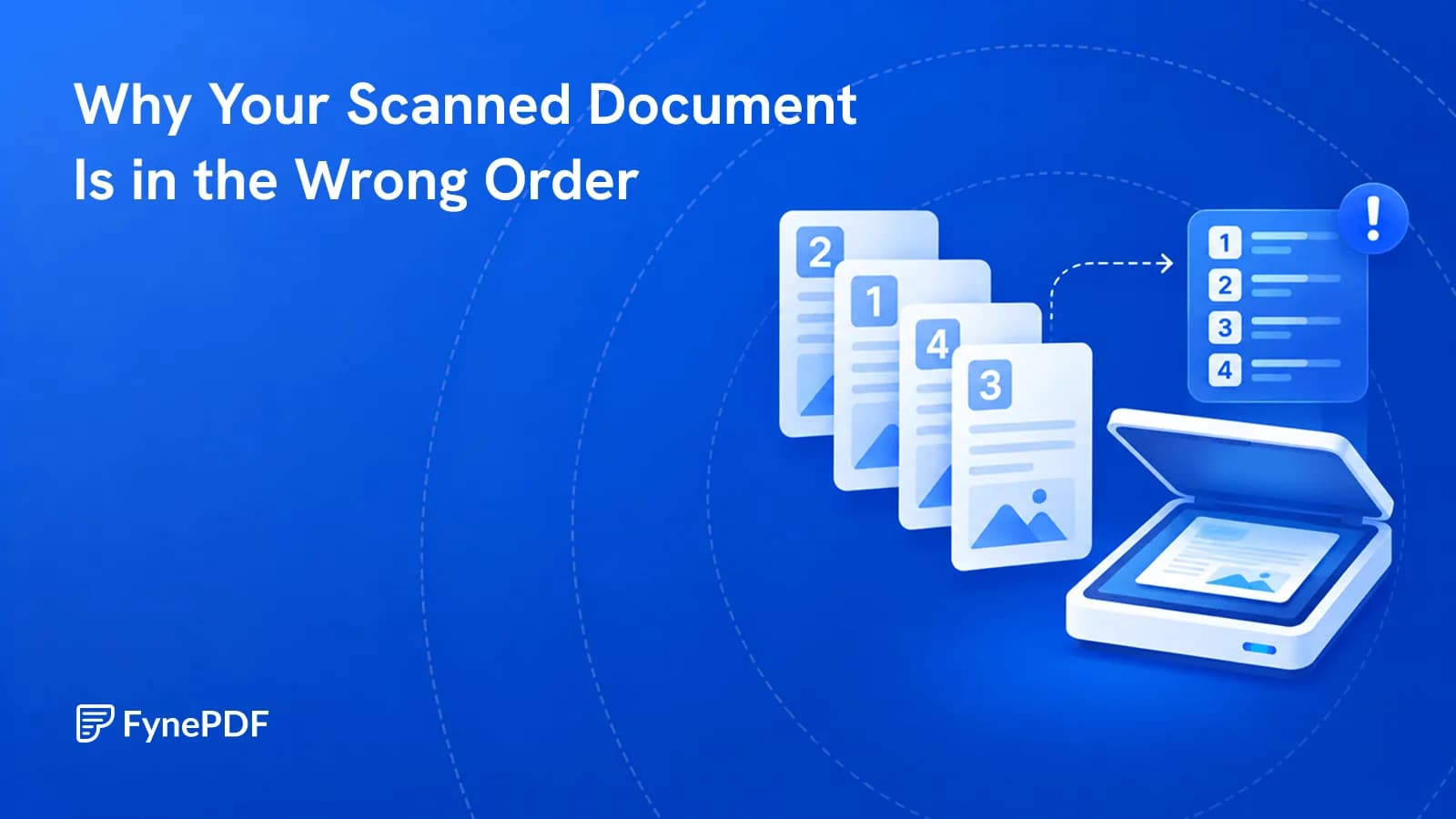
Double-sided scanning gives you all the odd pages, then all the even ones. Here's the fix.
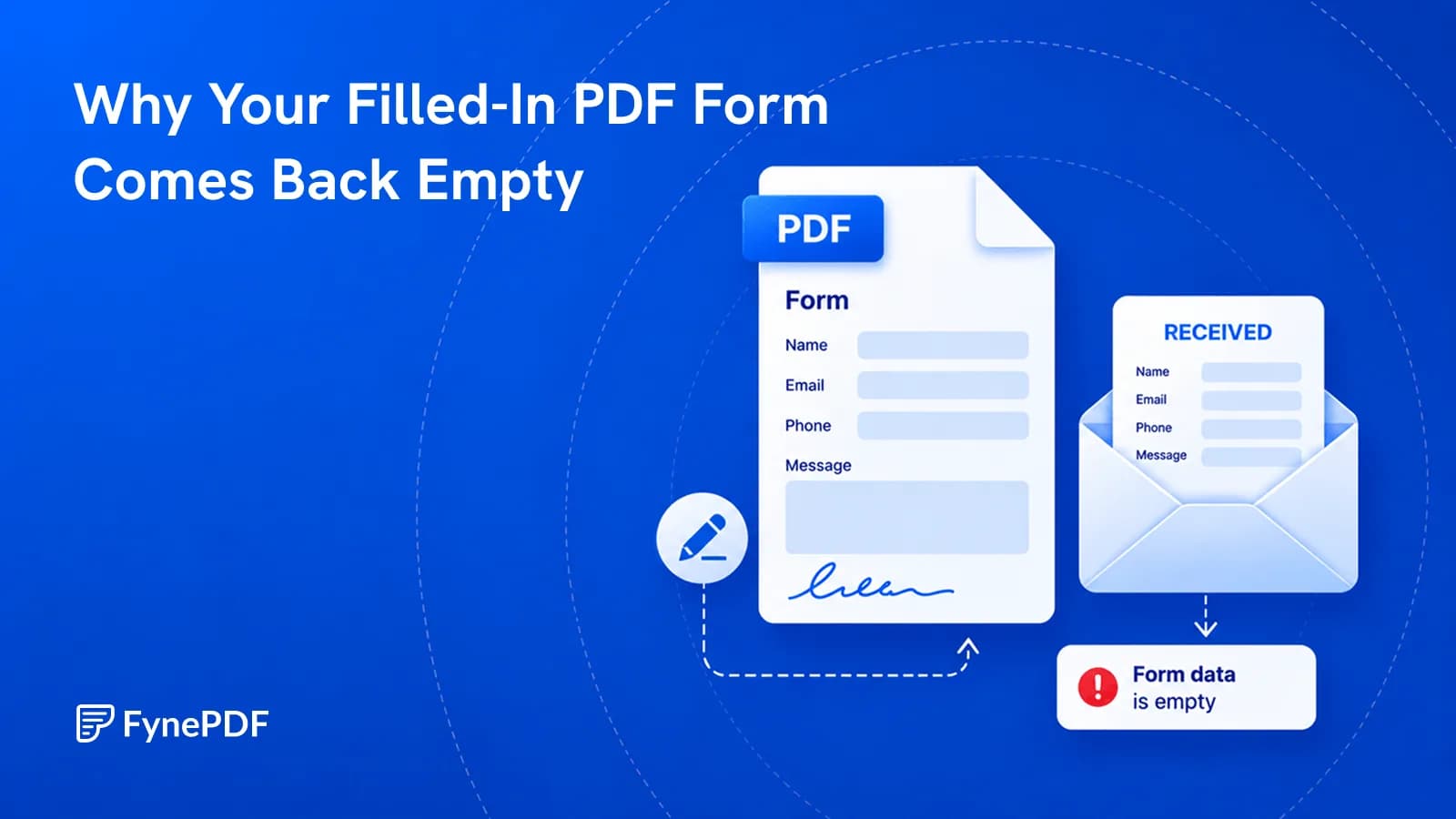
You typed everything in and they see blank boxes. Here's what actually went wrong.