


Why Your Word Document Looks Different on Someone Else's Screen
Your 12-page report opened as 14 on their machine. Here's why, and how to stop it.

28 July 2026
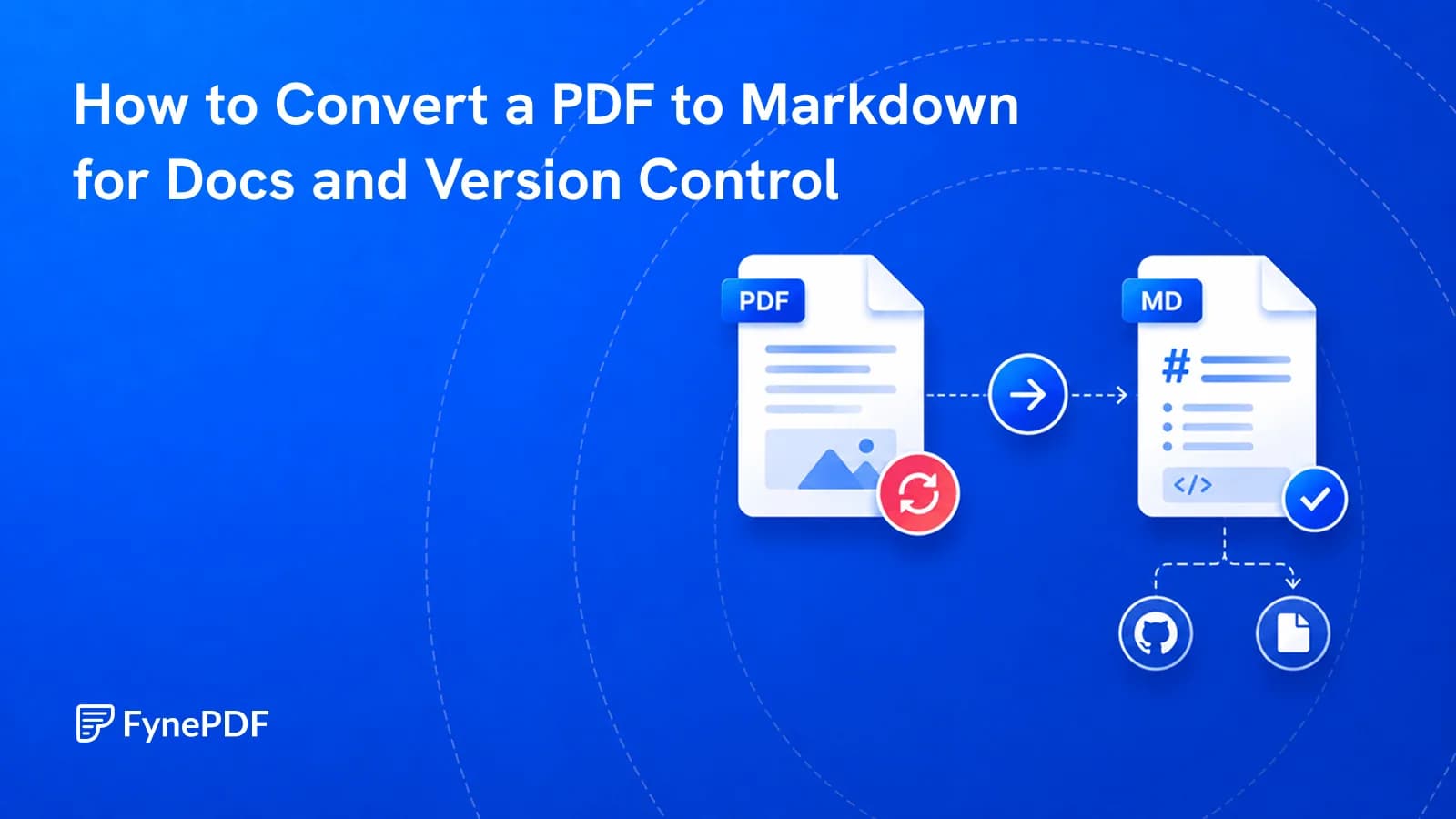
PDFs can't be diffed or edited in a docs pipeline. Markdown makes the content workable.
Converting a PDF to Markdown extracts its text and reconstructs the structure as headings, lists, and tables in plain text. This makes the content editable, diffable, and usable in documentation pipelines. None of which is possible while it stays a PDF.
The conversion infers structure rather than reading it, which is worth understanding before you rely on the output.
Because PDFs are a delivery format, not a working one. Once content is in a PDF it can't be meaningfully version-controlled, a diff between two PDFs tells you the binary changed, not which sentence did. It can't be edited without a round trip through another format. It can't be fed into a documentation site, a static site generator, or a content pipeline.
Markdown solves all of that. It's plain text, so Git diffs it line by line. Every documentation platform accepts it. It's editable in anything.
Common triggers:
.md file.Free accounts handle files up to 100MB.
Structure, because a PDF doesn't record it. A PDF knows that a line of text is 18pt bold at a particular position. It does not know that this makes it a level-two heading. Conversion infers heading levels from size and weight, list structure from indentation and bullet characters, and table layout from alignment.
That inference is usually right and occasionally isn't:
| Element | Reliability |
|---|---|
| Body paragraphs | High |
| Headings | Good, levels sometimes need adjusting |
| Bulleted and numbered lists | Good |
| Simple tables | Reasonable |
| Complex or merged-cell tables | Needs manual repair |
| Multi-column layouts | Text can interleave |
| Footnotes | Often land inline mid-paragraph |
| Headers and footers | Frequently captured as body text |
Multi-column layouts are the worst case, for the same reason they break resume parsers. Content is read in the order it was written into the file, not the order your eye follows.
Budget a few minutes per document. The recurring items:
# to ###A find-and-replace pass usually clears the page furniture in one go, since it repeats identically throughout.
You'll get an empty or nearly empty file, because there's no text to extract. Run OCR first to add a text layer, then convert.
Proofread scanned conversions properly. Recognition errors become plain text that reads as ordinary typos, and once they're committed to a repository they propagate into everything downstream.
If the tables are the reason you're converting, PDF to Excel will handle them better. It's built for grid reconstruction, whereas Markdown table syntax struggles with merged cells and nested headers.
A reasonable pattern for mixed documents: convert the prose to Markdown, convert the tables to a spreadsheet, and reference or embed the data separately.
Text conversion focuses on text. To pull graphics out of the same document, Extract Graphics retrieves embedded images as separate files, which you can then reference from the Markdown.
Markdown to PDF renders it back into a formatted document. Neither direction is lossless, so decide which version is your source of truth and keep the other as output.
For text-led documents, generally yes. Markdown is a clean input format. Verify tables and figures separately, since those are exactly where inference errors concentrate, and errors in numbers don't announce themselves.
Files transfer over encrypted connections and are permanently deleted within 15 minutes of processing unless you save them to your library.
Upload it to PDF to Markdown, then check the heading hierarchy before it goes anywhere near a repository.
Try it yourself
Your 12-page report opened as 14 on their machine. Here's why, and how to stop it.
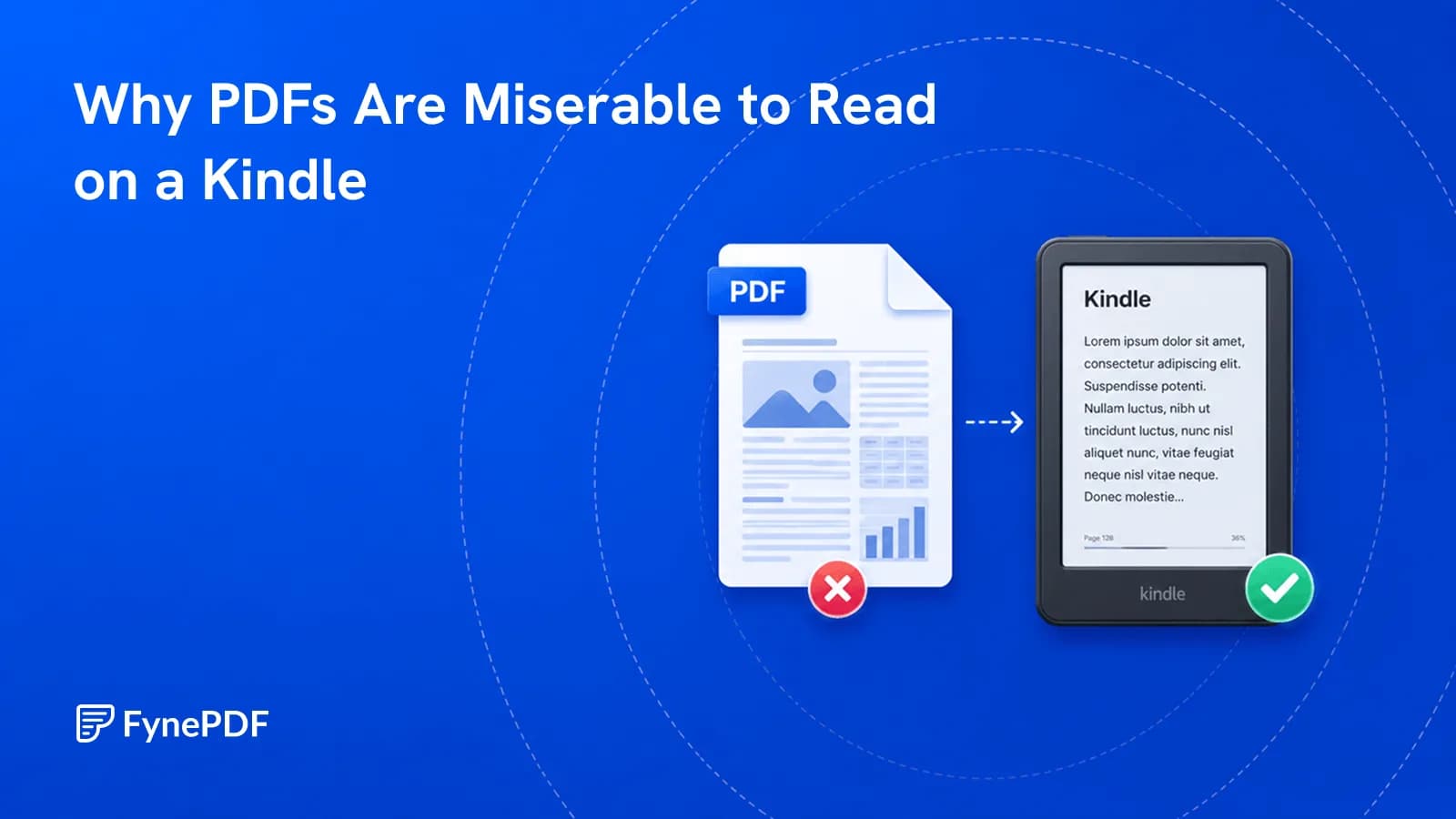
PDFs have fixed pages. E-readers want text that reflows to the screen.
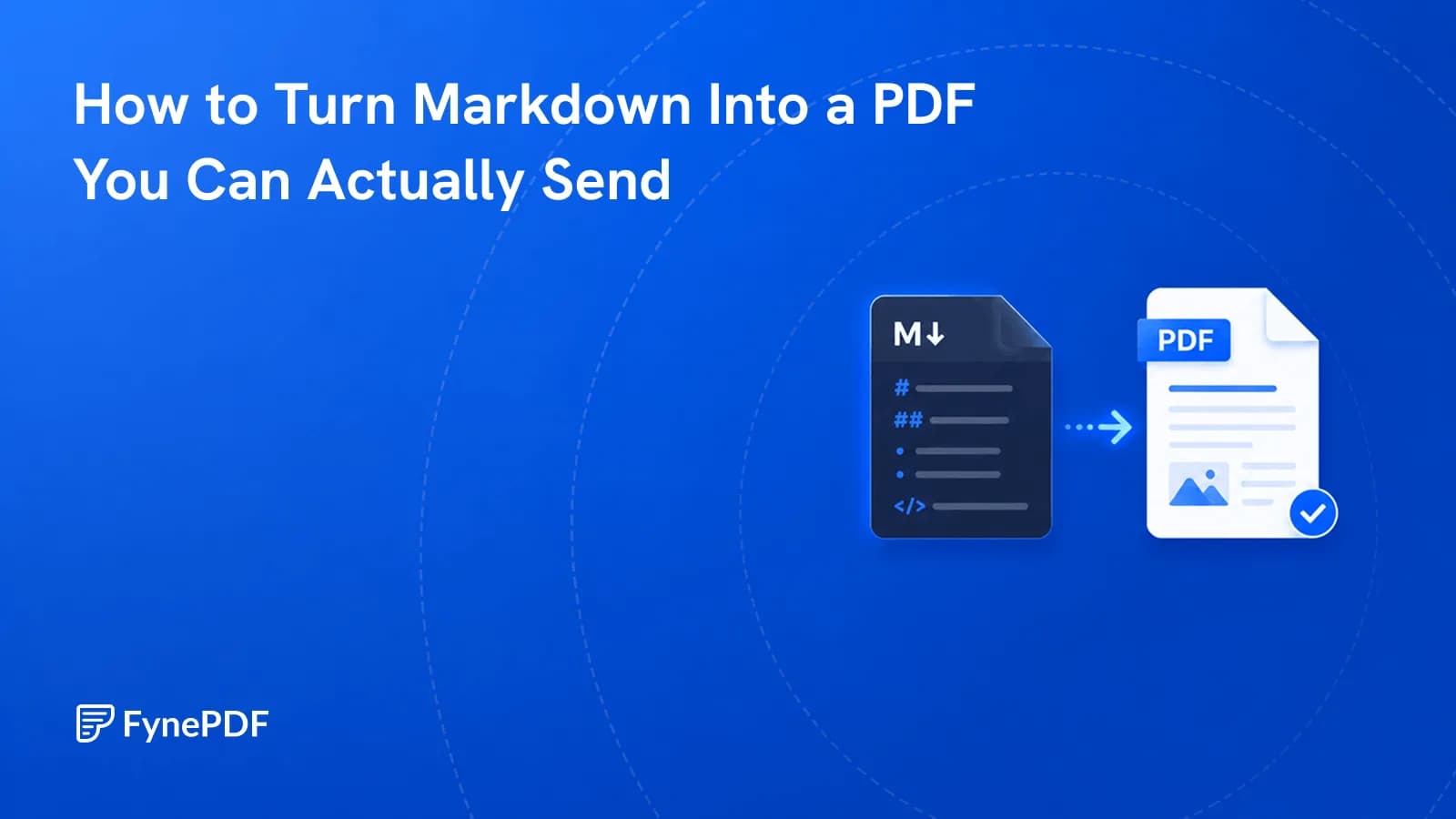
It renders beautifully on GitHub and reads as plain text everywhere else. Convert it.