


Why Won't My PDF Open?
From incomplete downloads to outdated viewers, most PDFs that refuse to open fall into a handful of fixable categories.

28 July 2026
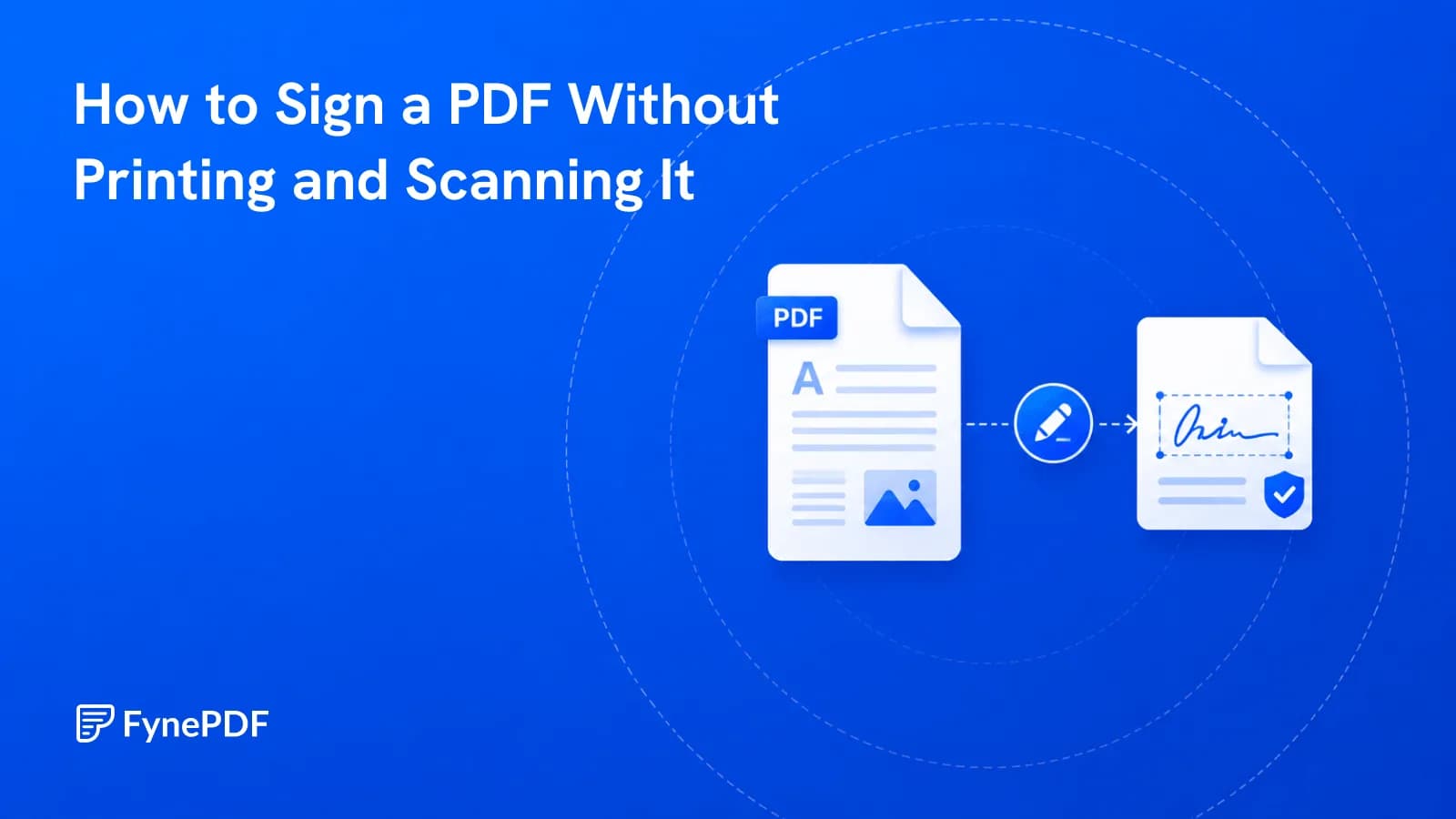
Print, sign, scan, email is four steps and a worse file. Sign it directly instead.
To sign a PDF without printing it, upload the document, place a signature where it's needed, and download the signed file. The document keeps its original text, stays searchable, and stays small. None of which survives the print-sign-scan cycle.
That cycle is worth examining, because most people run it out of habit rather than necessity.
You start with a clean digital document containing real text. You print it, sign it, and scan it back, and now you have photographs of pages. The text layer is gone, so nobody can search it, copy from it, or process it further. The file is also much larger, often by a factor of ten or more, because scanned images carry far more data than the text they depict.
A twelve-page agreement that arrived as a 200KB PDF commonly returns as a 15MB scan that struggles against email limits. You've spent four steps to produce a worse file.
Signing directly skips all of it.
This runs in your browser, the document is processed on your own device rather than uploaded to a server. For signed agreements, that's the assurance worth knowing.
Sounds obvious, and it's the most common cause of a document coming back. Before downloading, check:
Scroll the whole document once after signing. A missing initial on page 4 means the entire round trip repeats.
Usually yes, and this is the step people skip. A signature placed as an annotation is a separate layer that some readers let you move or delete. Flattening merges it into the page so it behaves as part of the document.
Run Flatten PDF after signing if the document is going anywhere consequential. It also collapses form field values into the visible page, which prevents the awkward situation where a recipient opens the file and finds the fields still editable.
If the PDF has proper interactive fields, fill them before signing, the signature is the last step, and flattening afterwards locks everything at once.
If the form is flat, with printed lines rather than clickable boxes, Annotate PDF lets you place text anywhere on the page. Both of those tools also run locally in your browser.
| Document type | Approach |
|---|---|
| Interactive form with fields | Fill fields, sign, flatten |
| Flat form with printed lines | Annotate text, sign, flatten |
| Signature only, no fields | Sign, flatten |
| Scanned form | OCR first if you need searchable text |
Electronic signatures are widely recognised across jurisdictions, but the specifics vary by country and by document type. Property transfers, wills, and some regulated instruments carry additional requirements almost everywhere. This isn't legal advice, and for anything consequential the sensible step is confirming with a qualified professional in your jurisdiction what form of signature that particular document requires.
What is generally true: for routine business documents, a placed electronic signature is standard practice and is what most counterparties expect.
Signature appearance doesn't determine validity, and minor variation between documents is normal. It's true of handwritten signatures too. Consistency matters more for recognisability than for enforceability.
Remove the protection first with Unlock PDF using your password, sign the document, then reapply protection with Protect PDF if the recipient needs it.
The document has printed signature lines rather than interactive fields. Very common with forms originally designed for paper. Use Annotate PDF to place your signature anywhere on the page instead.
Signing directly keeps it small by definition, since you're not adding scanned images. If the original was already oversized, Compress PDF will reduce it before you send.
Open the Sign PDF tool, place your signature, and scroll the whole document before downloading. Every block, every date field.
Try it yourself
From incomplete downloads to outdated viewers, most PDFs that refuse to open fall into a handful of fixable categories.
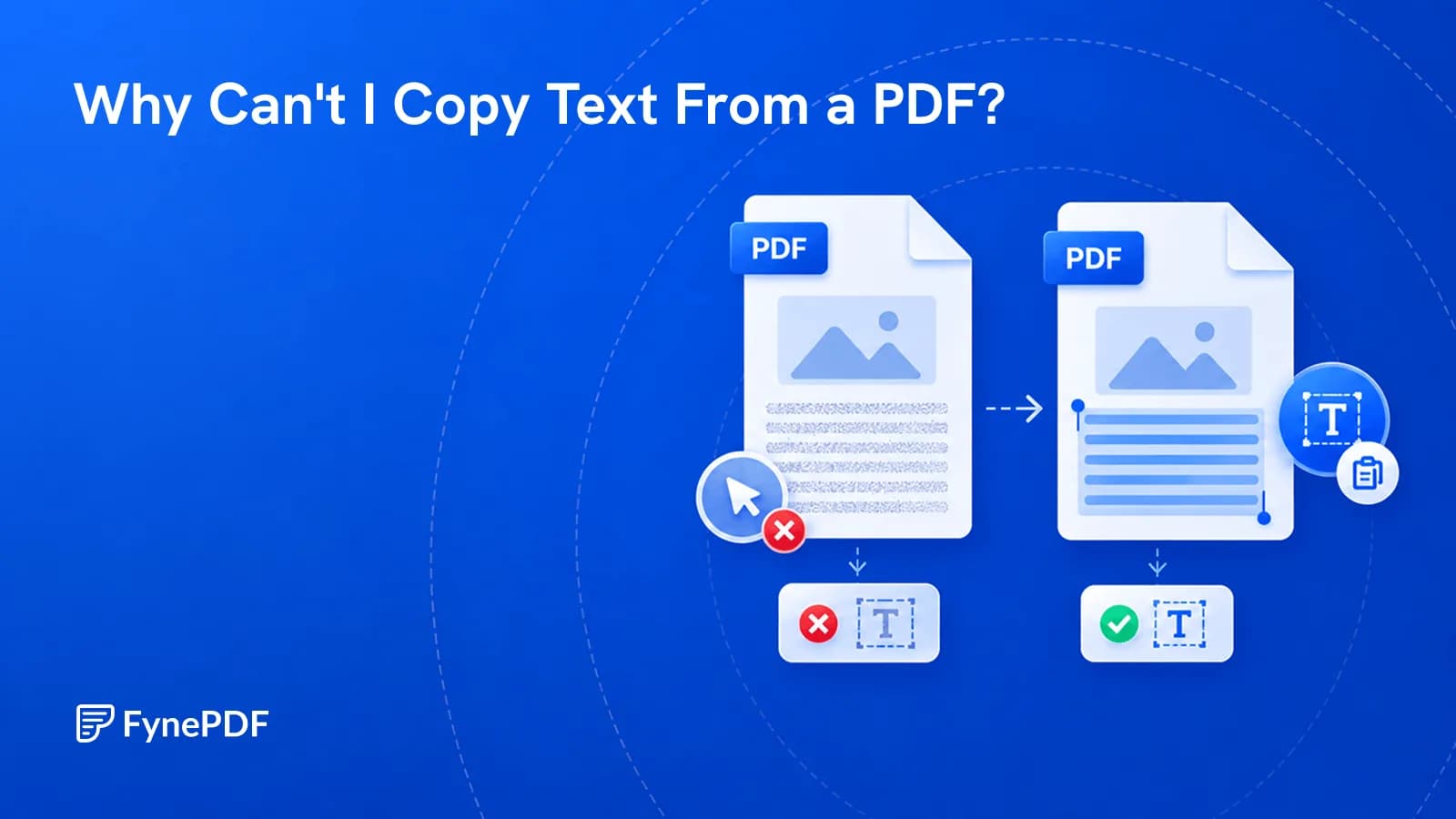
Scanned pages, copy restrictions, and bad encoding all block copying. Here's how to tell which one you have and make the text selectable.

PDFs can carry malicious links, scripts, and attachments. Here's how to spot a suspicious PDF before you open it.