


How to Send a Deck as a PDF Instead of a 60MB PowerPoint
The deck bounced off their mail server and the fonts were wrong anyway. Send a PDF.

28 July 2026
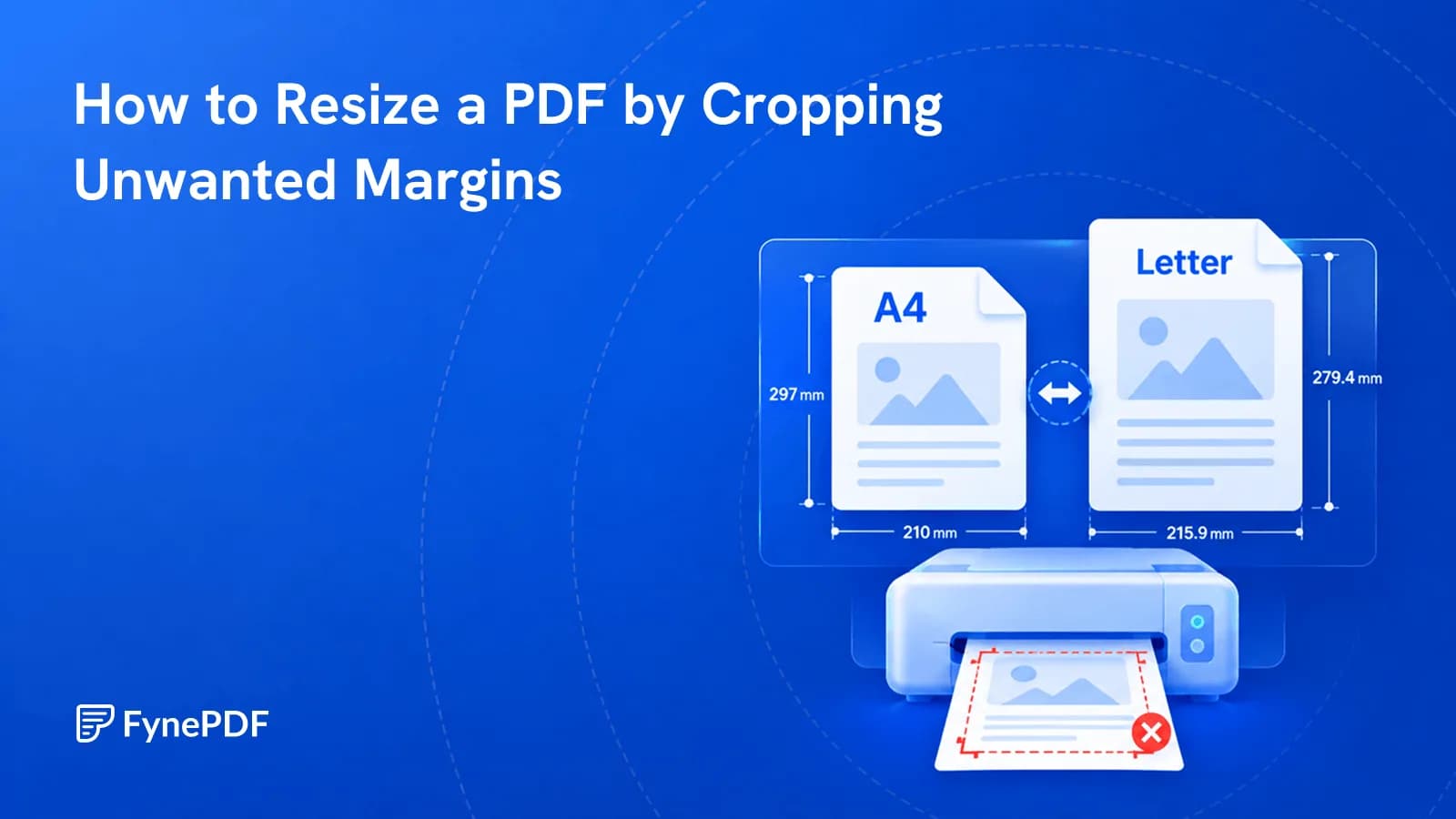
Cropping removes unnecessary margins so your PDF fits the page better when printing or sharing.
Documents don't always print the way you expect. A PDF created for one paper size may leave large white borders, place content too close to the edges, or simply waste space when printed on another printer.
While changing the page size is one solution, many documents only need their unnecessary margins removed. Cropping a PDF trims those outer areas without changing the text, images, or layout inside the remaining page.
Cropping is useful whenever the document contains more whitespace than necessary or when you only want to keep the important part of each page.
Common situations include:
Unlike resizing, cropping doesn't scale your content. It simply removes the areas you don't want.
Free accounts support files up to 600MB.
After cropping, quickly review the first few and last few pages to make sure important headers, footers, and page numbers are still visible.
Often, yes.
Many PDFs appear too small on paper because they contain unusually large margins. Removing those margins allows the important content to occupy more of the printable area.
Cropping can also improve the appearance of scanned documents by removing black scanner borders, uneven edges, and unnecessary whitespace.
However, cropping does not change the actual paper size of the PDF. If the original document was designed for A4 or Letter paper, it remains that paper size after cropping. The tool simply removes unwanted portions around the content.
Cropping permanently removes anything outside the selected area in the new PDF.
Before saving, check carefully for:
Headers and footers. Documents often place page numbers, dates, company names, or legal notices near the page edges. Cropping too aggressively can remove them.
Tables and diagrams. Wide spreadsheets, engineering drawings, and charts may extend closer to the page boundaries than regular text.
Printed forms. Government forms, contracts, and applications sometimes include alignment marks or required margins. Avoid cropping unless you're certain those areas aren't needed.
Using a preview before downloading helps catch these issues.
Cropping and resizing solve different problems.
| Situation | Better choice |
|---|---|
| Large white margins | Crop PDF |
| Scanner borders or black edges | Crop PDF |
| Remove unwanted page edges | Crop PDF |
| Focus on a section of the page | Crop PDF |
| Keep only the important content | Crop PDF |
If your goal is simply to remove unnecessary space while preserving the original appearance, cropping is usually the better option.
Sometimes, but not by a significant amount.
Cropping removes parts of each page that are outside the selected area, but it doesn't automatically recompress images or optimize the PDF. If your goal is to make the file much smaller for email or storage, use a dedicated PDF compression tool after cropping. Cropping is primarily intended to improve the document's appearance rather than reduce its storage size.
Yes.
Many documents only need a few pages adjusted. For example, a scanned cover page may have large borders while the remaining pages are already clean. Cropping only the affected pages preserves the rest of the document exactly as it is and avoids unnecessary editing.
No.
Cropping doesn't resample or redraw the contents of your PDF. It simply defines a new visible page area. Text remains sharp, vector graphics stay crisp, and images keep their original quality within the cropped region.
It's always a good idea to keep the original PDF.
The cropped file contains only the visible page area you chose to keep. If you later discover that important information near the edges was removed, having the original document allows you to crop again with different settings.
Your files are transferred over encrypted connections and are automatically deleted within 15 minutes of processing unless you choose to save them to your library.
This helps protect sensitive business documents, contracts, reports, and personal files while they're being processed.
Upload your document to Crop PDF to remove unwanted margins, scanner borders, or unnecessary page edges.
Review the preview before downloading to make sure important content near the page boundaries remains visible.
Try it yourself
The deck bounced off their mail server and the fonts were wrong anyway. Send a PDF.
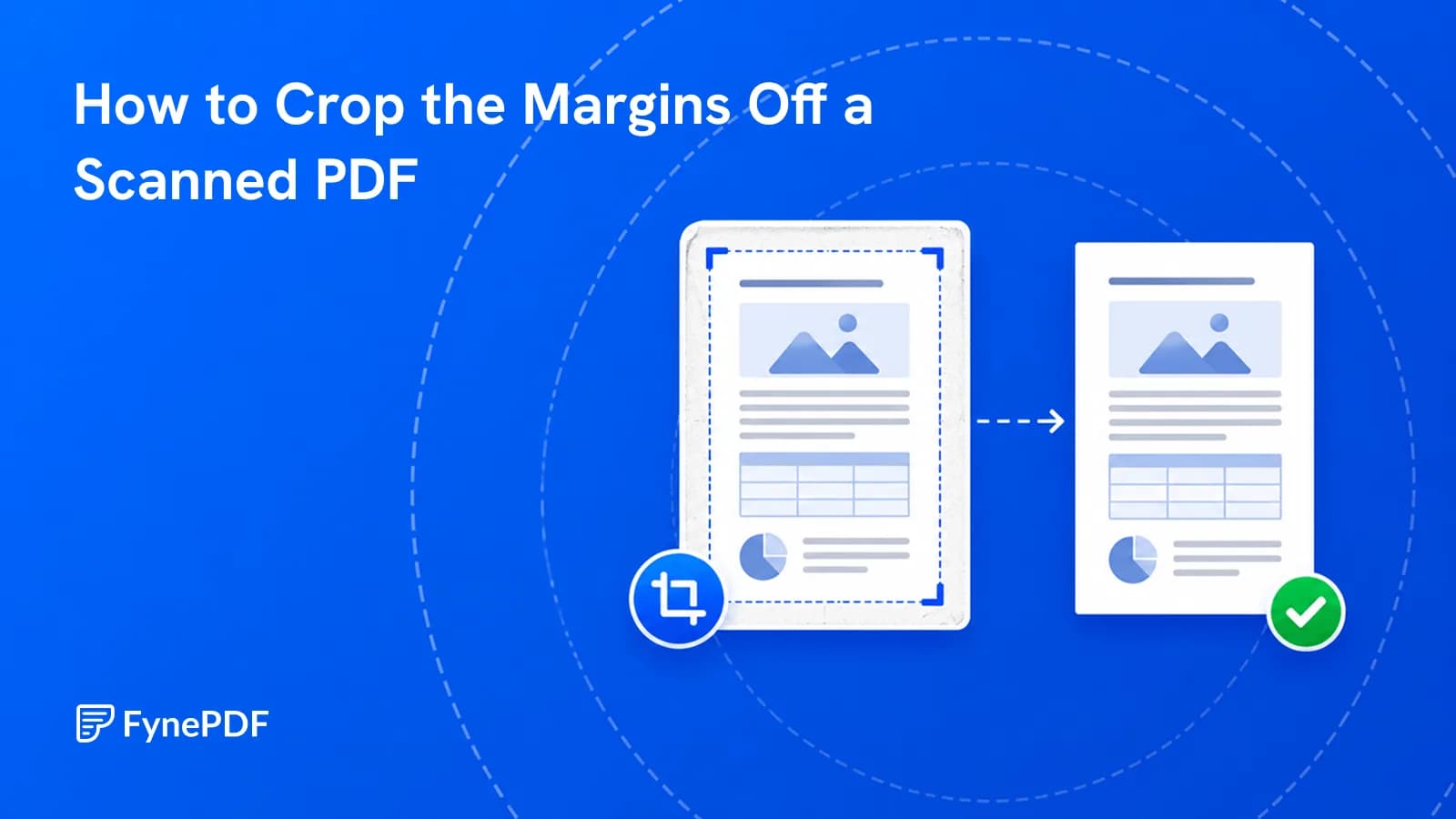
Wide scan borders waste screen space and make documents unreadable on a phone.

Your 12-page report opened as 14 on their machine. Here's why, and how to stop it.