


Why Your Word Document Looks Different on Someone Else's Screen
Your 12-page report opened as 14 on their machine. Here's why, and how to stop it.

28 July 2026
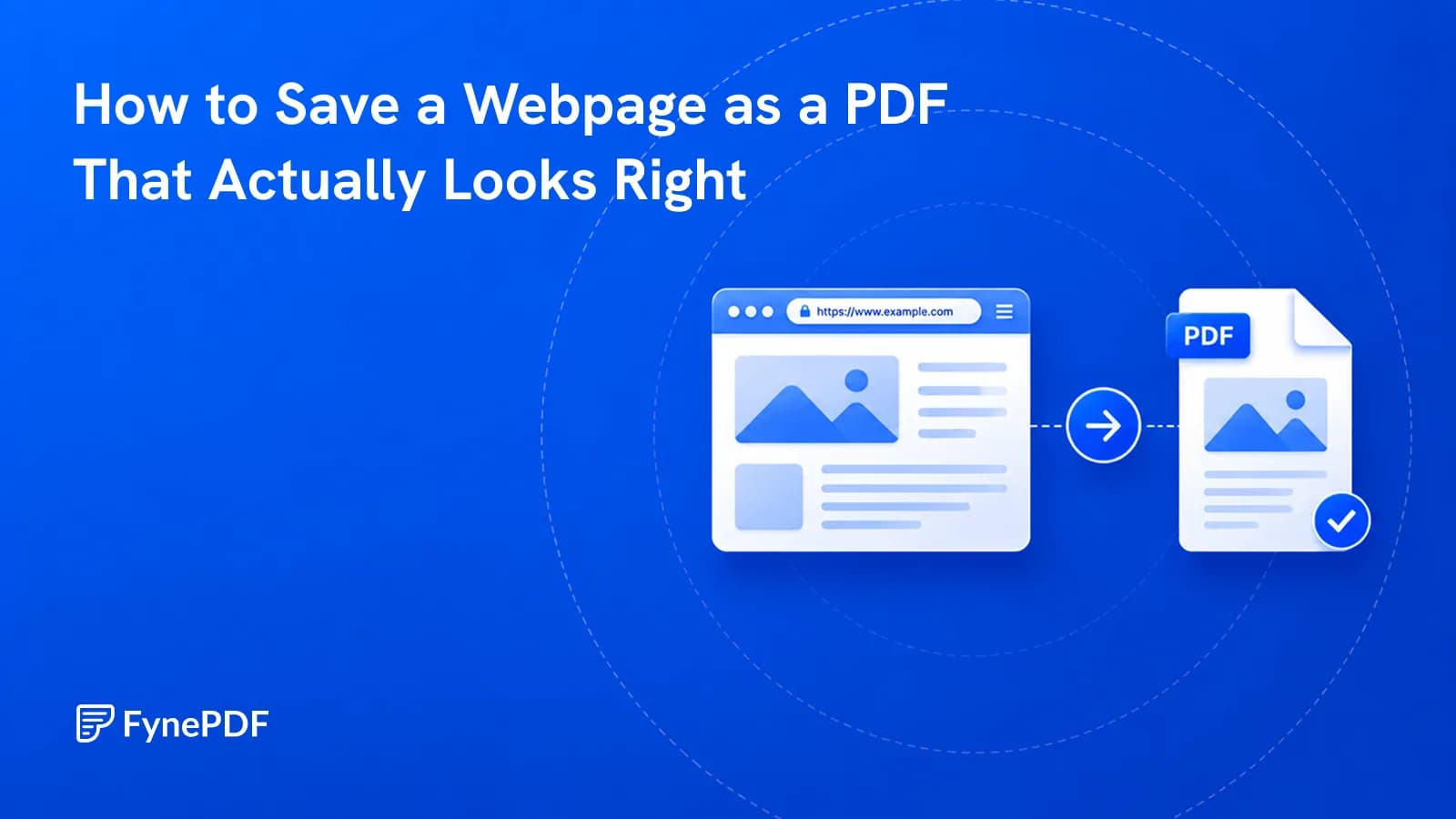
Ctrl+P captures cookie banners and misses images. Here's how to archive a page properly.
To save a webpage as a PDF, paste its URL and convert. The page is rendered in full before being paginated, so images load and layout holds. This avoids the two failures of printing from a browser: cookie banners baked into the output, and lazy-loaded images captured as blank placeholders.
Both are common enough that most people have a folder of half-broken printed pages somewhere.
Three reasons, and they compound.
Print stylesheets are usually neglected. Sites define how they should look when printed, and that CSS is written once and rarely tested again. Columns collapse, sidebars land on top of body text, and navigation appears mid-article.
Overlays get printed. Cookie consent bars, newsletter modals, sticky headers, and chat widgets are part of the page, so they're part of the printout. A banner covering the first paragraph is the classic result.
Lazy-loaded images never load. Most sites only fetch images as you scroll to them. Printing captures the page in its current state, so anything below the fold that you never scrolled past prints as an empty box.
Rendering the full page first, then paginating, sidesteps all three.
Nothing to install, no browser extension. Free accounts can convert 5 sites; paid plans remove the limit.
The common thread is permanence. Bookmarks save a pointer; PDFs save the content.
Worth knowing before you try, because these are properties of the format rather than fixable settings.
| Content | Result |
|---|---|
| Anything behind a login | Not accessible, the page is fetched as an anonymous visitor |
| Paywalled articles | Only the visible portion |
| Embedded video | A still frame |
| Interactive maps | A fixed image at whatever position loaded |
| Calculators and configurators | Captured in their default state |
| Infinite-scroll feeds | Only the content loaded at capture time |
For pages behind a login, your browser's own print-to-PDF is the fallback. It has your session, even if the output is rougher.
Yes. Text is captured as real text rather than as a picture of the page, so you can search it with Ctrl+F, select it, and copy from it. That's the main advantage over screenshotting, and it means the resulting file works with everything else. You can query it with Chat with Doc or pull content out with OCR PDF.
Screenshots give you pixels. This gives you a document.
Convert each page separately, then combine them with Merge PDF in whatever order makes sense. Useful for archiving a documentation set or a multi-part article as one file.
It paginates automatically across as many PDF pages as needed. Long-form articles and documentation handle fine. Endless feeds are the exception, since only loaded content can be captured.
Hyperlinks are preserved, so the PDF behaves more like the original page than a flat image would. External links will of course break if the target eventually disappears, which is an argument for archiving the linked pages too if they matter.
Files transfer over encrypted connections and are permanently deleted within 15 minutes of processing unless you save them to your library.
Paste the URL into URL to PDF. You'll get a searchable, permanent copy rather than a printout with a cookie banner across the top.
Try it yourself
Your 12-page report opened as 14 on their machine. Here's why, and how to stop it.
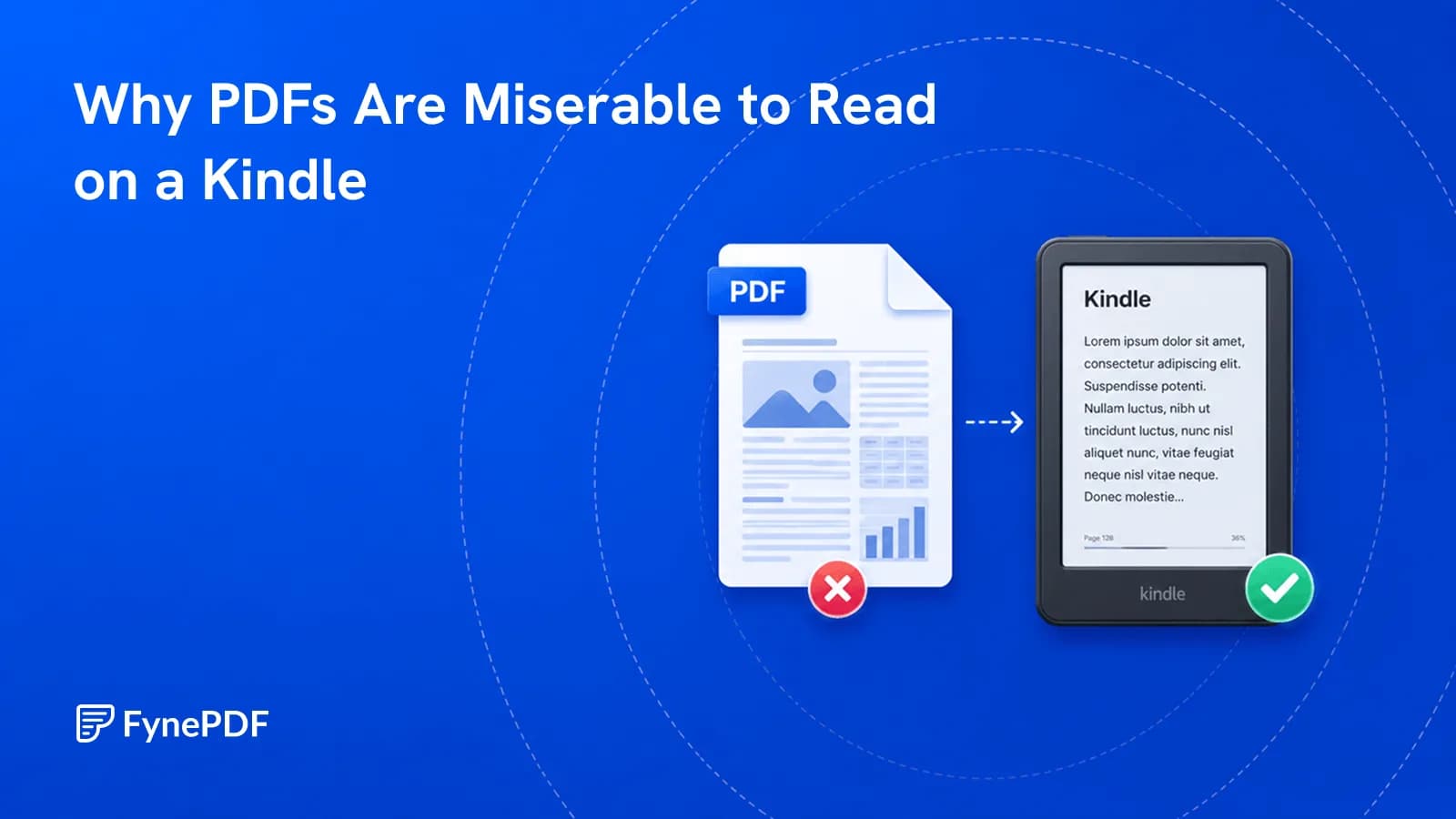
PDFs have fixed pages. E-readers want text that reflows to the screen.
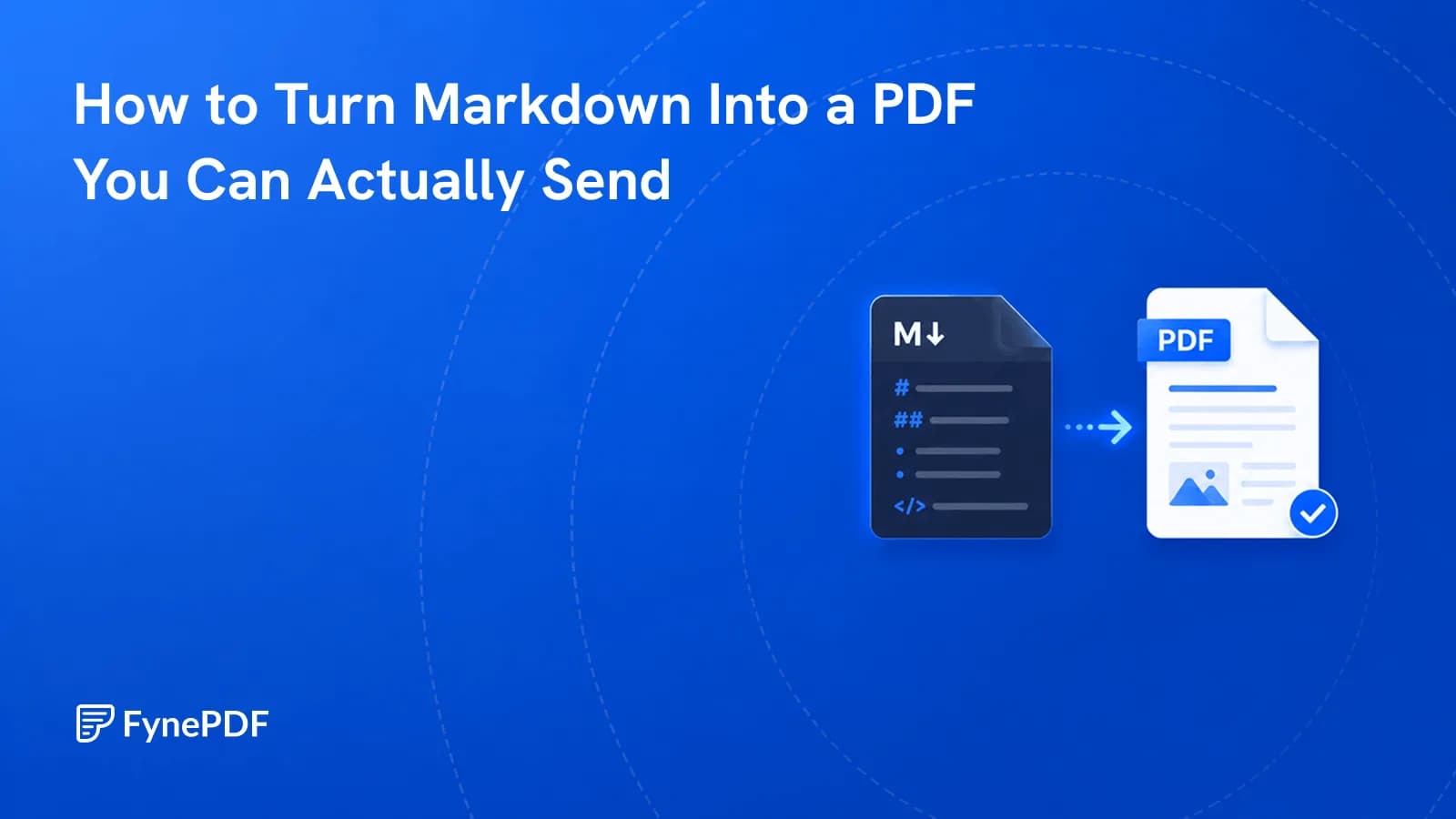
It renders beautifully on GitHub and reads as plain text everywhere else. Convert it.