


Why Your Word Document Looks Different on Someone Else's Screen
Your 12-page report opened as 14 on their machine. Here's why, and how to stop it.

28 July 2026
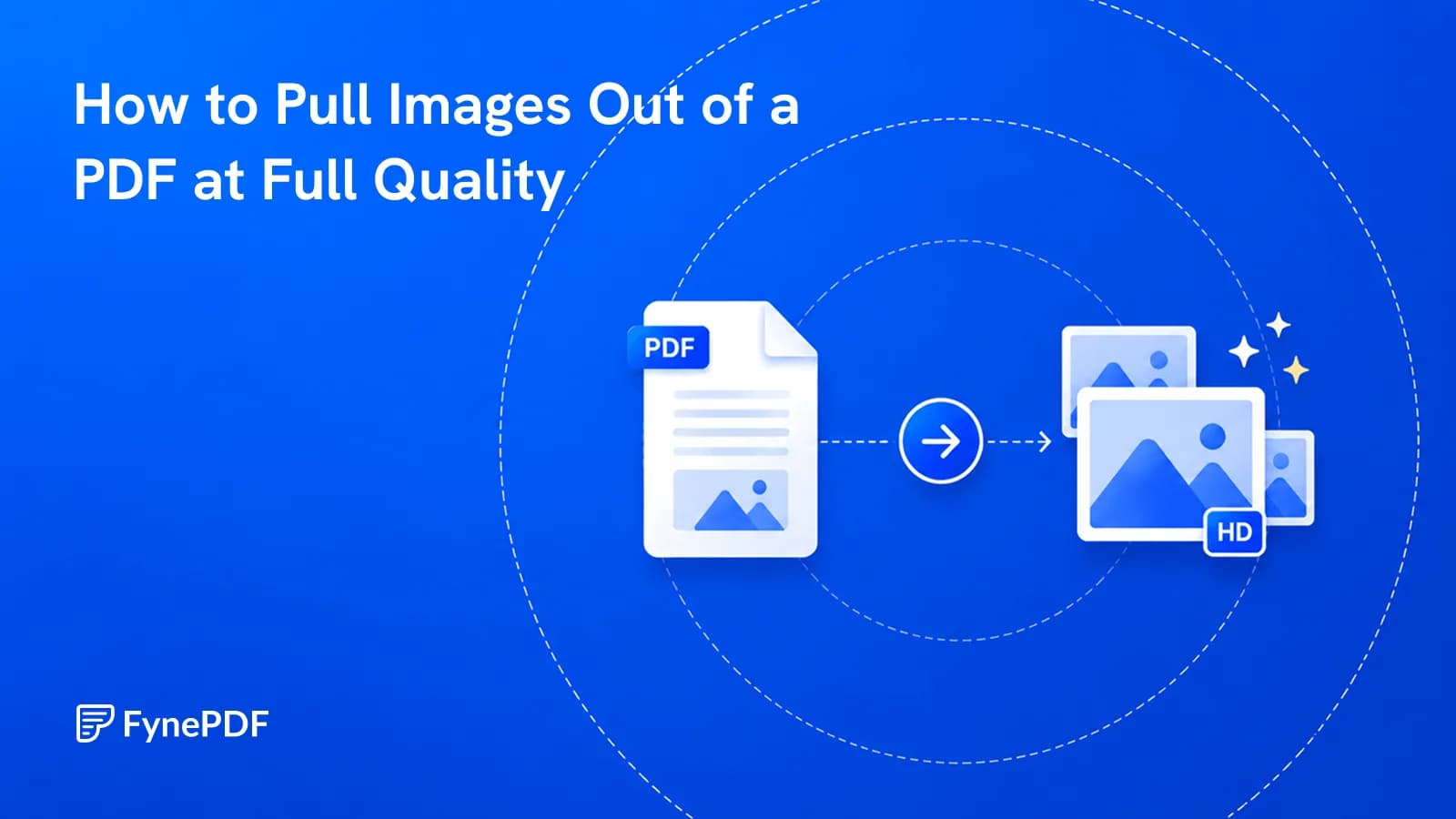
Screenshotting caps a chart at your screen resolution. Extracting gets the real thing.
To pull images out of a PDF, upload it and extract the embedded graphics as separate files. This retrieves each image at the resolution it was stored, which is usually far higher than what a screenshot captures, a screenshot is limited to whatever your monitor displays.
The difference shows the moment you try to use the image anywhere other than a screen.
Because a screenshot records pixels from your display, and your display is showing the image at whatever size it happens to appear on the page. A chart embedded at 2000 pixels wide but displayed at 600 gets captured at 600. The remaining detail is in the file and your screenshot doesn't have it.
That's fine for a quick reference and inadequate for anything else. Print the screenshot and it's visibly soft. Put it on a slide and it blurs when projected. Hand it to a designer and you'll be asked for the original.
Extraction retrieves what's actually stored, which for a print-quality report is often several times what you saw.
That last one is the recurring corporate case. A design agency delivered a PDF three years ago, the relationship ended, and the images inside it are the only remaining copies.
Free accounts handle files up to 600MB. Every embedded image comes out as a separate file, so an image-heavy brochure produces a lot of them, including background textures and decorative elements you may not want.
More files than you expect, and not always in the form you saw them:
| Element | Result |
|---|---|
| Photographs | Extracted at stored resolution |
| Raster charts | Extracted as images |
| Vector charts and diagrams | May not extract as image files |
| Logos | Usually extracted, sometimes in pieces |
| Background elements | Extracted whether you want them or not |
| Text | Not included, use OCR Tool |
Vector graphics are the notable gap. Charts generated by design or plotting software are often stored as drawing instructions rather than pixels, which is why they stay sharp at any zoom. Those aren't embedded images and may not appear in an extraction.
For a vector element you can't extract, converting the page with PDF to Image at high resolution gives you a usable raster version instead.
A scanned PDF is images all the way down. Each page is one large image of a sheet of paper. Extracting gives you full-page scans rather than the photographs printed on them.
To isolate a specific picture from a scanned page, extract the page, then crop to the area you want.
Being present in a PDF doesn't make an image yours to reuse. Photographs, illustrations, and charts frequently carry licensing terms, and stock imagery in a brochure is typically licensed to the organisation that commissioned it rather than to anyone who receives the file.
Extracting your own material from your own documents is straightforward. Extracting from someone else's is a question about permission, not about tooling, and it's worth answering before the image appears in something public.
It was embedded at that quality. Documents optimised for web distribution often carry heavily compressed images. Extraction retrieves what's stored, and can't restore detail that was discarded when the PDF was made.
Pull that page out first with Extract Pages, then extract from the single-page file. Far tidier than sorting through everything.
Files transfer over encrypted connections and are permanently deleted within 15 minutes of processing unless you save them to your library.
Open Extract Graphics and check the dimensions of what comes out. That tells you immediately whether it's usable for print.
Try it yourself
Your 12-page report opened as 14 on their machine. Here's why, and how to stop it.
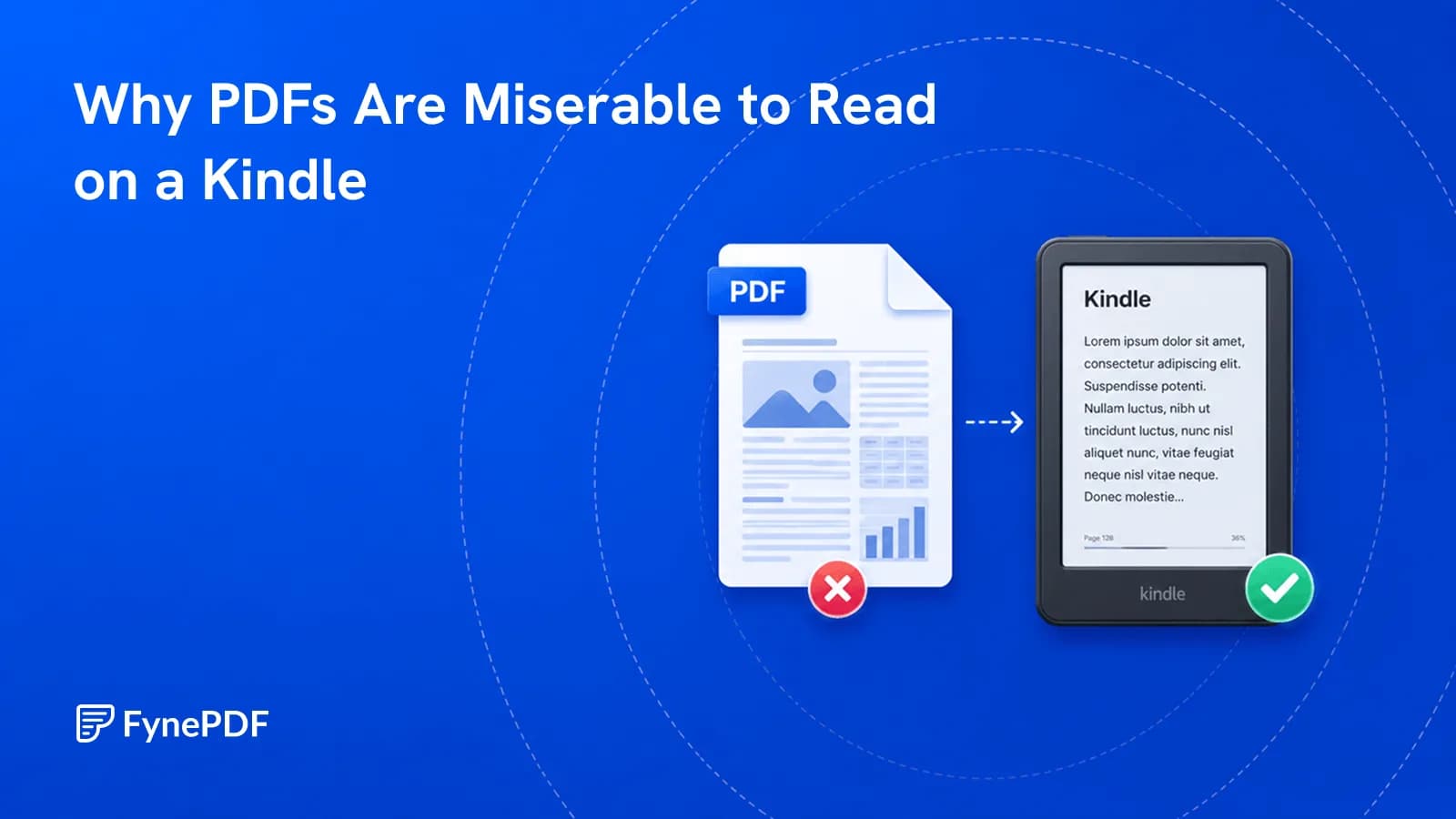
PDFs have fixed pages. E-readers want text that reflows to the screen.
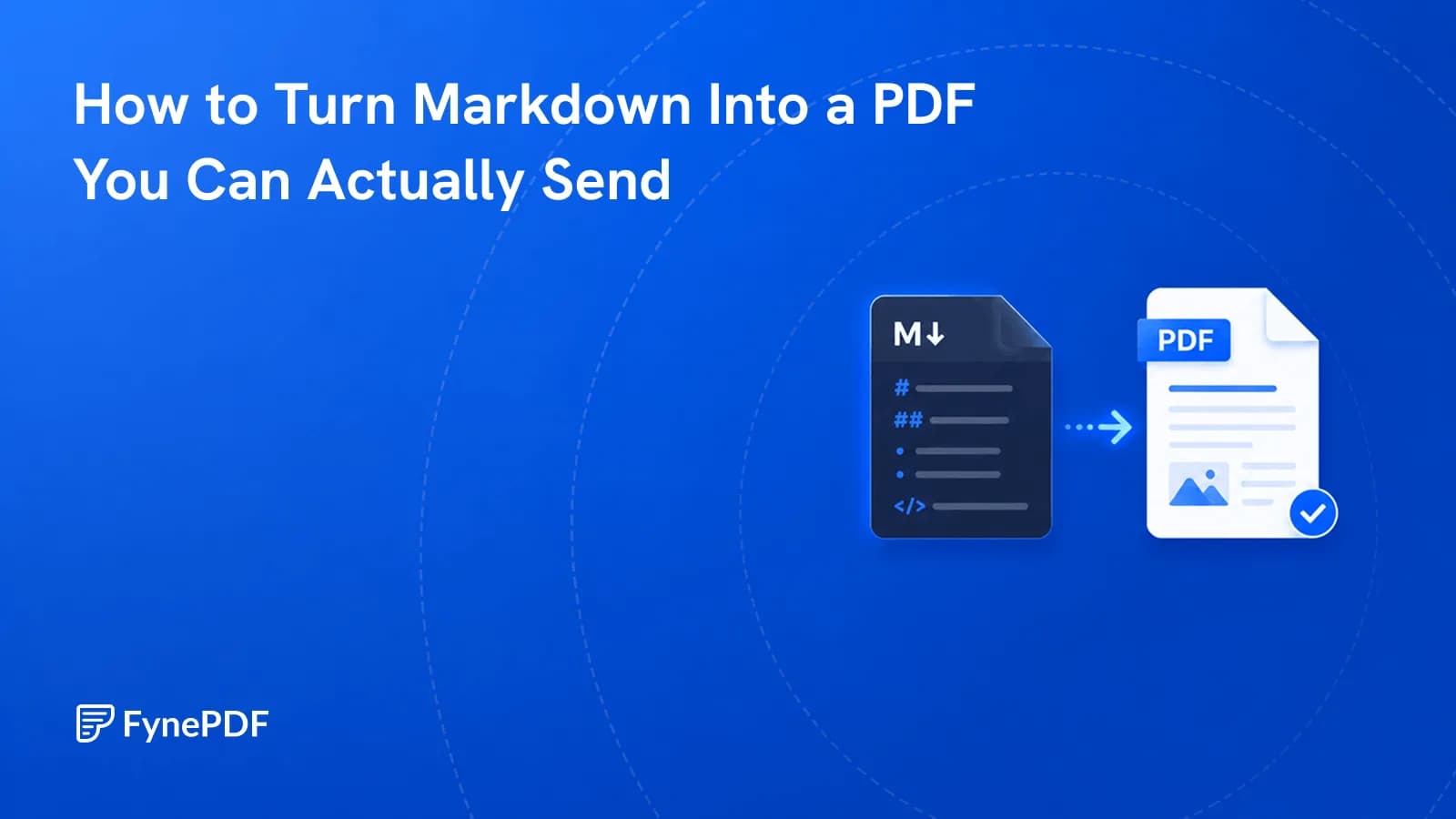
It renders beautifully on GitHub and reads as plain text everywhere else. Convert it.