


Why Your Word Document Looks Different on Someone Else's Screen
Your 12-page report opened as 14 on their machine. Here's why, and how to stop it.

28 July 2026
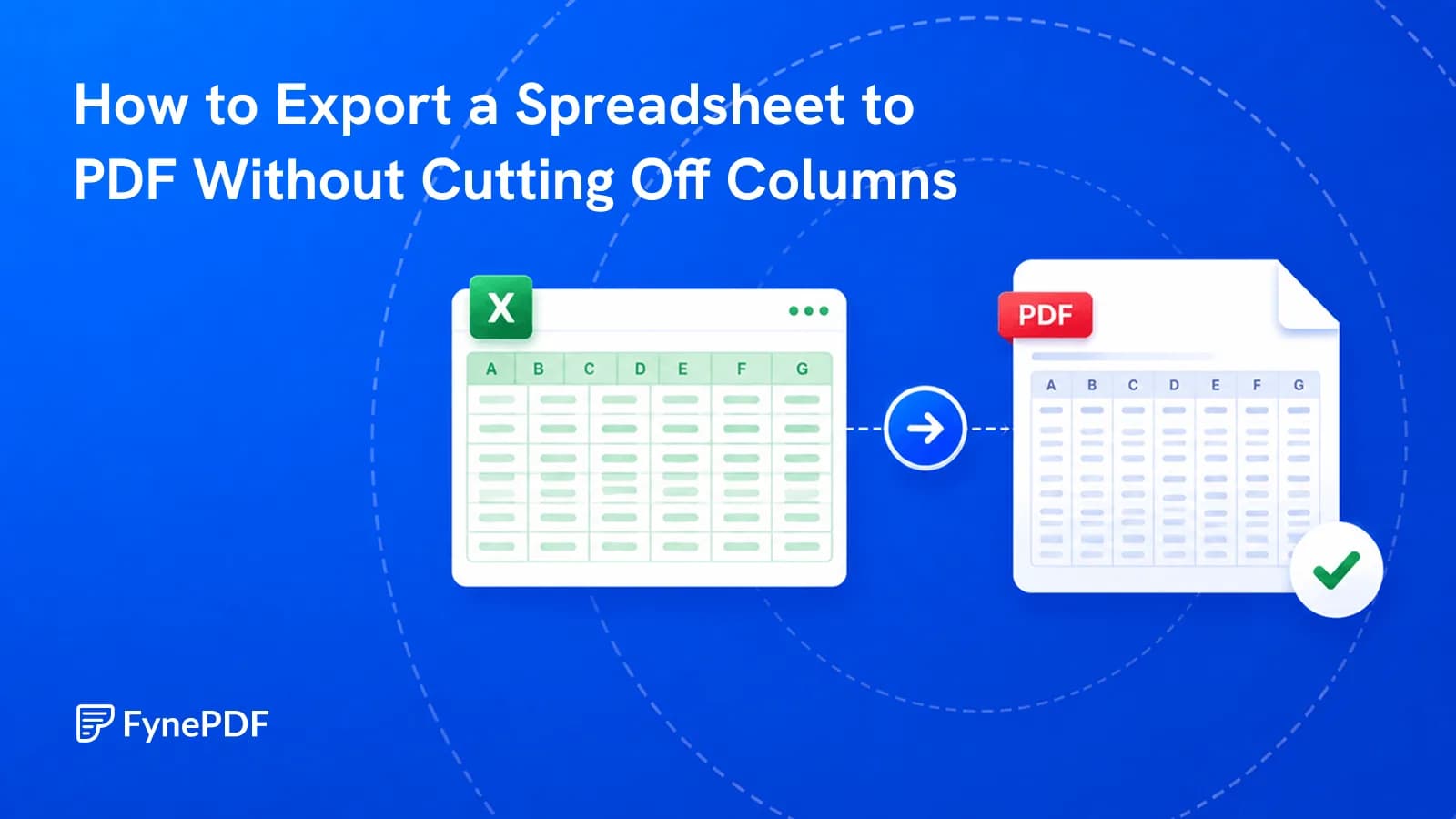
The last three columns landed on their own page. Here's how to set it up before exporting.
Spreadsheets lose columns when exported to PDF because a worksheet has no fixed page width and a PDF does. Excel decides where to break, and by default it breaks at the paper edge. Pushing remaining columns onto separate pages. Setting the print area and scaling before you export solves it.
Almost every complaint about spreadsheet exports traces back to settings that were never configured in the source file.
Because a worksheet is theoretically infinite. It has no page concept at all until something forces one, and printing is that something. Excel then fits as many columns as the paper allows and moves the rest to a new page, in an order that makes no visual sense. Columns A–G on page 1, H–J on page 2, then rows continuing the same way.
The result is a document nobody can read. A 12-column financial summary becomes six pages that have to be laid side by side to reconstruct one table.
Configure these in the spreadsheet first. Doing it here is far easier than fixing the PDF afterwards:
Fit-to-width scaling is the one that matters most. It shrinks the content until every column fits the page width, which is nearly always preferable to splitting.
Free accounts handle files up to 100MB. That fourth step takes ten seconds and catches the problem this article exists to prevent.
A workbook with a dozen tabs will convert them all, which is often not what you want. Internal calculation sheets and lookup tables ending up in a document sent to a client.
Either delete the sheets you don't need from a copy of the workbook first, or extract the relevant pages from the finished PDF with Extract Pages. The first approach is cleaner; the second is faster if you've already converted.
Scaling has a floor. Fitting 30 columns onto one landscape page produces text nobody can read on screen or in print.
| Column count | Approach |
|---|---|
| Up to 8 | Portrait, fit to width |
| 8–15 | Landscape, fit to width |
| 15–25 | Landscape, consider splitting the table |
| Over 25 | Split into logical tables, or send the spreadsheet |
At a certain width, a PDF is the wrong format. If the recipient needs to work with 40 columns of data, they need the spreadsheet, a PDF that requires zooming to 400% helps nobody.
PDF when the numbers are final and you want them read exactly as presented. Board reports, invoices, published summaries, anything attached to a contract. The fixed layout is the point, and it prevents accidental edits.
Spreadsheet when the recipient needs to sort, filter, recalculate, or extend the data. Converting to PDF and forcing them to reconstruct it with PDF to Excel wastes their time and introduces transcription risk.
Sending both is common practice for financial reporting: the PDF is the record, the spreadsheet is the working file.
No. The PDF shows calculated values, not the formulas behind them. That's usually desirable. It prevents recipients seeing the internal logic of a model, but it means errors are no longer traceable, so verify before converting.
Set the print area on that sheet and remove the others from a copy of the workbook before uploading. Alternatively convert everything and extract the pages you need afterwards.
Charts positioned across a page break get split like any other content. Move them fully within a page boundary in Page Break Preview before exporting.
Files transfer over encrypted connections and are permanently deleted within 15 minutes of processing unless you save them to your library.
Set fit-to-width scaling first, then upload to Excel to PDF. Check the column count in the output before you send it anywhere.
Try it yourself
Your 12-page report opened as 14 on their machine. Here's why, and how to stop it.
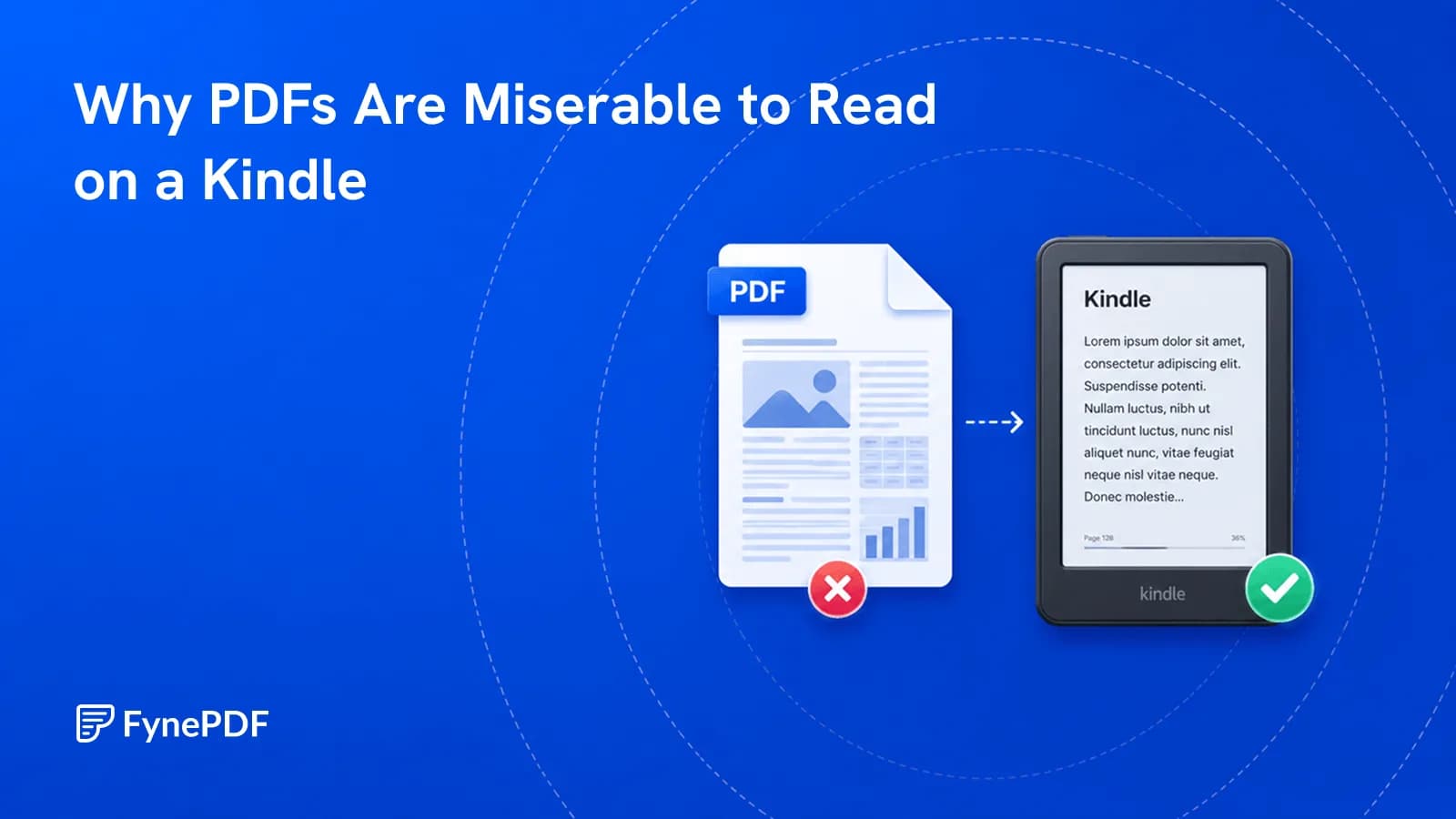
PDFs have fixed pages. E-readers want text that reflows to the screen.
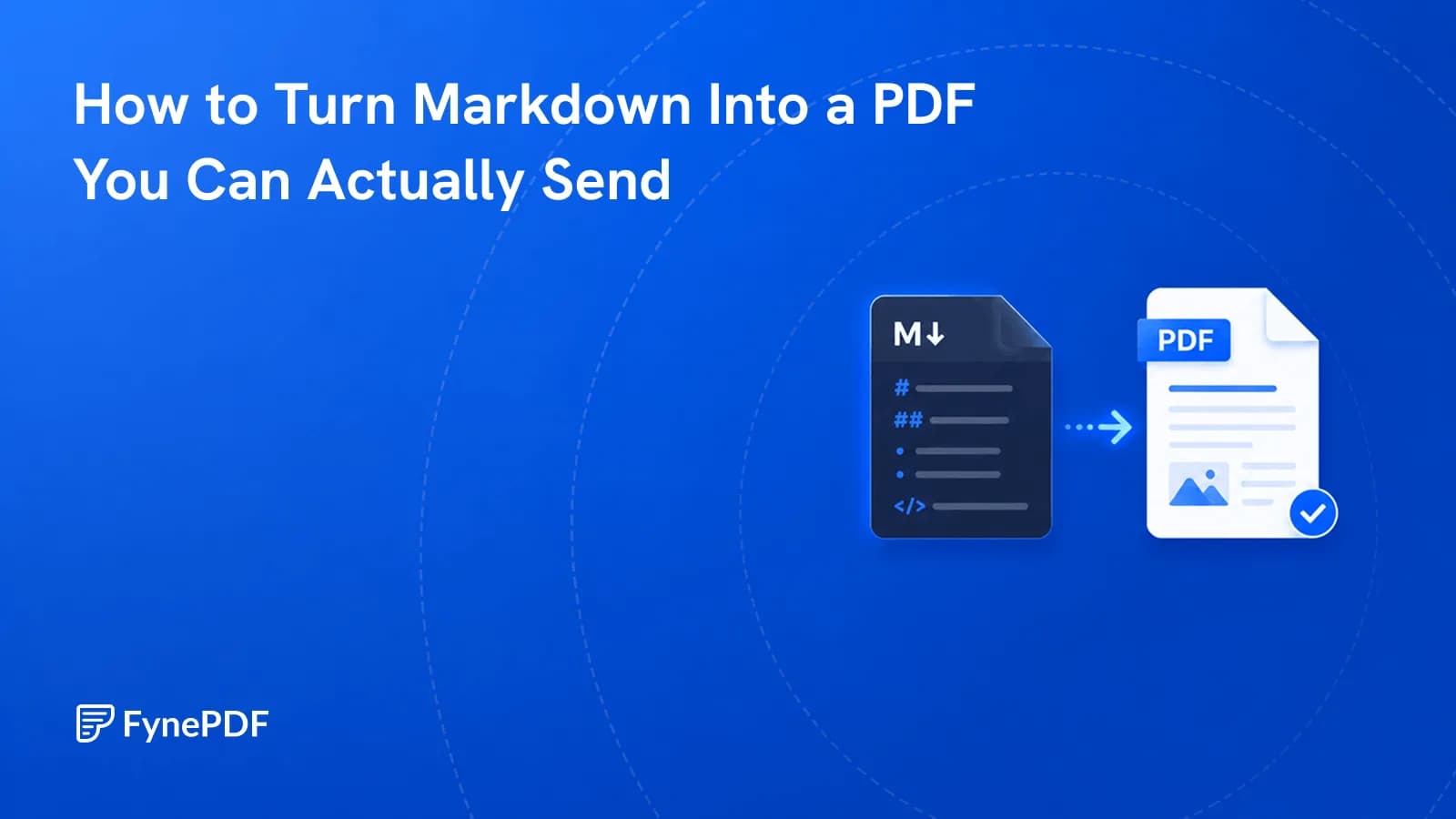
It renders beautifully on GitHub and reads as plain text everywhere else. Convert it.