


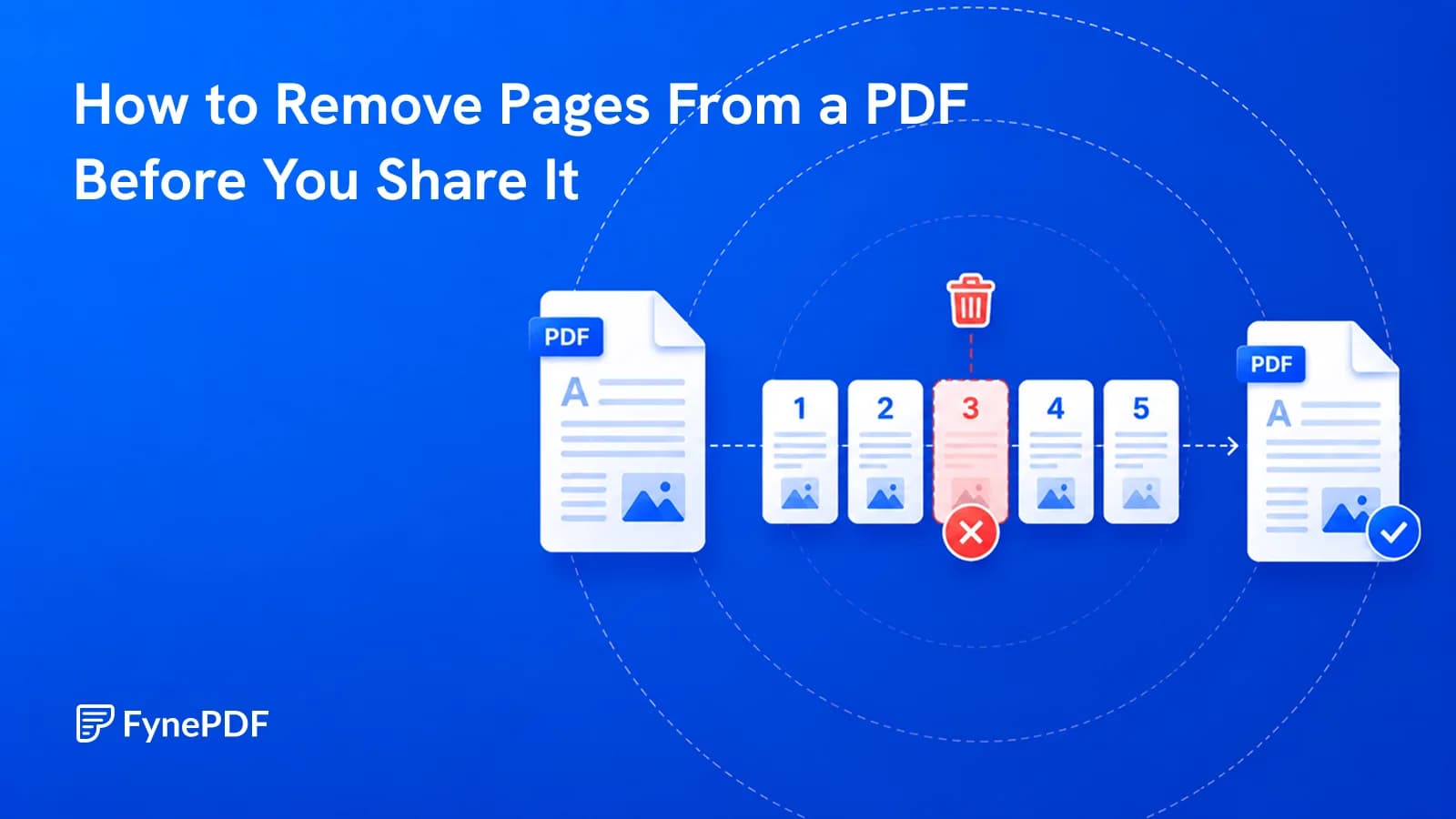
How to Remove Pages From a PDF Before You Share It
Internal notes on page 9 shouldn't reach the client. Here's how to remove them.

28 July 2026
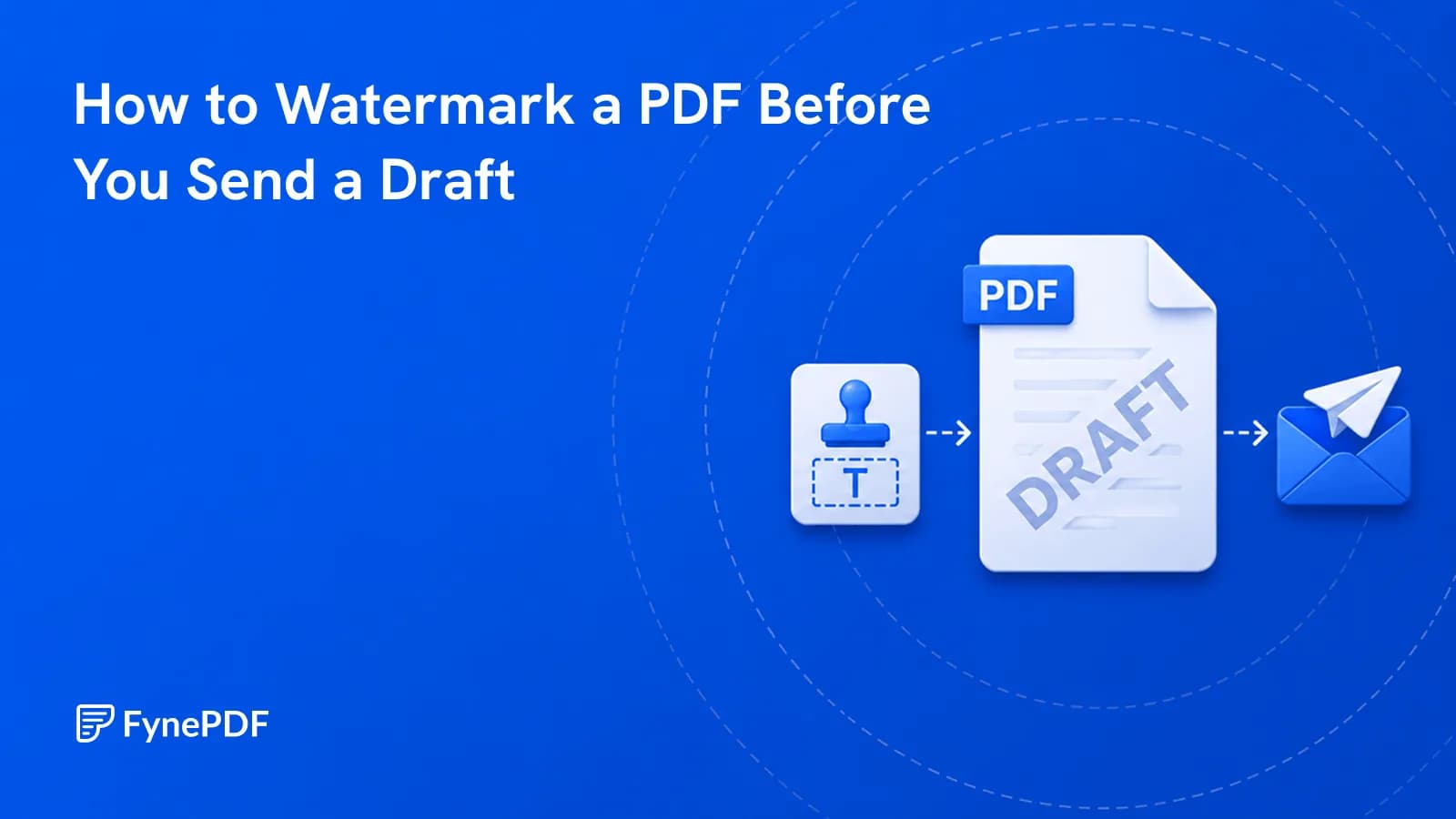
A draft with no DRAFT mark eventually gets treated as final. Here's how to prevent that.
To watermark a PDF, upload it and apply text across the pages. DRAFT, CONFIDENTIAL, or a client name. The mark appears on every page and travels with the document. It's a labelling tool, not a security control, and treating it as the latter is where people get into trouble.
What it does well is prevent a specific, expensive kind of confusion.
Documents outlive the context they were sent in. A proposal emailed as a working draft gets forwarded, saved, printed, and referred to weeks later by someone who wasn't on the original thread and has no idea it wasn't final.
A watermark carries that context on the page itself. It can't be separated from the document, forwarded without, or missed by someone who skipped the covering email. On a printed copy pulled from a folder six months on, it's the only signal remaining.
Common uses:
This runs in your browser, the document is processed on your own device rather than uploaded to a server, which matters when the thing you're marking CONFIDENTIAL is genuinely confidential.
Free accounts handle files up to 600MB.
The tension is between visibility and legibility. Too faint and people miss it; too heavy and the document becomes hard to read, which defeats the purpose of sending it.
Practical guidance:
| Setting | Suggestion |
|---|---|
| Opacity | Light enough to read text through, dark enough to notice |
| Position | Diagonal across the centre is hardest to crop out |
| Size | Large enough to see in a thumbnail |
| Colour | Grey usually works better than black or red |
| Repetition | Every page, without exception |
Every page is the one that isn't optional. A watermark on page one only means any extracted page circulates unmarked, and extracting pages is exactly what people do with long documents.
No, and this is the misunderstanding worth correcting. A watermark is a visible label. It can be cropped, covered, or removed by anyone willing to spend a few minutes, and it does nothing to stop a document being read, copied, or forwarded.
If the document genuinely needs protecting, the watermark is a complement to actual measures rather than a substitute:
Even together these aren't a guarantee against a determined recipient. The realistic goal is preventing accidents and casual sharing, not defeating deliberate misuse.
After content is final, before sending. Watermarking early means re-doing it every revision.
If you're combining documents, watermark after merging so the mark is consistent across the whole file, Merge PDF first, then watermark. And if the file needs compressing, do that afterwards, since Compress PDF works on the finished document.
Not from the watermarked file, the mark is part of the page content. Keep the unmarked original, which is the version you'll want when the draft becomes final.
Yes. It's page content rather than an annotation layer, so it appears in print exactly as on screen. That's the main advantage over adding text as a comment.
Text is the most reliable for status labels because it stays legible at any scale. A logo works for branding but is easier to miss when it's the thing carrying a DRAFT warning.
This tool runs locally in your browser. The file is processed on your device.
Open Add Watermark, apply it to every page, and keep the unmarked original for when the document is approved.
Try it yourself
Internal notes on page 9 shouldn't reach the client. Here's how to remove them.
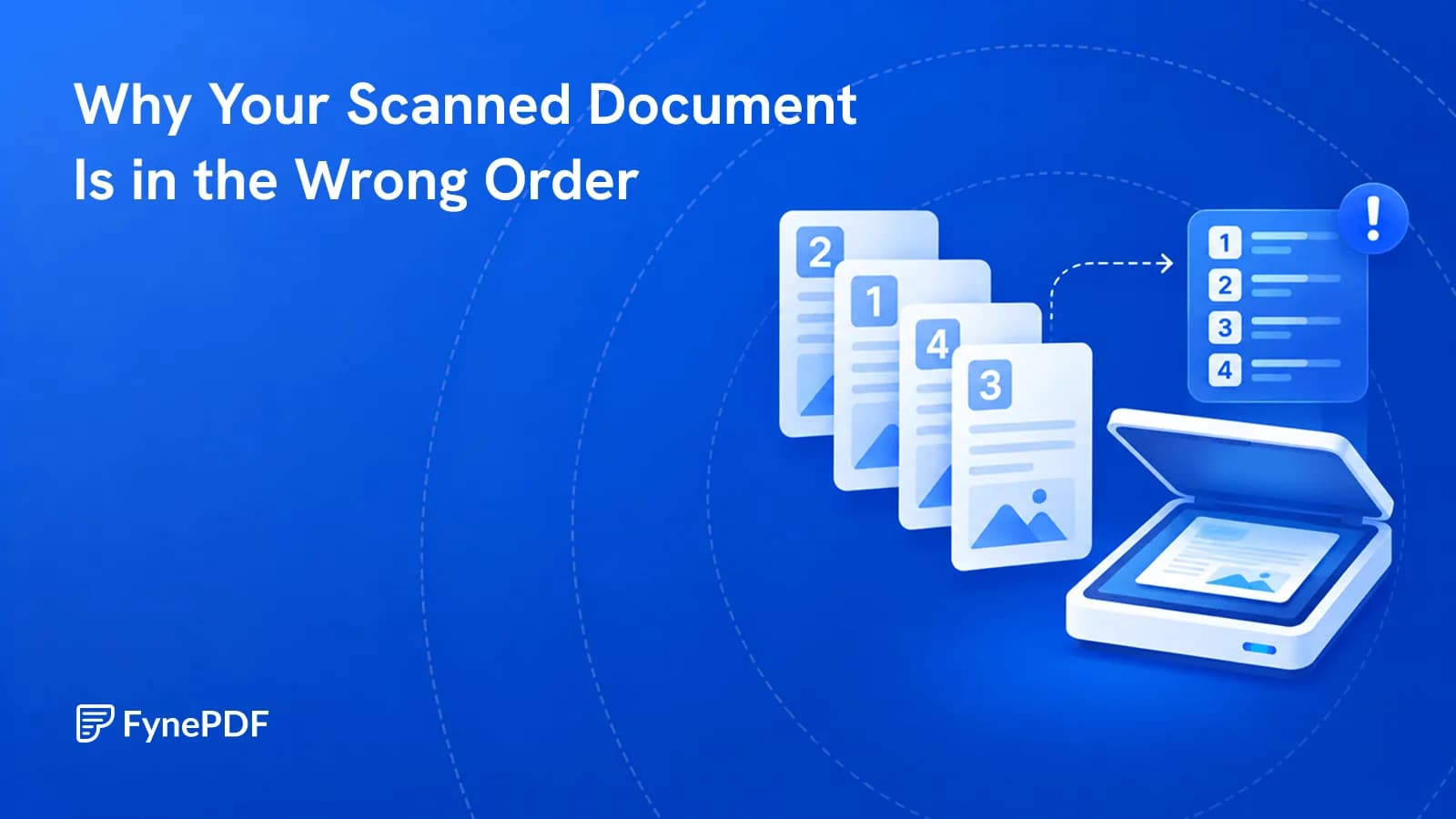
Double-sided scanning gives you all the odd pages, then all the even ones. Here's the fix.
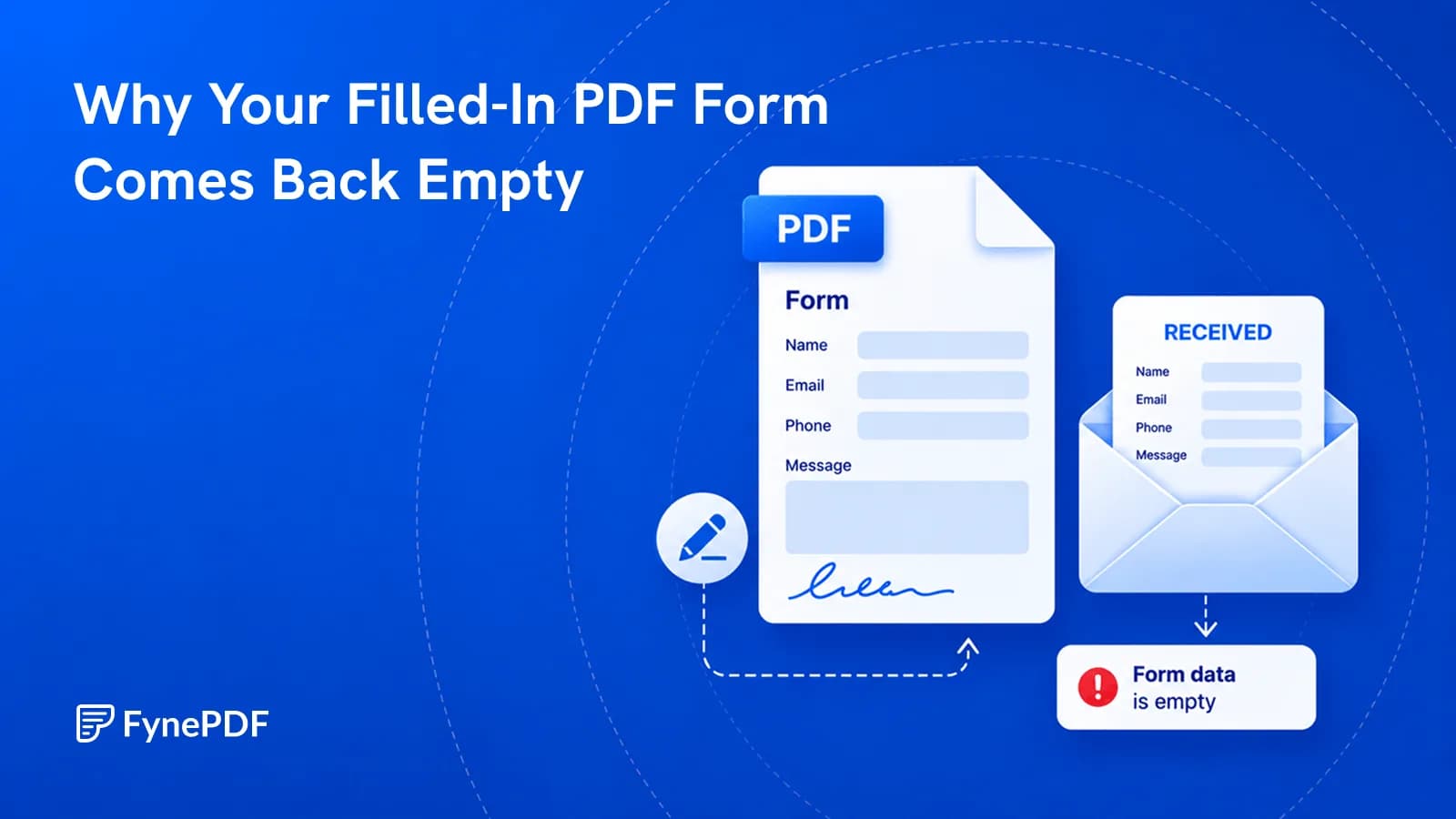
You typed everything in and they see blank boxes. Here's what actually went wrong.