


How to Summarize a Long PDF Without Missing What Matters
A summary tells you what a document covers, not what it commits you to.

28 July 2026
A contract came back edited with no track changes. Here's how to find every difference.
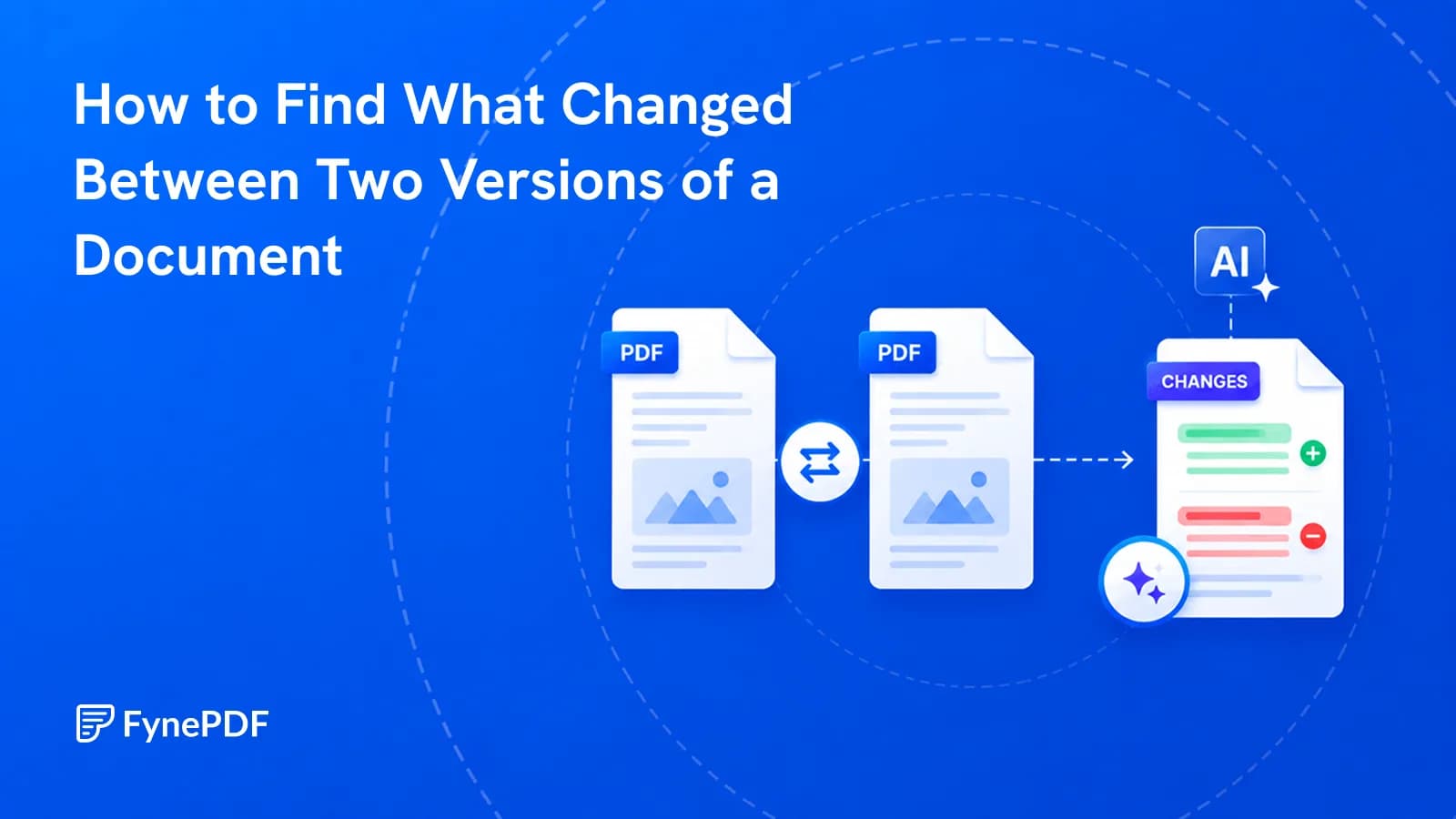
To find what changed between two documents, upload both versions and compare them directly. Differences in wording, inserted clauses, and deletions are surfaced side by side. This works when track changes was never enabled, which is the situation that causes the problem in the first place.
Reading two versions in parallel is how people usually attempt this, and it's how single-word changes get missed.
Because the changes that matter are the ones designed not to look like changes. "Shall" becoming "may" converts an obligation into an option and adds no visible length to the paragraph. "Thirty days" becoming "thirty business days" extends a deadline by nearly two weeks and reads almost identically. A removed sentence leaves no gap.
Your eye reads what it expects. On the second pass through a document you already know, it skims, which is precisely when substituted words slip past. This isn't carelessness; it's how reading works.
The common thread is a document you've already reviewed once, returned to you as a fresh file with no record of what happened in between.
Free accounts handle up to 50 pages across 10 files, with a 15MB per-file limit. Larger documents need a paid plan, or you can compare the relevant sections by pulling them out with Extract Pages first.
Not all differences carry equal weight, and a comparison will show you all of them. Triage in this order:
| Change type | Why it matters |
|---|---|
| Modal verbs, shall, will, may, must | Converts obligations into options |
| Numbers, dates, durations | Deadlines, amounts, notice periods |
| Named parties | Shifts who carries a liability |
| Deleted clauses | The absence is easy to overlook entirely |
| Defined terms | Redefining a term changes every use of it |
| Cross-references | A renumbered clause can point somewhere new |
Formatting differences, repagination, and font changes will also appear. They rarely matter, but they add noise, which is why working through the substantive categories first is worth the discipline.
Usually because one version is a scan. If a document was printed, signed, and rescanned, it contains images rather than text, so there's nothing to compare against the digital original. Run OCR on the scanned version first.
The other common cause is a layout shift. If the second version reflowed because a font substituted or a margin changed, text can appear on different pages, and a position-sensitive comparison flags a great deal that hasn't actually changed. The wording comparison is still valid; the noise is what increases.
Convert both to PDF with Word to PDF and compare those. Word's own compare feature is good when both files are .docx and you have them, but it fails in the common case: the other side sent a PDF.
Converting both to a single format also removes a subtle problem, which is that the same .docx can render differently on two machines depending on installed fonts. Comparing PDFs compares what both parties actually see.
Compare them in pairs. Version 1 against 2, then 2 against 3. Comparing the first against the last hides the intermediate history, which is often where you find out when a change was introduced and by whom.
Yes, and deletions deserve more attention than insertions. Something added is visible and gets scrutinised. Something removed leaves nothing behind, so reviewers read past the gap without registering it.
Only after OCR, and with more caution afterwards. Recognition errors produce differences that aren't real, so verify anything flagged in a scanned document against the page image before you raise it with the other side.
Files transfer over encrypted connections and are permanently deleted within 15 minutes of processing unless you save them to your library.
Upload both files to Compare PDF and work through the modal verbs and numbers first. Those are where the consequential changes hide.
Try it yourself
A summary tells you what a document covers, not what it commits you to.
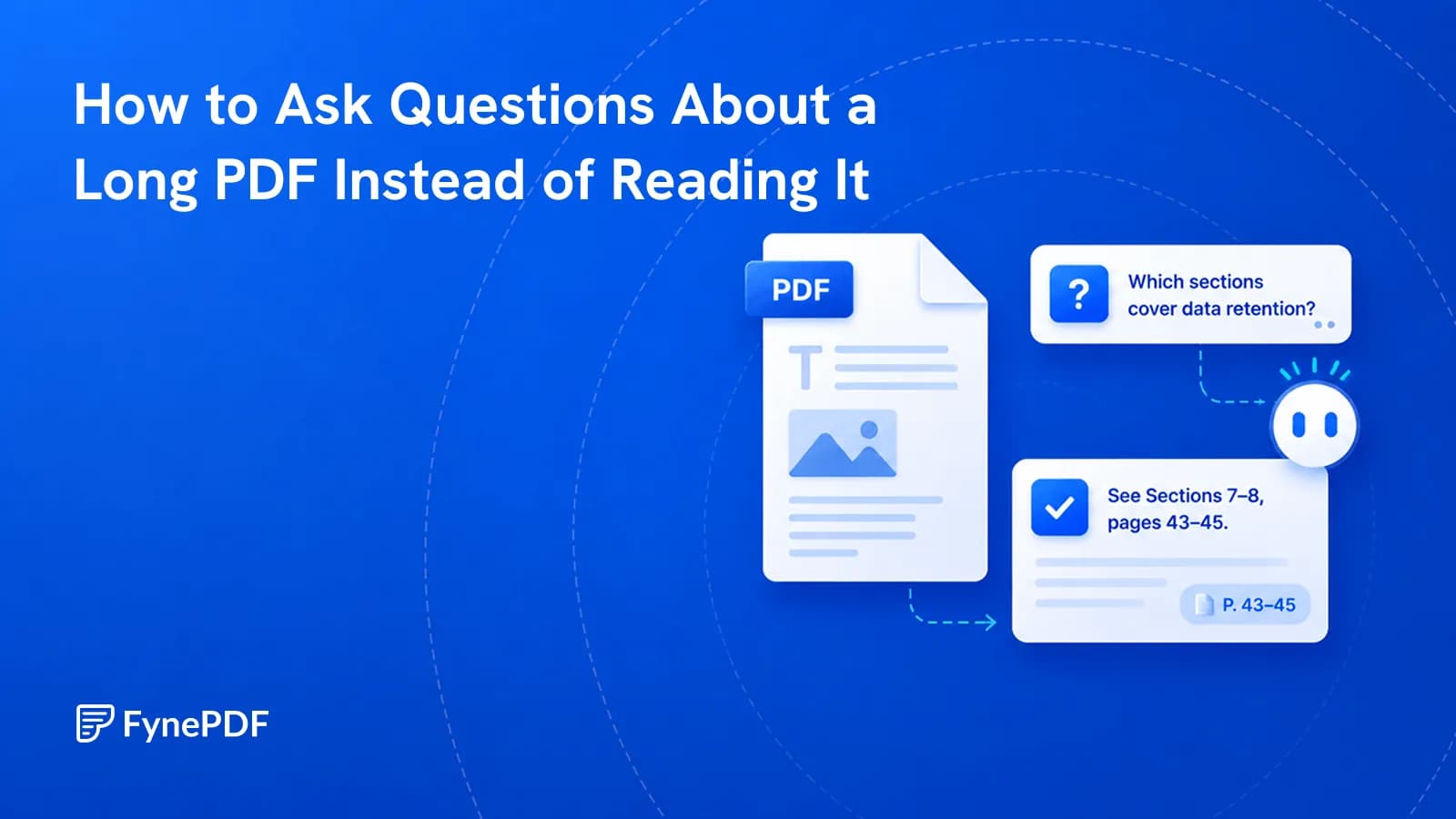
You need one clause from 200 pages. Query the document directly instead of skimming it.

From incomplete downloads to outdated viewers, most PDFs that refuse to open fall into a handful of fixable categories.