


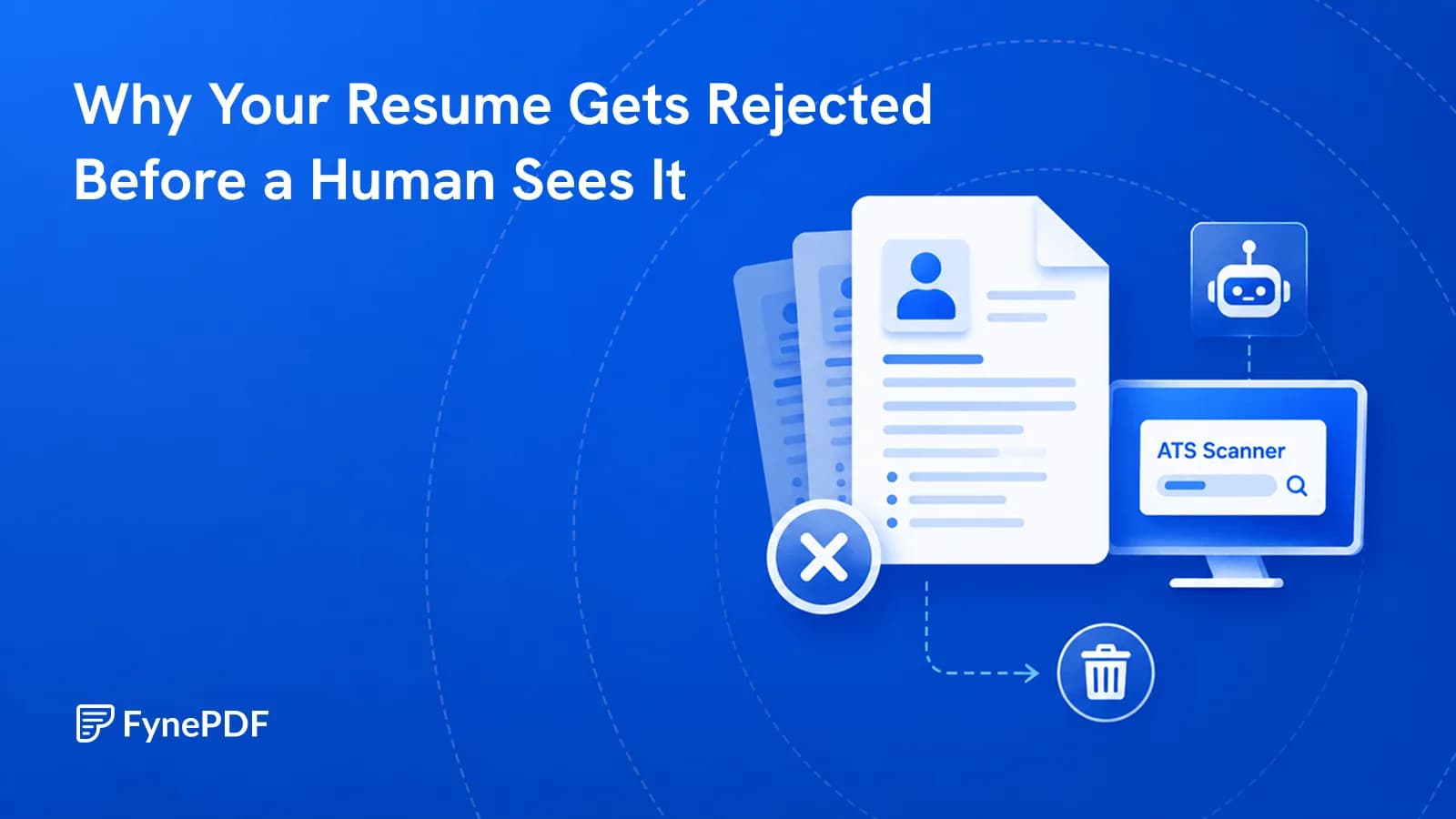
Why Your Resume Gets Rejected Before a Human Sees It
Applicant tracking systems parse your file first. Size, layout, and scans are why it fails.

28 July 2026
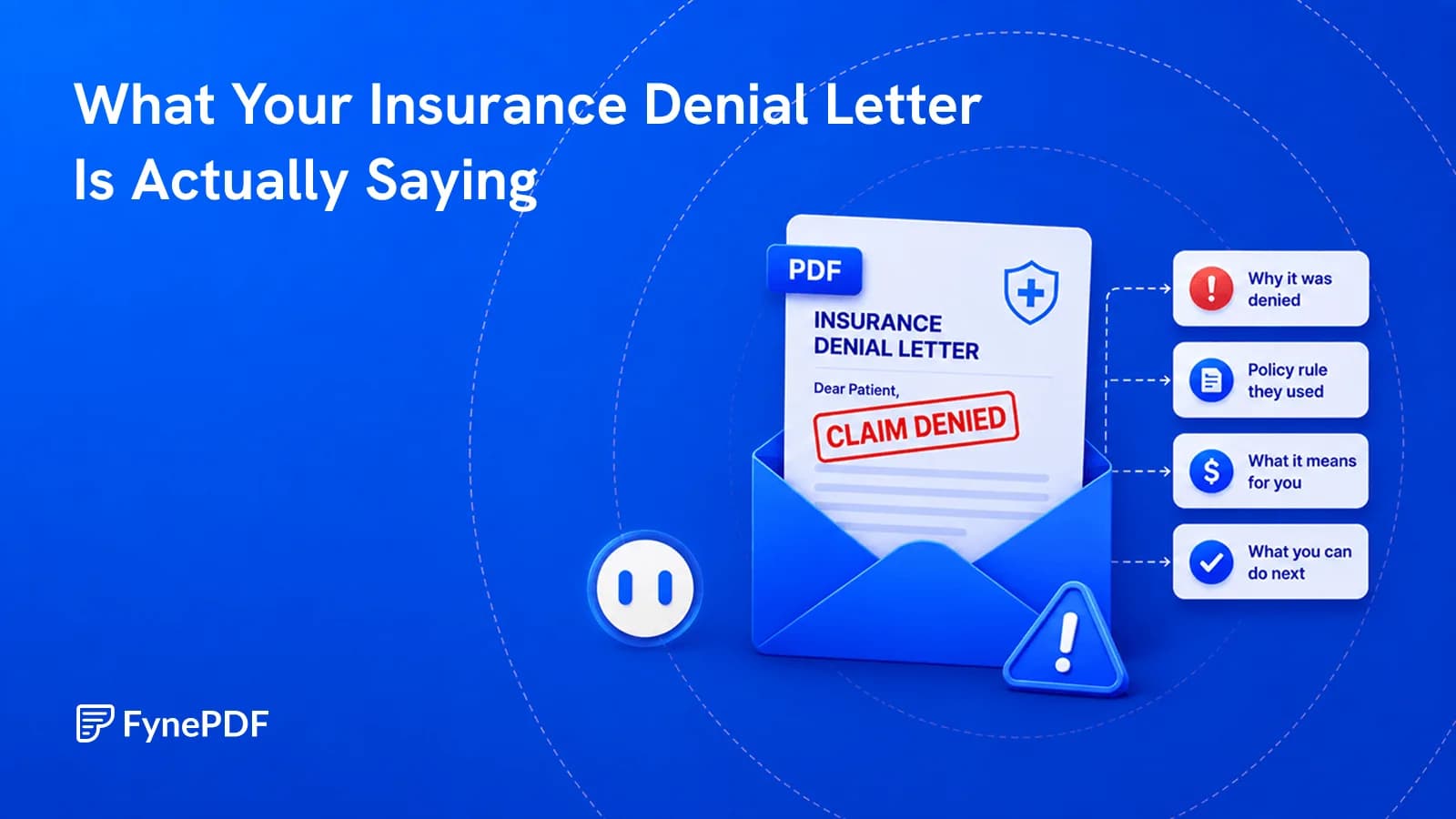
The reason code and the appeal deadline are buried on purpose. Find both first.
A denial letter contains two things that matter and buries both: the specific reason the claim was refused, and the deadline for appealing. Everything else is procedural text. Finding those two facts quickly is what lets you respond in time.
This explains what the letter says. It is not legal or financial advice, and the formal appeal runs through your insurer's own process regardless.
Because they serve two purposes at once. They have to satisfy regulatory requirements about what must be disclosed, and they are written by an organisation with no particular interest in making an appeal easy.
The result is a document where the operative sentence sits in the middle of a page of boilerplate, often expressed as a code rather than a sentence. Many people read a denial letter, understand that they have been refused, and never locate the actual stated reason, which is the thing an appeal has to address.
Six items, and the first two are the ones that govern everything else:
Deadlines are the thing that ends more appeals than any substantive question. Once it passes, the strength of your case stops mattering.
Free accounts get 10 interactions and files up to 15MB.
The category tells you what an appeal would need to show:
| Stated reason | What it means |
|---|---|
| Not medically necessary | They dispute that the treatment was required |
| Out of network | A provider or facility question, not a treatment one |
| Prior authorisation missing | A process step, sometimes fixable retroactively |
| Not a covered benefit | They say the policy excludes it |
| Insufficient documentation | They want more records |
| Coding error | Frequently resolved by the provider resubmitting |
Coding and documentation denials are worth noticing, because they are administrative rather than substantive. Your provider's billing office deals with these routinely and can often resolve them without a formal appeal. Calling them before writing anything is usually the fastest route.
The line matters here, so it is worth being explicit. This explains the document. It does not tell you whether the denial was correct, whether your policy actually covers the treatment, whether you have grounds to appeal, or what a regulator or court would decide.
Those questions depend on your full policy, your medical records, and the law where you live. Depending on the amount and the complexity, the people to ask are your provider's billing office, your employer's benefits administrator, your state or national insurance regulator, or a lawyer.
Many jurisdictions also provide an independent external review after internal appeals are exhausted, and consumer assistance programmes exist in many places at no cost. Your regulator's website is the reliable source for what applies to you.
Everything, in one place. Appeals turn on documentation and timelines more often than on argument.
Keep the original denial letter, your policy document, all correspondence, and notes of every phone call with the date, the time, and the name of the person you spoke to. If you accumulate a stack of PDFs, Merge PDF will assemble them in order and Add Page Numbers makes the bundle referenceable.
Not necessarily, and not yet. Denials are frequently overturned on appeal, and administrative denials are often resolved by the provider without one. Do not assume the first decision is final.
The letter should state it, and the period varies by insurer, plan, and jurisdiction. Confirm it with your insurer rather than relying on any reading of the document, including this one.
Files transfer over encrypted connections and are permanently deleted within 15 minutes of processing unless you save them to your library.
Upload it to the Claims and Denial Checker, find the reason and the deadline, then call your provider's billing office before anything else.
Try it yourself
Applicant tracking systems parse your file first. Size, layout, and scans are why it fails.
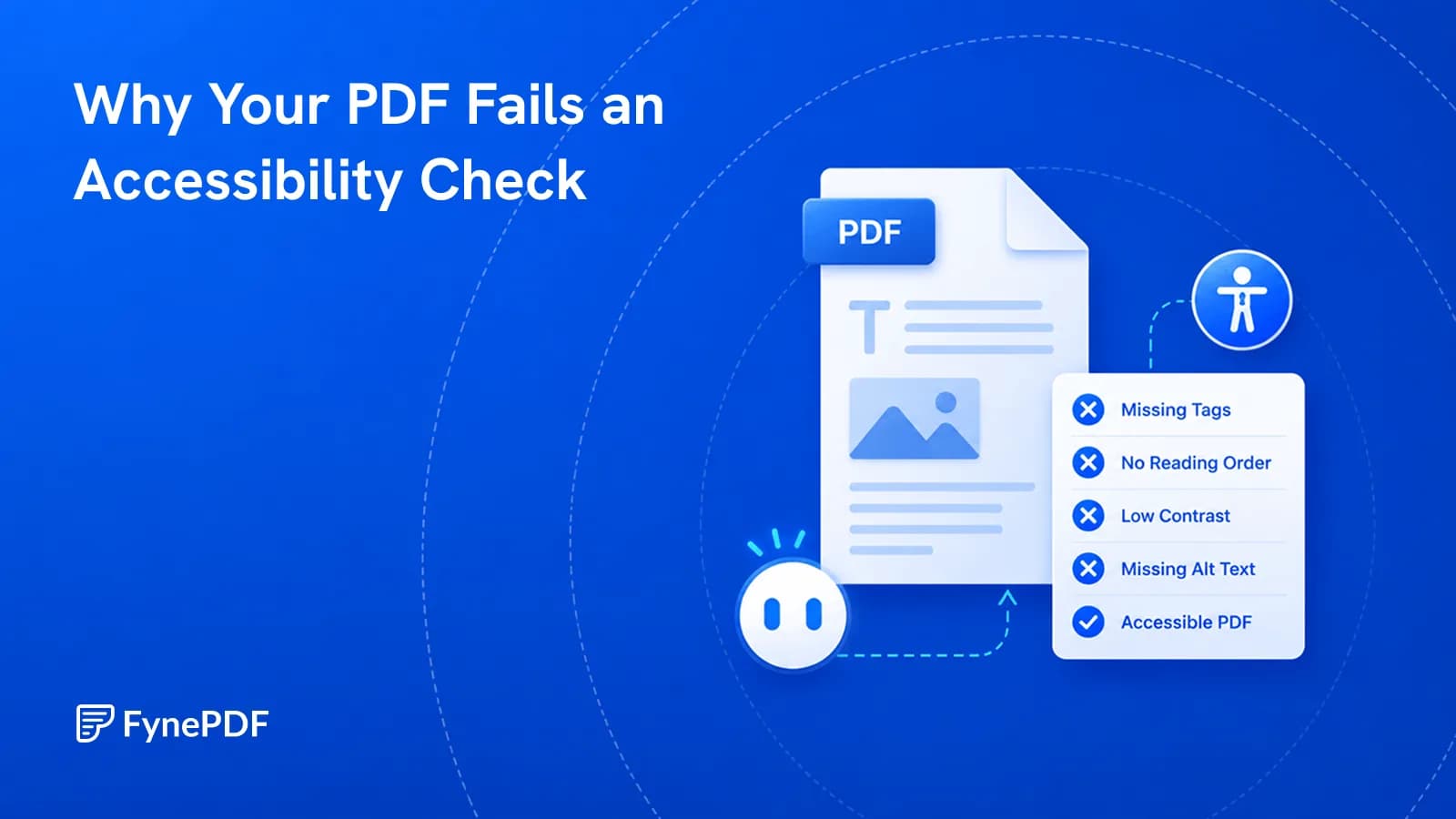
A PDF that looks fine can be unreadable with a screen reader. Here's what's missing.
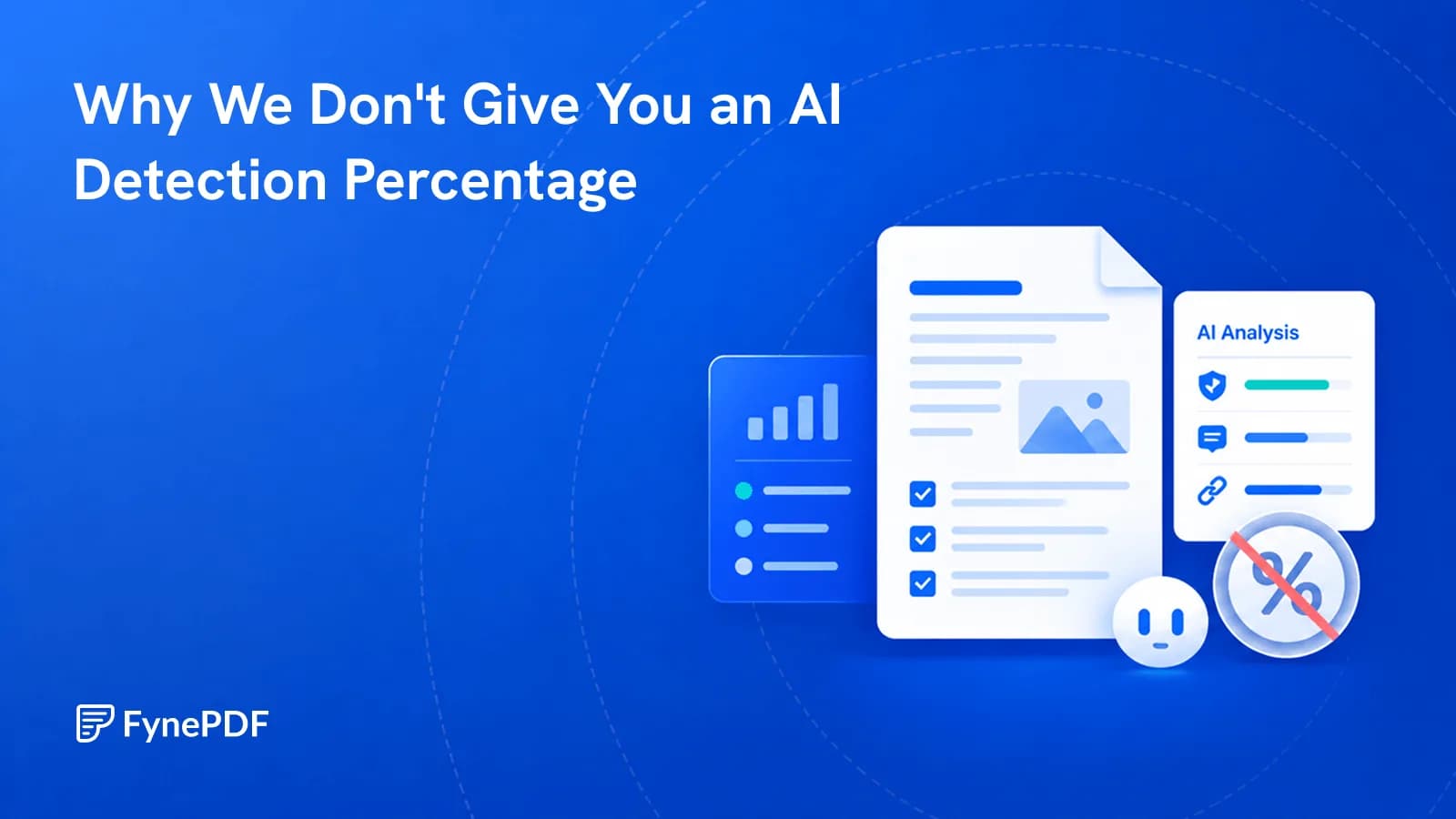
Percentages get treated as proof and used against people. We tell you what we found instead.